

Steps to Earn a Master's in Psychology of Negotiation for Professional Mediators
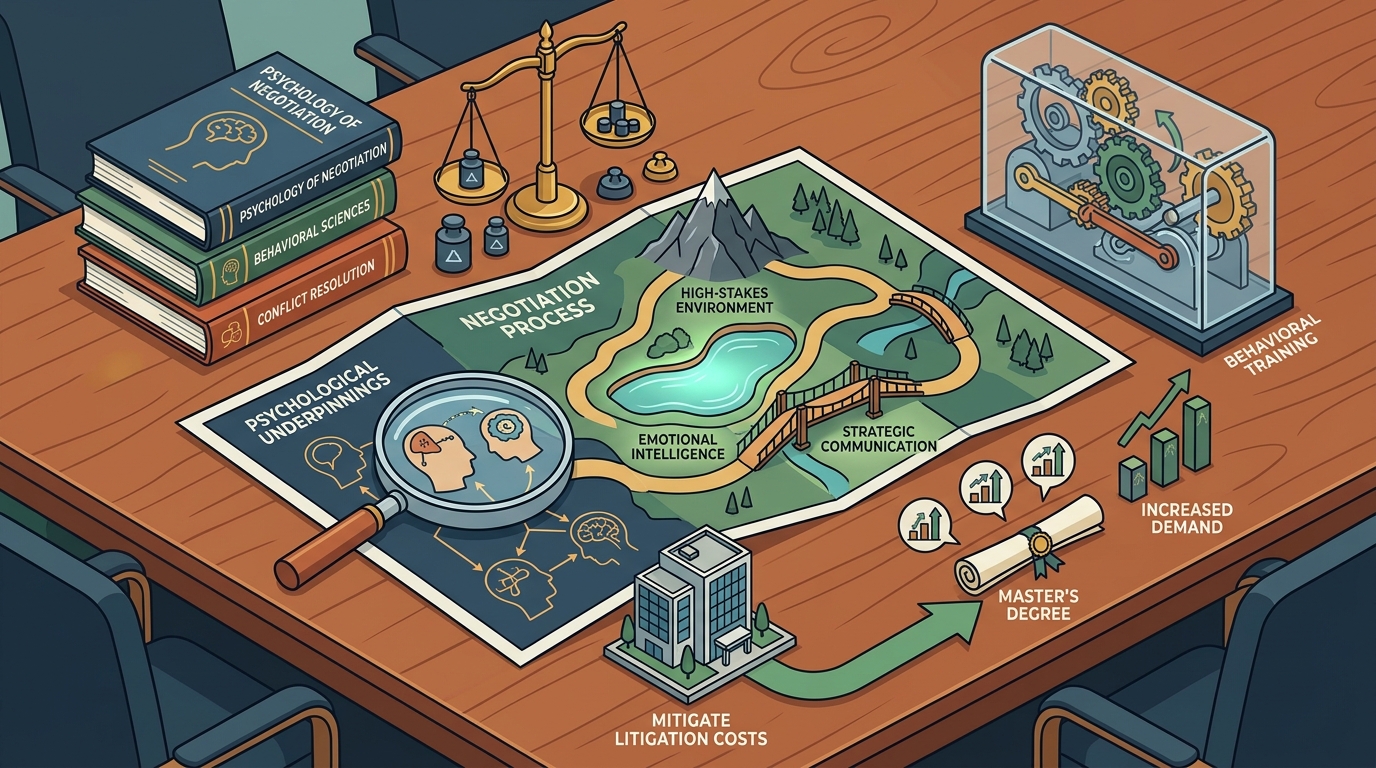
Professional mediators operate in high-stakes environments where emotional intelligence and strategic communication determine outcomes. According to recent industry analyses, the demand for specialized behavioral training in dispute resolution has increased by over 30% in the last five years as organizations seek to mitigate litigation costs. This shift highlights the critical need for mediators to understand the psychological underpinnings of human decision-making. Earning a Master's in Psychology of Negotiation provides the rigorous academic framework necessary to navigate complex interpersonal dynamics. This guide outlines the precise steps to pursue this advanced degree, specifically tailored for working professionals in mediation and conflict resolution. (About Us Evidentia University)
Understand the Degree and Its Relevance
Before applying, it is essential to define what a Master's in Psychology of Negotiation entails. This degree is not merely a study of contract law or procedural rules. It is an interdisciplinary program that merges behavioral science, cognitive psychology, and strategic communication. For professional mediators, this knowledge translates directly into the ability to de-escalate conflict and facilitate mutually beneficial agreements. (Counselor Evidentia University)
Psychology of Negotiation is the systematic study of how individuals make decisions during conflicts and how those decisions can be influenced through ethical communication strategies. Unlike traditional law degrees, this program focuses on the human element of dispute resolution. Mediators often face parties who are emotionally charged or cognitively biased. Understanding these biases allows a mediator to reframe issues in ways that reduce defensiveness and promote cooperation.
The curriculum typically covers topics such as behavioral economics, nonverbal communication analysis, and the psychology of trust. These subjects are critical for mediators who must read between the lines of verbal statements. By mastering these concepts, you move beyond simple facilitation to active psychological intervention. This level of expertise is increasingly required in corporate, legal, and community mediation settings.
Evaluate Online Program Options
For working mediators, flexibility is paramount. The best programs offer 100% online coursework that respects your professional schedule. When evaluating options, look for programs that integrate theory with practical application. Avoid programs that rely solely on theoretical lectures without case studies or interactive components.
Consider the structure of the coursework. A high-quality program will offer a blend of synchronous and asynchronous learning. Synchronous sessions allow for real-time debate and role-playing, which are vital for negotiation skills. Asynchronous modules provide the flexibility to study at your own pace. This hybrid approach ensures that you can maintain your mediation practice while advancing your education.
Another critical factor is the faculty composition. Look for programs taught by practitioners who have extensive experience in the field. Faculty members who are active mediators, psychologists, or behavioral scientists bring real-world insights to the classroom. Their experiences provide context that textbooks alone cannot offer. This practical perspective is invaluable for mediators seeking to apply academic concepts to immediate professional challenges.
Verify Academic and Professional Credentials
Accreditation and licensing are non-negotiable factors in selecting a graduate program. Ensure that the university is licensed by the appropriate state or national educational authority. In the United States, this often means verification through the Florida Department of Education or equivalent bodies for international institutions. Proper licensing ensures that your degree is recognized by employers and professional boards.
Additionally, check if the program holds specific accreditations from behavioral science or forensic science organizations. While general university accreditation is the baseline, specialized accreditations signal a commitment to rigorous standards in niche fields. For mediators, this distinction can enhance credibility when presenting qualifications to clients or courts.
Review the credit structure carefully. A standard Master's degree typically requires 36 US credits or 65 ECTS. This volume of coursework ensures depth of study. Programs that offer fewer credits may lack the comprehensive coverage needed for advanced professional practice. Ensure the curriculum aligns with the competencies required by your local mediation certification board.
Prepare Your Application Materials
The application process for a specialized Master's program is competitive. Start by preparing a strong statement of purpose. This document should articulate your specific goals as a mediator and how this degree will help you achieve them. Avoid generic statements about wanting to "help people." Instead, focus on specific professional challenges you face and how psychological insights can solve them.
Gather your academic transcripts and professional references. If you do not have a prior bachelor's degree in a related field, some programs may require prerequisite courses. Check the admission requirements early to avoid delays. Professional references from supervisors or clients in the mediation field can strengthen your application by attesting to your practical skills.
Prepare for potential interviews. Some programs conduct admissions interviews to assess your fit for the cohort. Be ready to discuss your mediation philosophy and how you handle complex emotional dynamics. Demonstrating self-awareness and a willingness to learn are key indicators of success in behavioral science programs.
Complete the Curriculum
Once admitted, engage fully with the coursework. The Master's in Psychology of Negotiation involves rigorous analysis of human behavior. You will study frameworks such as the Facial Action Coding System (FACS) to interpret micro-expressions. FACS is a anatomical system for classifying facial movements based on their relation to corresponding underlying muscle contractions. Understanding these movements helps mediators detect deception or hidden distress in parties.
Participate actively in case studies and role-playing exercises. These simulations are where theory meets practice. You will apply psychological principles to mock mediation scenarios. Receive feedback from faculty and peers on your communication style and strategic choices. This iterative process refines your skills in real-time.
Focus on the intersection of behavioral economics and negotiation. Behavioral economics is the study of the effects of psychological, cognitive, emotional, cultural and social factors on the decisions of individuals and institutions. In mediation, understanding loss aversion and framing effects can help you guide parties toward better outcomes. Learn to identify when parties are making irrational decisions due to emotional bias.
Leverage Faculty and Alumni Networks
Education extends beyond the classroom. Build relationships with faculty members who are experts in forensic and behavioral sciences. These connections can lead to mentorship opportunities and professional collaborations. Many faculty members are active researchers or practitioners who can provide guidance on emerging trends in mediation.
Engage with your alumni network. Connecting with graduates who are now working in various sectors can open doors to new opportunities. Alumni often share job leads, conference invitations, and research collaborations. This network is a valuable resource for career growth and continuous professional development.
Consider publishing or presenting your work. Many programs encourage students to contribute to academic journals or conferences. Sharing your insights on the psychology of mediation establishes you as a thought leader in the field. This visibility can enhance your reputation and attract high-profile mediation cases.
Key Takeaways
- A Master's in Psychology of Negotiation integrates behavioral science with strategic communication for advanced mediation practice.
- Evidentia University offers this degree as a 100% online program, designed for working professionals.
- The program requires 36 US credits and is licensed by the Florida Department of Education.
- Faculty include former FBI agents and retired military officers, providing unique forensic perspectives.
- Understanding FACS and behavioral economics is critical for detecting deception and bias in negotiations.
- Accreditation and licensing are essential for the degree to hold professional weight.
- Networking with faculty and alumni is crucial for career advancement in the mediation field.
Frequently Asked Questions
Is the Master's in Psychology of Negotiation available online?
Yes, the program is designed to be 100% online, allowing mediators to study while maintaining their professional practices. The curriculum is built around flexibility and accessibility.
What is the duration of the Master's program?
The program typically takes approximately one year to complete, depending on the student's pace and course load. It is structured to be intensive yet manageable for working adults.
Do I need a background in psychology to apply?
While a background in psychology is helpful, it is not always mandatory. The program is designed to provide foundational knowledge in behavioral sciences. However, prior experience in mediation or conflict resolution is highly valued.
How does this degree differ from a standard mediation certification?
A standard certification focuses on procedural rules and basic facilitation techniques. This Master's degree provides deep theoretical and practical knowledge of human behavior, decision-making, and psychological manipulation tactics.
What career opportunities does this degree open up?
Graduates can pursue roles in corporate mediation, legal consulting, forensic psychology, and high-stakes dispute resolution. The degree also prepares students for academic research and teaching positions.
Is the program accredited?
The program is licensed by the Florida Department of Education. Prospective students should verify recognition with their local professional boards or employers to ensure compliance with regional standards.
What kind of support is available for students?
Students have access to dedicated counselors, academic advisors, and a virtual classroom platform. The university emphasizes a student-centered approach with personalized support services.
Start Your Journey in Behavioral Negotiation
Earning a Master's in Psychology of Negotiation is a strategic investment in your career as a professional mediator. It equips you with the tools to understand the hidden drivers of conflict and the skills to resolve them effectively. By following these steps, you can navigate the application process with confidence and clarity. Take the next step toward professional excellence by exploring the program details and speaking with a counselor today. Visit Evidentia University to begin your application and transform your mediation practice.