

How to Apply for a Graduate Degree in Behavioral or Forensic Sciences Online
Applying for a graduate degree in behavioral or forensic sciences requires a strategic approach that goes beyond standard academic metrics. According to recent industry analyses, the demand for professionals with specialized training in criminal profiling and behavioral analysis has grown by over 15% annually, making this a critical career pivot for many. This guide outlines the precise steps to secure admission into a reputable online institution, ensuring your application reflects the rigorous standards of the field. (Evidentia University Leading Forensic)
Understanding Behavioral and Forensic Programs
Behavioral and forensic sciences encompass a wide range of disciplines, from criminal profiling to cybersecurity. Criminal Profiling is the analytical process used to identify the likely characteristics of an offender based on the nature of their crimes. This field requires a deep understanding of human behavior, psychology, and legal frameworks. Similarly, Behavioral Economics is the study of the effects of psychological, cognitive, emotional, cultural, and social factors on the decisions of individuals and institutions. Understanding these distinctions is vital for selecting the right program.
Online programs have become increasingly sophisticated, offering the same academic rigor as traditional on-campus degrees. However, the flexibility of online learning demands a high level of self-discipline and time management. Prospective students must evaluate whether the program's structure aligns with their professional goals and personal circumstances.
Choosing the Right Institution
Selecting a reputable online institution is the first critical step. Accreditation is non-negotiable in this field. Look for institutions licensed by recognized bodies, such as the Florida Department of Education, which ensures that the curriculum meets strict academic standards. Evidentia University, for instance, is licensed by the Florida Department of Education (CIE #9097), providing a layer of regulatory assurance for its students.
Faculty credentials are another key indicator of quality. Programs taught by practitioners with real-world experience, such as former FBI agents or retired law enforcement officers, offer invaluable insights. Evidentia University's faculty includes former Special Agents from the FBI Behavioral Analysis Unit, bringing direct investigative experience into the virtual classroom.
Meeting Academic and Professional Prerequisites
Most graduate programs in behavioral and forensic sciences require a bachelor's degree from an accredited institution. While a background in psychology, criminology, or sociology is common, it is not always mandatory. Many programs welcome professionals from diverse fields, such as law, human resources, or cybersecurity, who wish to specialize.
Professional experience can significantly strengthen your application. If you are working in law enforcement, compliance, or risk management, highlight your relevant roles. For those without direct experience, demonstrating a strong academic record and a clear motivation for entering the field is essential. Choosing the right online forensic certificate programs can also serve as a stepping stone for those looking to build foundational knowledge before committing to a full master's degree.
Key Application Components
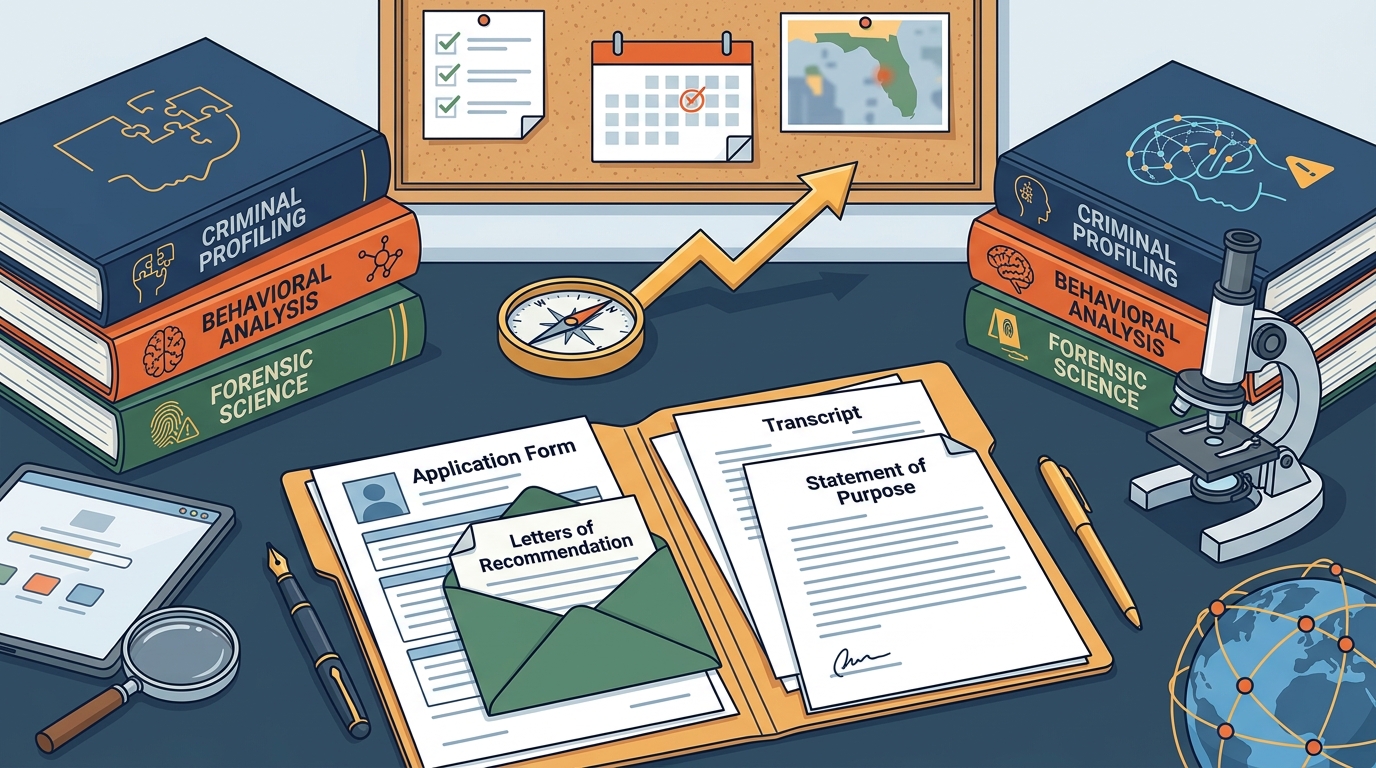
The application process typically involves several core components. Each piece of your application should tell a cohesive story about your readiness for graduate-level study in this specialized field.
| Component | Description | Tip for Success |
|---|---|---|
| Transcripts | Official records of your undergraduate coursework. | Ensure all degrees are from accredited institutions. |
| Statement of Purpose | A personal essay outlining your goals and motivation. | Connect your past experience to future career objectives. |
| Letters of Recommendation | Professional or academic references attesting to your abilities. | Choose recommenders who know your work ethic well. |
| Resume/CV | A detailed summary of your professional and academic history. | Highlight relevant skills and certifications. |
Your statement of purpose is particularly important. It should articulate why you are interested in behavioral sciences, how your background prepares you for this study, and what you hope to achieve. Avoid generic statements. Instead, focus on specific interests, such as criminal profiling methodologies or behavioral cybersecurity.
Navigating the Interview Process
Many reputable online programs require an interview as part of the admissions process. This is not just a formality but an opportunity for the admissions committee to assess your communication skills, ethical reasoning, and fit for the program. Prepare by reviewing your application materials and reflecting on your career goals.
Be ready to discuss ethical dilemmas you have encountered in your professional life. Behavioral and forensic sciences often involve complex moral questions, and your ability to navigate these thoughtfully is crucial. Evidentia University's core values emphasize respect for individual uniqueness and academic rigor, so aligning your responses with these principles can be beneficial.
Financial Planning and Tuition
Understanding the financial commitment is essential. Graduate programs in specialized fields can be costly, but many institutions offer flexible payment plans and financial aid options. Evidentia University's tuition structure is designed to be accessible, with clear pricing for its master's degrees and certificates.
Consider the return on investment. Graduates with specialized degrees in behavioral sciences often find opportunities in law enforcement, corporate security, consulting, and academia. Researching salary data and job placement rates can help you make an informed financial decision. According to the Bureau of Labor Statistics, management occupations in related fields show strong growth potential.
Key Takeaways
- Accreditation Matters: Ensure the institution is licensed by a recognized body, such as the Florida Department of Education.
- Faculty Expertise: Prioritize programs taught by practitioners with real-world experience in the field.
- Specialization Alignment: Choose a program that matches your specific career goals, whether in profiling, fraud, or cybersecurity.
- Application Depth: Your statement of purpose should clearly connect your past experience to your future goals.
- Interview Preparation: Be ready to discuss ethical reasoning and professional motivations.
- Financial Clarity: Review tuition costs and available financial aid options early in the process.
- Continuous Learning: Consider starting with a certificate program if you are unsure about committing to a full degree.
Frequently Asked Questions
What is the typical duration of an online master's degree in behavioral sciences?
Most online master's programs in behavioral and forensic sciences are designed to be completed in approximately one year of full-time study. However, part-time options are often available for working professionals, extending the duration to two years or more.
Do I need a background in psychology to apply?
While a background in psychology is beneficial, it is not always required. Many programs welcome students from diverse academic and professional backgrounds, provided they meet the prerequisite coursework and demonstrate a strong interest in the field.
How important is faculty experience in online programs?
Faculty experience is critical. Programs taught by practitioners with real-world experience, such as former law enforcement officers or forensic psychologists, offer practical insights that pure academics may lack. This practical knowledge is invaluable for students aiming for careers in investigative or analytical roles.
Can I transfer credits from a certificate program to a master's degree?
Many institutions allow students to transfer credits from certificate programs into their master's degree programs. This can reduce the time and cost required to complete the degree. Check with the specific institution for their transfer policies.
What kind of support do online students receive?
Reputable online institutions provide comprehensive support, including academic advising, technical assistance, and career services. Evidentia University, for example, offers personalized services to support student learning and professional development.
Is online learning as rigorous as on-campus study?
Yes, accredited online programs maintain the same academic rigor as their on-campus counterparts. The primary difference is the delivery method, which requires greater self-discipline and time management from the student.
What are the career prospects after graduation?
Graduates can pursue careers in law enforcement, corporate security, fraud examination, human resources, and consulting. The specialized skills gained in behavioral and forensic sciences are highly valued in many industries.
Next Steps
Taking the first step toward a graduate degree in behavioral or forensic sciences can transform your career. If you are ready to explore your options, contact a counselor at Evidentia University to discuss your goals and learn more about our accredited online programs. Visit our home page to begin your journey into the world of behavioral and forensic sciences.