

Which Master's Degree Is Best for a Career in Behavioral Cybersecurity and Cybercriminology?
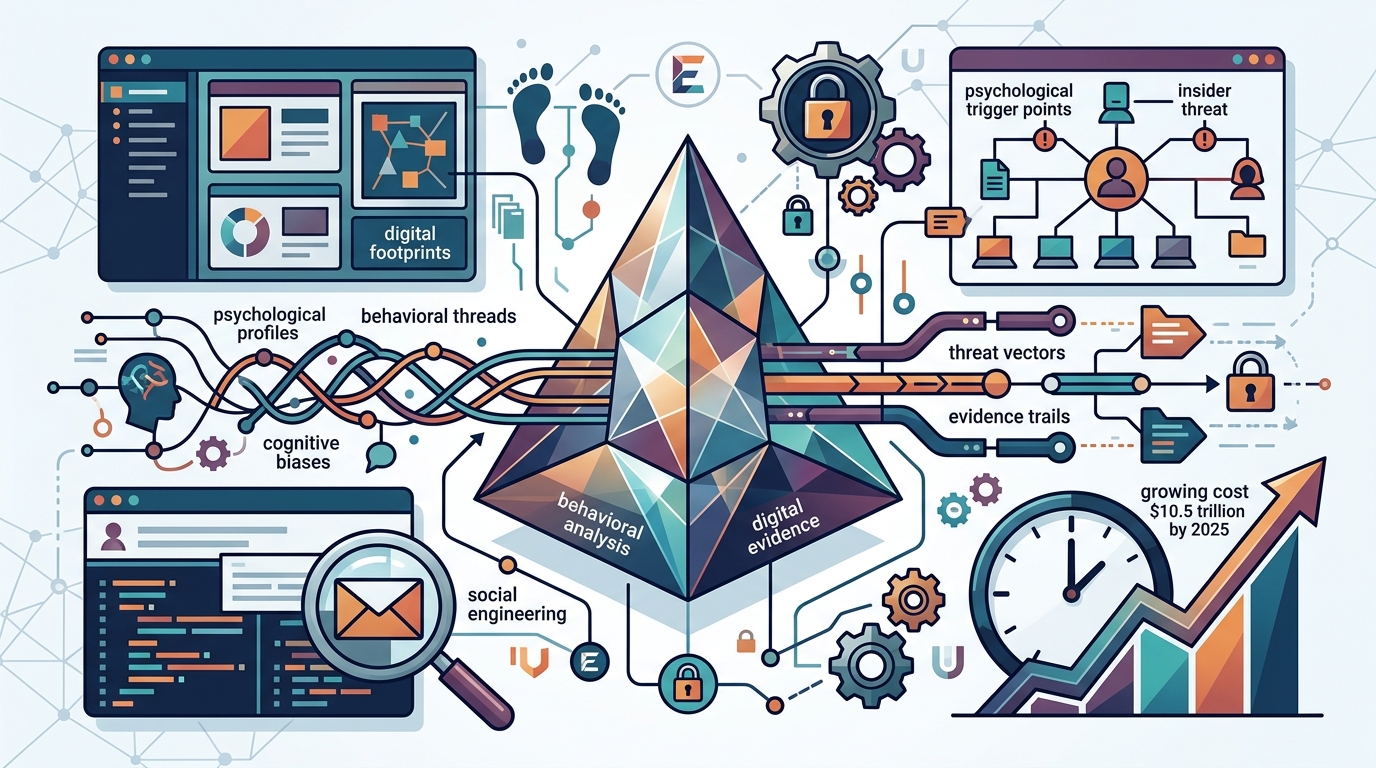
The intersection of human psychology and digital threat landscapes is no longer a niche academic interest. It is a critical operational necessity for modern organizations. According to recent industry analyses, the global cost of cybercrime is projected to reach $10.5 trillion annually by 2025. This exponential growth is not driven solely by sophisticated code, but by the exploitation of human behavior. Professionals who understand the psychological triggers behind phishing, social engineering, and insider threats are in unprecedented demand. This guide explores which master's degree provides the strongest foundation for a career in this high-stakes field. (About Us Evidentia University)
Understanding Behavioral Cybersecurity
Behavioral cybersecurity, often referred to as cybercriminology, focuses on the "why" behind digital attacks. Traditional cybersecurity measures like firewalls and encryption are essential, but they fail when a user willingly bypasses security protocols due to manipulation or ignorance. Behavioral cybersecurity is the study of human actions, motivations, and vulnerabilities within digital environments. (Evidentia University Leading Forensic)
This field bridges the gap between technical security and psychological insight. It examines how cybercriminals think, how they select targets, and how organizations can design interventions that reduce risk. The demand for this expertise is driven by the fact that over 90% of data breaches involve the human element, whether through error or exploitation. Professionals in this space do not just fix systems; they fix the human processes that compromise those systems. (Evidentia University Leading Forensic)
For students considering this path, it is crucial to distinguish between a general IT security degree and one focused on behavioral analysis. The latter requires a deep understanding of criminology, psychology, and investigative techniques. It is not merely about understanding technology, but about understanding the criminal mind that exploits it.
Comparing Degree Options
When evaluating master's degrees for this career, you will encounter several variations. Some programs focus heavily on technical forensics, while others lean toward pure psychology. The most effective programs for behavioral cybersecurity integrate both. Below is a comparison of the primary academic approaches available to prospective students.
| Degree Focus | Primary Curriculum | Career Outcome | Best For |
|---|---|---|---|
| Behavioral Cybersecurity & Cybercriminology | Criminal profiling, threat analysis, psychological triggers, digital forensics. | Cyber Threat Analyst, Behavioral Profiler. | Those seeking to understand the attacker's mindset. |
| Anti-Fraud Behavioral Analysis | Financial fraud patterns, deception detection, risk assessment. | Fraud Investigator, Compliance Officer. | Those focused on financial crime and corporate integrity. |
| Criminal Profiling | Crime scene analysis, offender behavior, investigative psychology. | Criminal Profiler, Law Enforcement Consultant. | Those aiming for traditional law enforcement or federal roles. |
| Nonverbal & Deceptive Behavior | Facial coding, body language, lie detection methodologies. | Interrogation Specialist, Security Consultant. | Those interested in direct human interaction and detection. |
While all these degrees offer valuable skills, the Master of Science in Behavioral Cybersecurity & Cybercriminology is specifically designed for the digital age. It addresses the unique challenges of online harassment, cyber scams, and digital identity theft. This program is ideal for professionals who want to specialize in the intersection of crime and technology.
The Role of Faculty Expertise
In the field of forensic and behavioral sciences, the quality of instruction is paramount. Theory alone is insufficient for understanding complex criminal behaviors. Students must learn from practitioners who have navigated these challenges in real-world scenarios. The faculty at leading institutions often include former law enforcement agents and specialized investigators.
For instance, instruction from Mark Safarik, a former Special Agent with the FBI Behavioral Analysis Unit, provides students with insights into how federal agencies approach criminal profiling. His experience offers a practical framework for understanding how behavioral evidence is collected and analyzed in high-stakes investigations. This level of mentorship is rare in standard academic settings.
Additionally, the integration of academic rigor with professional experience ensures that students are not just memorizing concepts, but applying them. Programs that emphasize this balance prepare graduates to handle the ambiguity and pressure inherent in cybersecurity incidents. The ability to think like a criminal is a skill that must be taught through case studies and real-world examples, not just textbooks.
Curriculum Deep Dive
A robust master's program in this field must cover several core domains. These include the psychological profiles of cybercriminals, the mechanics of social engineering, and the legal frameworks governing digital crime. The curriculum should also address the prevention of cybercrimes against vulnerable populations, such as minors.
Key topics typically include:
- Cybercrimes Against Persons: Understanding the dynamics of online harassment, sex crimes, and scams targeting individuals.
- Behavioral Analysis of Fraud: Identifying patterns in financial deception and organizational fraud.
- Geographic Profiling: Applying spatial analysis to digital crimes to predict offender locations.
- Lie Detection from a Scientific Perspective: Utilizing evidence-based methods for assessing truthfulness in digital and physical interactions.
These topics are not isolated. They form a cohesive framework for understanding the entire lifecycle of a cybercrime, from the initial planning stage to the post-incident investigation. Students learn to identify red flags early, which is critical for prevention. Early detection of behavioral anomalies is the most effective defense against sophisticated cyber threats.
The program also emphasizes the ethical implications of behavioral analysis. Professionals in this field must navigate complex privacy laws and ethical boundaries. Understanding these constraints is as important as understanding the criminal behavior itself. This dual focus ensures that graduates are not only skilled investigators but also responsible practitioners.
Career Pathways and Outcomes
Graduates with a master's degree in behavioral cybersecurity and cybercriminology are equipped for a variety of high-impact roles. These positions exist in both the public and private sectors, reflecting the broad applicability of the skills acquired.
Common career paths include:
- Cyber Threat Intelligence Analyst: Analyzing data to predict and prevent cyber attacks by understanding attacker motivations.
- Insider Threat Specialist: Monitoring and mitigating risks posed by employees within an organization.
- Digital Forensics Investigator: Examining digital evidence to support legal proceedings and internal investigations.
- Corporate Security Consultant: Advising organizations on how to protect their assets and employees from behavioral risks.
- Law Enforcement Specialist: Working with federal or local agencies to investigate complex cybercrimes.
The salary potential for these roles is significant, driven by the scarcity of qualified professionals. According to industry reports, cybersecurity professionals with specialized behavioral training often command higher salaries than their generalist counterparts. This is because they offer a unique value proposition: the ability to prevent attacks before they occur by understanding the human element.
Furthermore, the field is growing rapidly. As technology evolves, so do the methods of cybercriminals. This creates a continuous demand for updated knowledge and skilled practitioners. Professionals in this field are not just keeping up with technology; they are staying ahead of the criminals who exploit it.
Key Takeaways
- Specialized Focus: The MS in Behavioral Cybersecurity & Cybercriminology is specifically designed for the digital threat landscape, unlike general IT degrees.
- Faculty Credentials: Instruction from former FBI agents and retired law enforcement officials provides critical real-world context.
- Human-Centric Approach: The program emphasizes that over 90% of breaches involve human error or manipulation, making behavioral analysis essential.
- Comprehensive Curriculum: Covers cybercrimes against persons, fraud analysis, and geographic profiling to provide a holistic understanding of digital crime.
- High Demand: The global cost of cybercrime is rising, creating urgent demand for professionals who can bridge the gap between psychology and security.
- Ethical Framework: Graduates are trained to navigate complex privacy laws and ethical boundaries in their investigations.
- Flexible Learning: Programs are designed to be 100% online, allowing working professionals to advance their careers without pausing their lives.
Frequently Asked Questions
Is a master's degree necessary for a career in behavioral cybersecurity?
While not always legally required, a master's degree provides the specialized theoretical and practical knowledge needed to handle complex cyber threats. It distinguishes candidates in a competitive job market and is often preferred for senior analytical roles.
What is the difference between behavioral cybersecurity and traditional cybersecurity?
Traditional cybersecurity focuses on technical defenses like software and hardware. Behavioral cybersecurity focuses on the human element, studying how criminals manipulate people and how to prevent those manipulations through psychological insights.
Can I pursue this degree if I have no prior law enforcement experience?
Yes. These programs are designed for professionals from various backgrounds, including IT, psychology, and business. The curriculum builds the necessary forensic and behavioral skills from the ground up.
How long does it take to complete the master's program?
The program is structured to be completed in approximately one year of full-time study. It is designed to be flexible, allowing students to balance their studies with professional commitments.
What kind of support does the university provide to students?
Evidentia University offers personalized academic support, access to a virtual classroom, and direct interaction with faculty. The institution is licensed by the Florida Department of Education, ensuring academic standards.
Are the courses accredited?
The university is licensed by the Florida Department of Education (CIE #9097). It is important to verify accreditation status with your specific employer or licensing board, as requirements vary by region and profession.
What career roles are available after graduation?
Graduates can pursue roles such as cyber threat analyst, fraud investigator, digital forensics specialist, and corporate security consultant. The skills are applicable in both public and private sectors.
Next Steps
Choosing the right master's degree is a pivotal career decision. For those committed to combating digital crime through behavioral analysis, the Master of Science in Behavioral Cybersecurity & Cybercriminology offers a targeted and rigorous path. It combines academic excellence with practical expertise from industry leaders.
Do not let the complexity of the field deter you. With the right guidance and education, you can become a key player in the fight against cybercrime. Take the first step toward a meaningful career by exploring our program details or speaking with a counselor to discuss your goals. The future of digital security depends on professionals who understand the human mind.