

How to Apply for a Graduate Degree in Behavioral and Forensic Sciences
Applying for a graduate degree in behavioral or forensic sciences requires a strategic approach that goes beyond standard academic metrics. According to recent industry trends, the demand for professionals who can interpret human behavior in legal and corporate contexts has surged, with specialized programs now prioritizing candidates who demonstrate practical investigative insight alongside academic rigor. This guide outlines the precise steps to secure admission into a reputable online institution, focusing on the unique requirements of fields like criminal profiling, anti-fraud analysis, and behavioral cybersecurity. (About Us Evidentia University)
Understanding Specialized Behavioral Science Programs
Before initiating your application, you must define your specific career trajectory. Behavioral sciences encompass a broad spectrum of disciplines, ranging from criminal profiling to corporate fraud detection. Criminal Profiling is the analytical process of identifying the likely characteristics of an offender based on the nature of their crimes. This field requires a deep understanding of forensic psychology and investigative methodology.
Alternatively, Anti-Fraud Behavioral Analysis is the systematic study of human behavior to detect deception and financial misconduct within organizational settings. This specialization is critical for compliance officers, auditors, and corporate security professionals. Another emerging field is Behavioral Cybersecurity, which focuses on the psychological aspects of cybercrime, including how attackers manipulate human behavior to bypass technical defenses.
Choosing the right program depends on your professional goals. If you aim to work in law enforcement or federal agencies, a Master of Science in Criminal Profiling may be the optimal path. For those in the corporate sector, a degree in Behavioral Economics or Anti-Fraud Behavioral Analysis offers direct applicability to risk management and ethical compliance. Understanding these distinctions ensures your application materials align with the program's specific focus.
Evaluating Institutional Credibility and Licensure
The online education landscape is vast, but not all institutions hold equal weight in the forensic and behavioral sciences community. Accreditation and licensure are non-negotiable factors when selecting a graduate school. In the United States, legitimate online universities must be licensed by state departments of education or recognized regional accrediting bodies.
For example, Evidentia University is licensed by the Florida Department of Education, which ensures that its graduate programs meet strict state regulatory standards. This licensure is crucial for graduates who intend to practice in jurisdictions that require verified educational credentials. When researching institutions, verify their licensing status directly through the state education department's official database.
Additionally, examine the faculty composition. Reputable programs in forensic sciences are taught by practitioners who have served in relevant fields, such as former FBI agents, retired law enforcement officers, or certified forensic psychologists. Faculty with real-world investigative experience provide insights that theoretical academics cannot. Review the faculty profiles on the university website to confirm their professional backgrounds and published works.
Preparing Your Application Materials
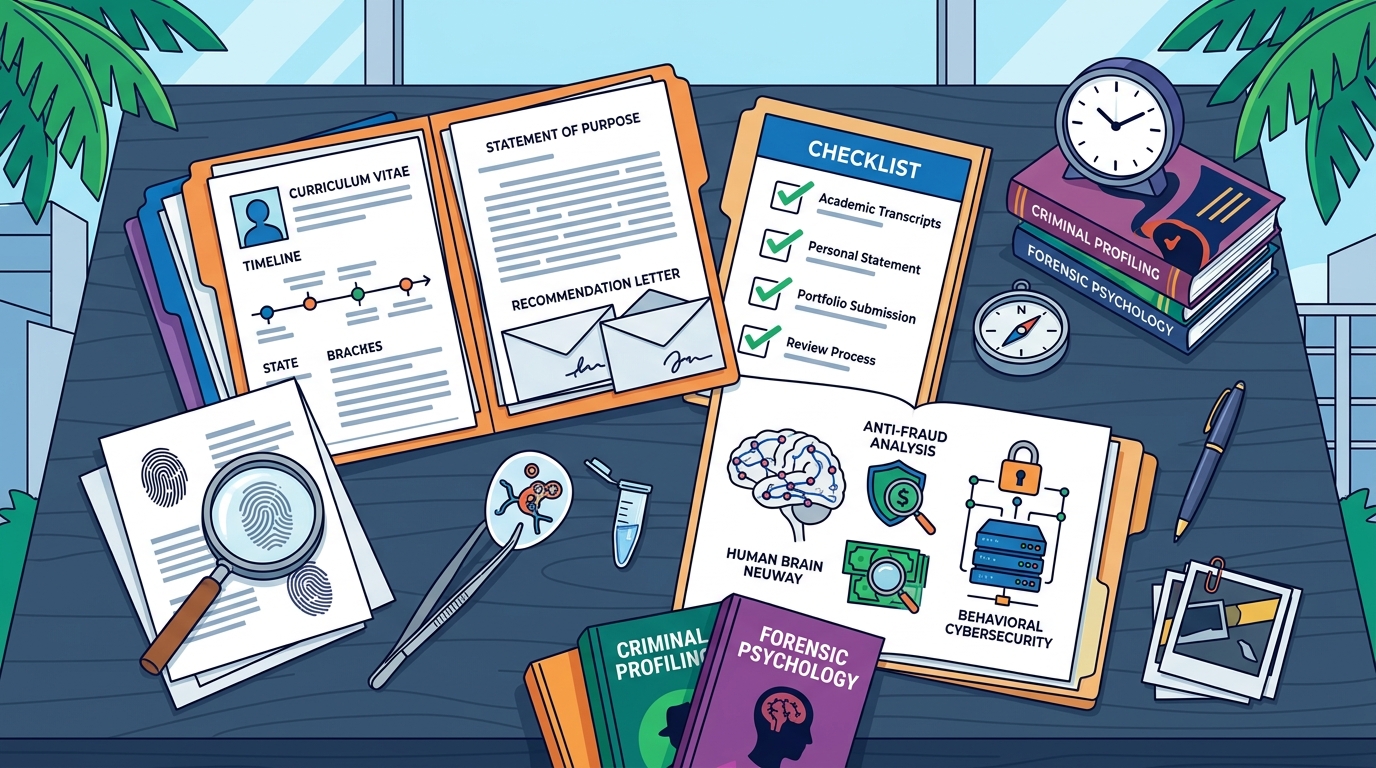
The application process for specialized behavioral science degrees often differs from traditional academic programs. While a bachelor's degree is typically required, the emphasis is placed on your professional experience and analytical reasoning. You must prepare a comprehensive portfolio that highlights your understanding of human behavior and investigative logic.
Your personal statement should articulate your motivation for entering the field. Avoid generic statements about "helping people." Instead, focus on specific interests, such as the psychological drivers of white-collar crime or the behavioral indicators of cyber threats. Connect your past professional experiences to the skills you will develop in the program. For instance, if you are an auditor, discuss how behavioral analysis can enhance fraud detection in financial audits.
Letters of recommendation should come from supervisors or professors who can attest to your analytical abilities and ethical judgment. In forensic sciences, integrity and objectivity are paramount. Recommenders should provide concrete examples of your critical thinking and attention to detail. If you lack academic references, professional references from senior colleagues in security, law, or compliance are acceptable and often preferred.
Navigating the Interview and Assessment Phase
Many reputable online institutions conduct interviews as part of the admissions process. This step is designed to assess your communication skills, ethical reasoning, and suitability for the field. The interview is not merely a formality but a critical evaluation of your potential to handle sensitive behavioral data.
Prepare for scenario-based questions that test your judgment. You may be asked how you would handle a conflict of interest or how you would approach a complex behavioral analysis problem. Demonstrate a structured thinking process rather than rushing to a conclusion. Admissions committees look for candidates who can remain objective under pressure and who understand the ethical implications of their work.
For programs like the Certificate in Behavioral Cybersecurity, the assessment may include a practical component or a written analysis of a case study. Review the specific requirements for your chosen program to ensure you are adequately prepared. Familiarize yourself with basic behavioral science terminology and common investigative frameworks to demonstrate your foundational knowledge.
Financial Planning and Tuition Considerations
Graduate education in specialized fields often carries a premium due to the small class sizes and expert faculty involved. Understanding the tuition structure is essential for financial planning. Many online programs offer flexible payment options, including installment plans and employer tuition reimbursement.
When comparing costs, look beyond the total price. Consider the return on investment by evaluating the career outcomes of alumni. Programs that offer strong industry connections and practical training often lead to higher earning potential in roles such as forensic consultant, compliance director, or security analyst. Check if the institution offers financial aid, scholarships, or partnerships with professional organizations that can reduce costs.
Additionally, inquire about the duration of the program. Accelerated formats, such as the Certificate in Antifraud Behavioral Analysis, allow you to enter the workforce faster, reducing the opportunity cost of your education. Balance the speed of completion with the depth of learning required for your career goals.
Key Takeaways
- Verify Licensure: Ensure the institution is licensed by a recognized state department of education, such as the Florida Department of Education.
- Align Specialization: Choose between Criminal Profiling, Anti-Fraud Analysis, or Behavioral Cybersecurity based on your career sector.
- Highlight Practical Experience: Emphasize professional investigative or analytical experience in your personal statement.
- Check Faculty Credentials: Prioritize programs taught by former law enforcement, FBI agents, or certified forensic experts.
- Prepare for Scenarios: Practice ethical reasoning and structured problem-solving for admissions interviews.
- Evaluate ROI: Compare tuition costs against potential career advancement in compliance, security, or law enforcement.
- Review Accreditation: Confirm that the degree is recognized for professional licensure or certification in your target region.
Frequently Asked Questions
Do I need a background in psychology to apply?
While a background in psychology is beneficial, it is not always mandatory. Many programs accept applicants from diverse fields such as law, accounting, and information technology, provided they demonstrate an interest in behavioral analysis and meet the academic prerequisites.
Are online forensic science degrees respected by employers?
Yes, online degrees from accredited and licensed institutions are widely respected, particularly in corporate and private sectors. Employers value the practical skills and specialized knowledge gained from reputable programs over the mode of delivery.
How long does the application process take?
The application process typically takes two to four weeks, depending on the time required to gather transcripts, letters of recommendation, and personal statements. Some programs offer rolling admissions, allowing you to apply at any time.
Can I work while studying for a graduate degree?
Most online graduate programs are designed for working professionals. The flexible, self-paced format allows you to balance your career with your studies, though you should expect to dedicate significant time to coursework and case analyses.
What is the difference between a Master's and a Certificate?
A Master's degree provides a comprehensive, deep dive into the field, often requiring 36 credits and lasting about a year. A Certificate is a shorter, focused program, typically lasting 12 weeks, designed to provide specific skills in areas like antifraud analysis or sustainability.
Is financial aid available for online behavioral science programs?
Financial aid options vary by institution. Some accredited universities offer federal financial aid, while others provide institutional scholarships or employer partnership programs. It is essential to check the specific financial resources available for your chosen program.
How do I choose the right specialization?
Consider your current career and desired future role. If you work in corporate security, Anti-Fraud Behavioral Analysis may be ideal. If you are interested in law enforcement or federal agencies, Criminal Profiling is a stronger fit. Consult with academic advisors to align your goals with the curriculum.
Start Your Journey in Behavioral Sciences
Applying for a graduate degree in behavioral or forensic sciences is a significant step toward a specialized and impactful career. By carefully evaluating institutions, preparing strong application materials, and understanding the unique requirements of the field, you can position yourself for success. Explore the academic programs at Evidentia University to find the path that aligns with your professional goals. Contact our admissions team to discuss your eligibility and begin your application process today.