

The landscape of forensic and behavioral education has shifted dramatically in recent years. According to a 2024 report by the International Association for Kinesiology and Security, over 60% of professional development programs in behavioral sciences have permanently adopted hybrid or fully online models to accommodate global practitioners. This shift is not merely a logistical adjustment but a fundamental reimagining of how complex human behaviors are taught and analyzed remotely. For institutions and professionals alike, the transition demands rigorous attention to pedagogical integrity, technological infrastructure, and regulatory compliance. This guide outlines the critical steps for successfully moving behavioral and forensic sciences into a digital environment while maintaining the high standards required by law enforcement, corporate security, and academic bodies.
Understanding the Digital Pedagogy of Behavior
Behavioral sciences, including criminal profiling and nonverbal communication analysis, rely heavily on observation, nuance, and real-time interaction. Transitioning these subjects online requires a shift from passive content consumption to active behavioral simulation. The core challenge is replicating the immediacy of a physical classroom where micro-expressions and group dynamics are palpable.
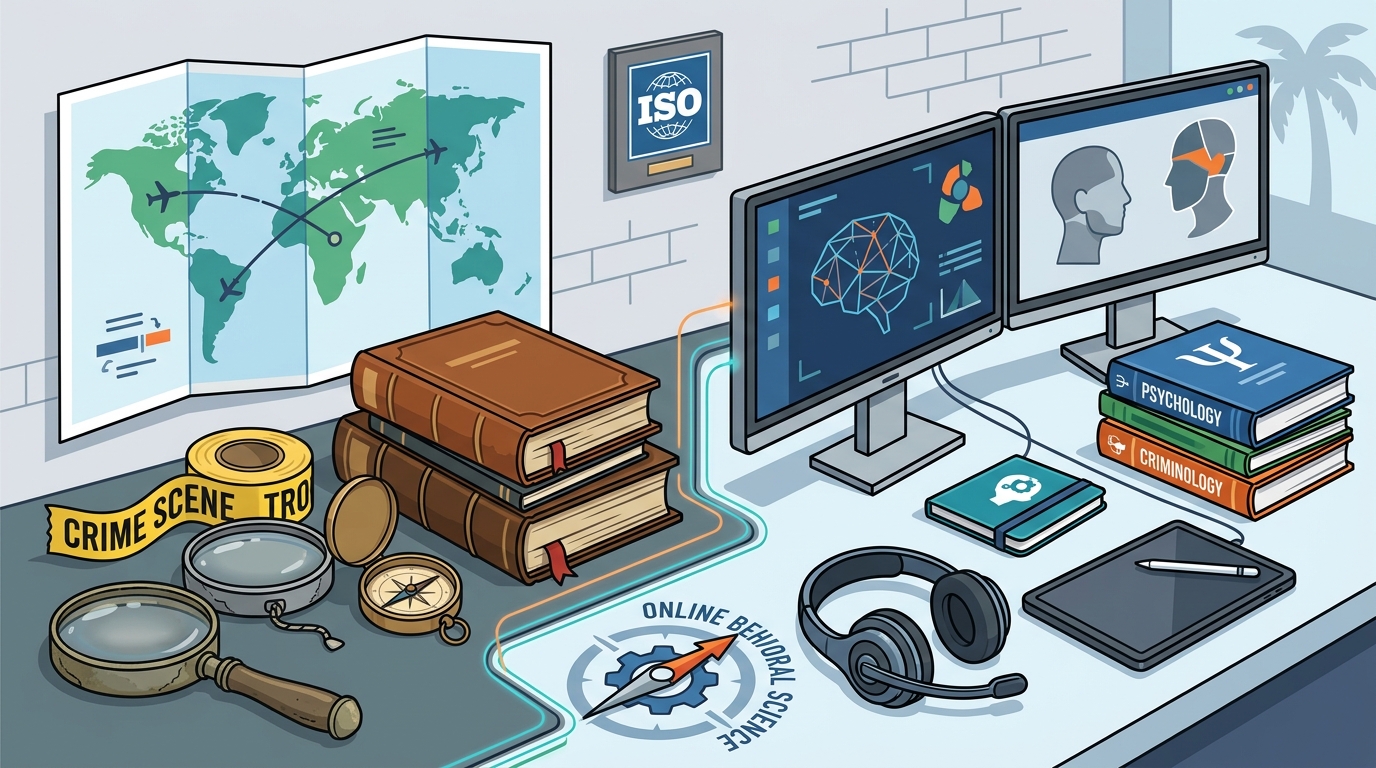
Successful institutions treat online learning not as a video repository but as a dynamic laboratory. This involves integrating synchronous sessions for live analysis and asynchronous modules for deep theoretical study. The goal is to create a virtual classroom that mirrors the intensity and precision of field training. Institutions must define clear learning outcomes that emphasize practical application over rote memorization. For example, a course on deception detection must include video-based case studies where students practice identifying cues in real-time, rather than simply reading about them.
According to data from the Online Learning Consortium, programs that integrate high-touch interaction models see significantly higher completion rates in specialized professional fields. This underscores the need for a pedagogical framework that prioritizes human connection despite the digital medium. The foundation of this transition is the recognition that behavioral science is inherently social, even when studied in isolation.
Selecting the Right Platform for Interactive Learning
The technology stack must support high-fidelity video analysis, secure data handling, and seamless collaboration. Standard learning management systems (LMS) are often insufficient for forensic sciences because they lack the specialized tools required for behavioral analysis. Institutions must evaluate platforms based on their ability to handle large video files, annotate frames, and facilitate breakout room discussions for role-playing exercises.
Key features to prioritize include:
- Video Annotation Tools: The ability to pause, frame-by-frame analyze, and comment on video evidence is critical for courses like nonverbal communication.
- Secure Virtual Classrooms: Platforms that offer encrypted, real-time video conferencing with recording capabilities for later review.
- Integration Capabilities: Seamless connection with external tools for psychological assessments, survey data collection, and case management software.
Evidentia University, for instance, utilizes a dedicated Virtual Classroom environment that supports these specific needs, allowing students to engage with faculty and peers in a secure, professional setting. This infrastructure is essential for maintaining the integrity of sensitive case studies and ensuring that students have access to the same analytical tools they would use in a physical lab.
Curriculum Adaptation for Remote Analysis
Adapting a curriculum for online delivery requires a structural overhaul. Traditional lecture-based models must be replaced with modular, competency-based units. Each module should focus on a specific behavioral skill, such as behavioral cybersecurity or anti-fraud behavioral analysis, and include practical assignments that simulate real-world scenarios.
The curriculum must also address the unique challenges of remote learning, such as digital fatigue and the lack of nonverbal cues between instructor and student. To counter this, instructors should employ varied media formats, including interactive simulations, virtual case files, and live debriefing sessions. For example, a module on geographic profiling might involve students using digital mapping tools to analyze crime data, followed by a live discussion on pattern recognition.
Furthermore, the curriculum should include a strong component on digital ethics and privacy. As students learn to analyze behavior online, they must also understand the legal and ethical boundaries of digital surveillance and data protection. This dual focus ensures that graduates are not only skilled analysts but also responsible practitioners who adhere to professional standards.
Faculty Training and Support Systems
The success of an online transition hinges on the faculty's ability to teach effectively in a digital environment. Many experts in forensic and behavioral sciences are seasoned practitioners but may lack experience with online pedagogy. Comprehensive training programs are essential to equip them with the necessary skills.
Training should cover:
- Virtual Engagement Techniques: Strategies for maintaining student attention and fostering participation in a remote setting.
- Technical Proficiency: Mastery of the platform's features, including video annotation, breakout rooms, and assessment tools.
- Online Assessment Design: Methods for evaluating student performance through digital submissions, peer reviews, and virtual presentations.
Support systems must also be in place to assist faculty throughout the transition. This includes dedicated instructional designers, technical support teams, and peer mentoring programs. Regular feedback loops between faculty and students help identify areas for improvement and ensure that the online experience remains high-quality and responsive to learner needs.
Strategies for Student Engagement and Assessment
Engagement in online behavioral science programs requires active participation and continuous feedback. Passive learning leads to disengagement, which is particularly detrimental in fields that rely on practical skills. Institutions must implement strategies that encourage students to apply their learning in real-time.
Effective strategies include:
- Case-Based Learning: Using real-world forensic cases to drive discussion and analysis. Students work in groups to solve problems, fostering collaboration and critical thinking.
- Role-Playing Simulations: Virtual role-playing exercises allow students to practice interviewing techniques, negotiation strategies, and deception detection in a safe environment.
- Peer Review and Collaboration: Structured peer review processes help students learn from each other and develop a sense of community.
Assessment must also be adapted to the online format. Traditional exams may not adequately measure behavioral competencies. Instead, institutions should use performance-based assessments, such as video submissions of student-led interviews or analysis of provided case materials. These assessments provide a more accurate measure of a student's ability to apply their knowledge in practical situations.
Compliance, Licensure, and Accreditation
For programs in forensic and behavioral sciences, compliance with regulatory bodies is non-negotiable. Online programs must meet the same standards as their on-campus counterparts to maintain credibility and ensure that graduates are eligible for professional licensure.
Key compliance areas include:
- Accreditation: Ensuring that the program is accredited by relevant bodies, such as the Florida Department of Education for institutions operating in the US. This ensures that the curriculum meets rigorous academic and professional standards.
- Data Privacy: Adhering to data protection regulations like GDPR or FERPA, especially when handling sensitive student data or case studies involving real individuals.
- Licensure Requirements: Understanding the specific requirements for professional licensure in different jurisdictions and ensuring that the online program prepares students to meet these criteria.
Institutions must also be transparent about the limitations of online learning for certain practical components. For example, some forensic programs may require in-person practicums or internships to ensure that students gain hands-on experience. Clear communication about these requirements helps students make informed decisions about their education.
Key Takeaways
- Pedagogical Shift: Online behavioral science education must move from passive content delivery to active, simulation-based learning to replicate the nuances of field work.
- Technology Stack: Specialized platforms with video annotation and secure virtual classroom features are essential for high-fidelity behavioral analysis training.
- Curriculum Design: Modular, competency-based curricula that integrate digital ethics and practical case studies are more effective than traditional lecture formats.
- Faculty Support: Comprehensive training and ongoing support for faculty are critical to ensuring effective online instruction and student engagement.
- Compliance: Adherence to accreditation, data privacy, and licensure standards is mandatory to maintain program credibility and graduate eligibility.
- Engagement Strategies: Case-based learning, role-playing simulations, and peer collaboration are key drivers of student success in online behavioral programs.
- Real-World Application: Programs like the Master in Criminal Profiling demonstrate how online formats can successfully prepare students for complex professional roles.
Frequently Asked Questions
How do online programs teach nonverbal communication effectively?
Online programs use high-definition video case studies and annotation tools to allow students to analyze micro-expressions and body language in detail. Synchronous sessions enable real-time feedback from instructors and peers, simulating the interactive nature of in-person training.
Are online forensic science degrees accredited?
Yes, many online programs are accredited by relevant educational bodies. For example, Evidentia University is licensed by the Florida Department of Education, ensuring that its degrees meet rigorous academic standards.
What technology do I need for online behavioral science courses?
Students typically need a reliable computer with a high-speed internet connection, a webcam, and microphone. Specific courses may require access to specialized software for video analysis or data management, which is often provided by the institution.
How are practical skills assessed in an online environment?
Practical skills are assessed through performance-based assignments, such as video submissions of student-led interviews, analysis of case materials, and participation in virtual role-playing simulations. These methods provide a direct measure of a student's ability to apply their knowledge.
Can I specialize in a specific area like anti-fraud analysis online?
Absolutely. Online programs offer specialized certificates and degrees in areas such as Anti-Fraud Behavioral Analysis and Behavioral Cybersecurity, allowing students to tailor their education to their career goals.
What support is available for faculty transitioning to online teaching?
Institutions typically provide comprehensive training on online pedagogy, technical support for platform usage, and access to instructional designers. Peer mentoring programs and regular feedback loops also help faculty refine their teaching strategies.
Is online learning as effective as in-person for forensic sciences?
When designed with high-touch interaction and practical simulations, online learning can be equally effective. The key is to replicate the intensity and precision of field training through technology and engaged instruction.
Start Your Transition to Behavioral Science Excellence
Transitioning to an online learning environment for behavioral and forensic sciences is a complex but rewarding endeavor. By focusing on pedagogical integrity, technological infrastructure, and regulatory compliance, institutions can deliver high-quality education that prepares students for the demands of the modern workforce. Whether you are looking to specialize in Criminal Profiling or Behavioral Economics, the right online program can provide the tools and knowledge you need to succeed.
Take the first step towards advancing your career in behavioral sciences. Explore our program catalog or contact our admissions team to learn more about how we can support your professional journey.