

Master's in Sustainability: Addressing Environmental Challenges and Career Readiness
Sustainability has shifted from a peripheral corporate concern to a central driver of global economic strategy. According to recent industry analyses, organizations that prioritize Environmental, Social, and Governance (ESG) criteria are significantly more resilient during market volatility. This shift is not merely regulatory but structural. Companies now demand leaders who can translate ecological constraints into profitable business models. A Master's in Sustainability provides the rigorous academic foundation and practical toolkit necessary to navigate this complex landscape. It moves beyond theoretical environmental science to focus on actionable business strategy, circular economy principles, and sustainable finance. (About Us Evidentia University)
What Is a Master's in Sustainability?
A Master's in Sustainability is a graduate-level degree designed to equip professionals with the strategic frameworks needed to integrate environmental responsibility into business operations. Unlike traditional environmental science degrees that focus heavily on ecological systems, this program emphasizes the intersection of ecology, economics, and corporate governance. It prepares students to lead organizational change, manage risk, and identify new revenue streams through sustainable practices.
Sustainability is the practice of meeting present needs without compromising the ability of future generations to meet their own needs. In a business context, this definition expands to include long-term value creation for stakeholders, including investors, employees, and communities. The curriculum is built around three pillars: environmental stewardship, social equity, and robust governance structures. By mastering these areas, graduates become essential assets to any organization seeking to future-proof its operations against regulatory changes and resource scarcity.
For professionals already working in finance, consulting, or management, this degree offers a specialized pivot. It allows individuals to apply their existing operational knowledge to the urgent challenges of climate change and resource depletion. The program is typically delivered online, allowing working professionals to continue their careers while acquiring new competencies. This flexibility is crucial for individuals who need to balance immediate professional responsibilities with long-term educational goals.
Core Curriculum: ESG, CSR, and Circular Economy
The heart of a Master's in Sustainability lies in its core curriculum, which is designed to provide immediate applicability to the workplace. Students do not just learn about problems; they learn the specific tools to solve them. The coursework is divided into strategic frameworks that drive modern corporate decision-making.
Environmental, Social, and Governance (ESG) Criteria
ESG criteria have become the standard language for investors and markets to evaluate corporate health. Students learn to identify, measure, and communicate these metrics effectively. This involves understanding how environmental risks, such as carbon emissions, impact financial performance. It also covers social factors, including labor practices and community engagement, and governance aspects like board diversity and executive compensation. Mastery of ESG allows graduates to bridge the gap between operational teams and investor relations.
Corporate Social Responsibility (CSR) Strategy
CSR has evolved from charitable giving to a core business strategy. The curriculum teaches students how to design initiatives that align brand reputation with measurable business value. This includes developing supply chain transparency programs, ethical sourcing policies, and community investment strategies. By treating CSR as a strategic lever rather than a cost center, graduates help organizations build trust and loyalty among consumers who increasingly vote with their wallets.
Circular Economy Principles
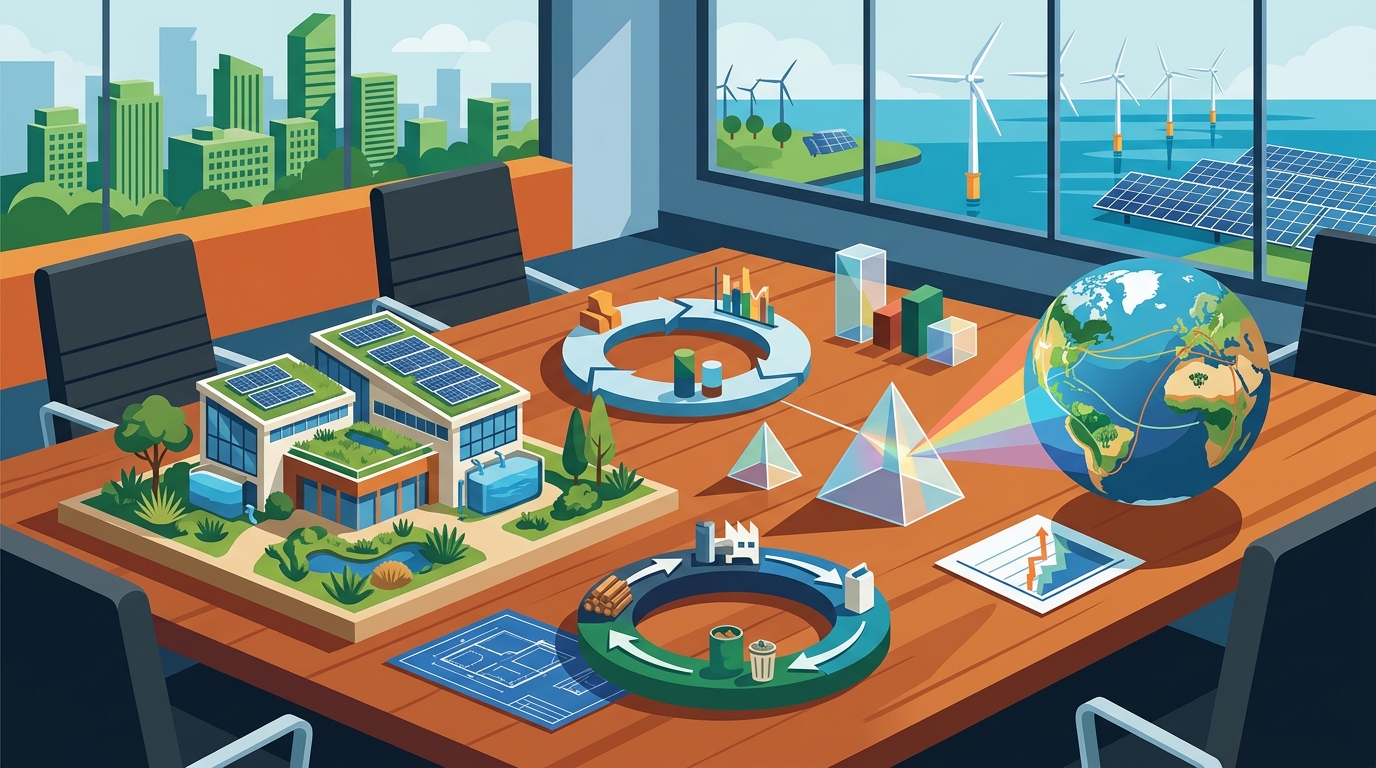
The traditional linear economy, which follows a take-make-dispose model, is no longer viable. Students study the circular economy, which focuses on keeping resources in use for as long as possible. This involves rethinking product design, manufacturing processes, and end-of-life management. By applying circular principles, companies can reduce waste, lower material costs, and create new business models based on service and repair rather than just sales.
Addressing Current Environmental Challenges
Global environmental challenges are intensifying, requiring immediate and innovative solutions. A Master's in Sustainability prepares students to tackle these issues head-on by providing a deep understanding of the systemic drivers behind ecological degradation.
Climate Change and Carbon Management
Climate change is the most pressing environmental challenge of our time. The program covers carbon accounting, reduction strategies, and net-zero roadmaps. Students learn how to set scientifically based targets and track progress using industry-standard frameworks. This knowledge is critical for companies facing increasing pressure from regulators and stakeholders to disclose their climate risks and transition plans.
Resource Scarcity and Water Security
Water scarcity and resource depletion pose significant risks to global supply chains. The curriculum addresses these issues by teaching sustainable resource management techniques. Students learn to assess water footprints, implement conservation technologies, and develop strategies for securing long-term access to critical materials. This proactive approach helps organizations mitigate supply chain disruptions and ensure operational continuity.
Biodiversity and Ecosystem Services
Often overlooked in corporate strategy, biodiversity loss is a critical risk. The program introduces students to the concept of natural capital, which assigns economic value to ecosystem services. By understanding the financial implications of biodiversity loss, graduates can advocate for business practices that protect and restore natural habitats. This holistic view ensures that environmental strategies are comprehensive and resilient.
Career Pathways and Professional Roles
Graduates of a Master's in Sustainability are prepared for a wide range of high-impact roles across various industries. The demand for sustainability professionals is growing rapidly, driven by regulatory requirements and consumer expectations.
| Role | Primary Focus | Key Skills Acquired |
|---|---|---|
| Sustainability Manager | Overseeing corporate sustainability strategy and implementation. | ESG reporting, stakeholder engagement, policy development. |
| ESG Analyst | Evaluating investment opportunities based on sustainability criteria. | Data analysis, risk assessment, financial modeling. |
| CSR Director | Leading corporate social responsibility initiatives. | Program design, community relations, brand strategy. |
| Supply Chain Sustainability Lead | Ensuring ethical and environmental standards in sourcing. | Auditing, supplier management, circular economy principles. |
| Environmental Consultant | Advising clients on regulatory compliance and green strategies. | Regulatory knowledge, strategic planning, communication. |
These roles are not limited to environmental firms. Major corporations in finance, technology, manufacturing, and retail are actively hiring sustainability experts to lead their transition efforts. The degree provides the credibility and expertise needed to step into these leadership positions. Graduates often find themselves at the intersection of finance, operations, and strategy, influencing decisions at the highest levels of their organizations.
Program Structure and Flexibility
Understanding the structure of the program is essential for prospective students. Evidentia University offers a Master's in Sustainability that is designed for working professionals. The program is 100% online, allowing students to learn from anywhere in the world. This format eliminates the need for relocation or rigid class schedules, making it accessible to a global audience.
The curriculum is intensive yet flexible. Students can progress at their own pace, completing coursework that aligns with their professional commitments. The program includes live sessions, interactive modules, and practical projects that simulate real-world business scenarios. This blend of theoretical knowledge and practical application ensures that graduates are job-ready upon completion.
Additionally, the program is bilingual, offering support in both English and Spanish. This inclusivity broadens the network and allows students from diverse linguistic backgrounds to participate fully. The faculty consists of practitioners and academics who bring real-world experience to the classroom. This mentorship is invaluable for students seeking to navigate their career transitions effectively.
Key Takeaways
- Strategic Integration: Sustainability is no longer optional; it is a core component of long-term business value and resilience.
- ESG Mastery: Graduates learn to measure and communicate ESG criteria, a skill highly valued by investors and markets.
- Circular Economy: The curriculum emphasizes waste reduction and resource efficiency, creating new revenue streams.
- Career Versatility: Opportunities exist in finance, consulting, corporate management, and regulatory compliance.
- Online Flexibility: The 100% online format allows working professionals to upskill without pausing their careers.
- Bilingual Support: English and Spanish tutoring ensures accessibility for a diverse student body.
- Expert Faculty: Instruction is provided by industry practitioners and seasoned academics.
Frequently Asked Questions
What is the duration of the Master's in Sustainability program?
The program is designed to be completed in a flexible timeframe, typically allowing students to finish within 12 to 24 months depending on their pace. The self-paced online format accommodates working professionals.
Is the program accredited?
Evidentia University is licensed by the Florida Department of Education. The degree is recognized for its rigorous curriculum and practical focus on applied behavioral science and sustainability.
Do I need a background in environmental science to apply?
No. The program is designed for professionals from diverse backgrounds, including finance, business, and management. The curriculum builds the necessary environmental knowledge from the ground up.
How does the program address climate change?
Students learn carbon accounting, net-zero strategies, and climate risk assessment. These skills enable them to develop actionable plans for reducing their organization's environmental impact.
What career support is available for graduates?
Graduates have access to career counseling, networking opportunities, and alumni resources. The program's focus on practical skills ensures that graduates are well-prepared for leadership roles in sustainability.
Can I study the program in Spanish?
Yes, the program offers flexible language support in both English and Spanish, including tutoring and course materials, to ensure accessibility for all students.
Next Steps
The transition to a sustainable economy is underway, and the demand for skilled professionals is growing. A Master's in Sustainability from Evidentia University offers the strategic tools and credentials needed to lead this change. Whether you aim to become a sustainability manager, ESG analyst, or CSR director, this program provides the foundation for a impactful career.
Take the first step toward transforming your career and contributing to a sustainable future. Visit Evidentia University to explore the curriculum, speak with a counselor, and learn more about the upcoming cohort dates. Do not let this opportunity pass you by. Join a community of forward-thinking professionals who are shaping the future of business and the planet.