

Criminal profiling is one of the most misunderstood professions in law enforcement. Many people believe it is an innate talent reserved for a select few, but the reality is that it is a rigorous academic discipline rooted in forensic psychology and investigative behavior. According to the Bureau of Labor Statistics, the field of investigative psychology is growing as agencies increasingly rely on behavioral analysis to solve complex crimes. To enter this high-stakes profession, you must first understand the educational roadmap that leads from a bachelor's degree to specialized graduate training. (About Us Evidentia University)
Understanding the Role of a Criminal Profiler
Before committing to years of study, it is vital to define what a criminal profiler actually does. Criminal profiling is the process of inferring the likely characteristics of an offender based on the analysis of their crime scene behavior. This is not mind reading. It is a scientific application of forensic psychology, geography, and sociology.
Profilers work to answer three core questions: Who is the offender? Why did they commit the crime? And how might they behave next? This work requires a deep understanding of human motivation, rationalization, and the psychological triggers that lead to violent or predatory behavior. The role is often confused with criminal investigation, but while detectives collect physical evidence, profilers analyze behavioral evidence to narrow down suspect pools.
Historically, this work was conducted within federal agencies like the FBI. Today, state, local, and private sector organizations also employ behavioral analysts. The demand for these specialists is rising as cybercrimes and white-collar fraud become more sophisticated, requiring a blend of traditional profiling skills and modern digital forensics.
The Educational Pathway: From Bachelor's to Master's
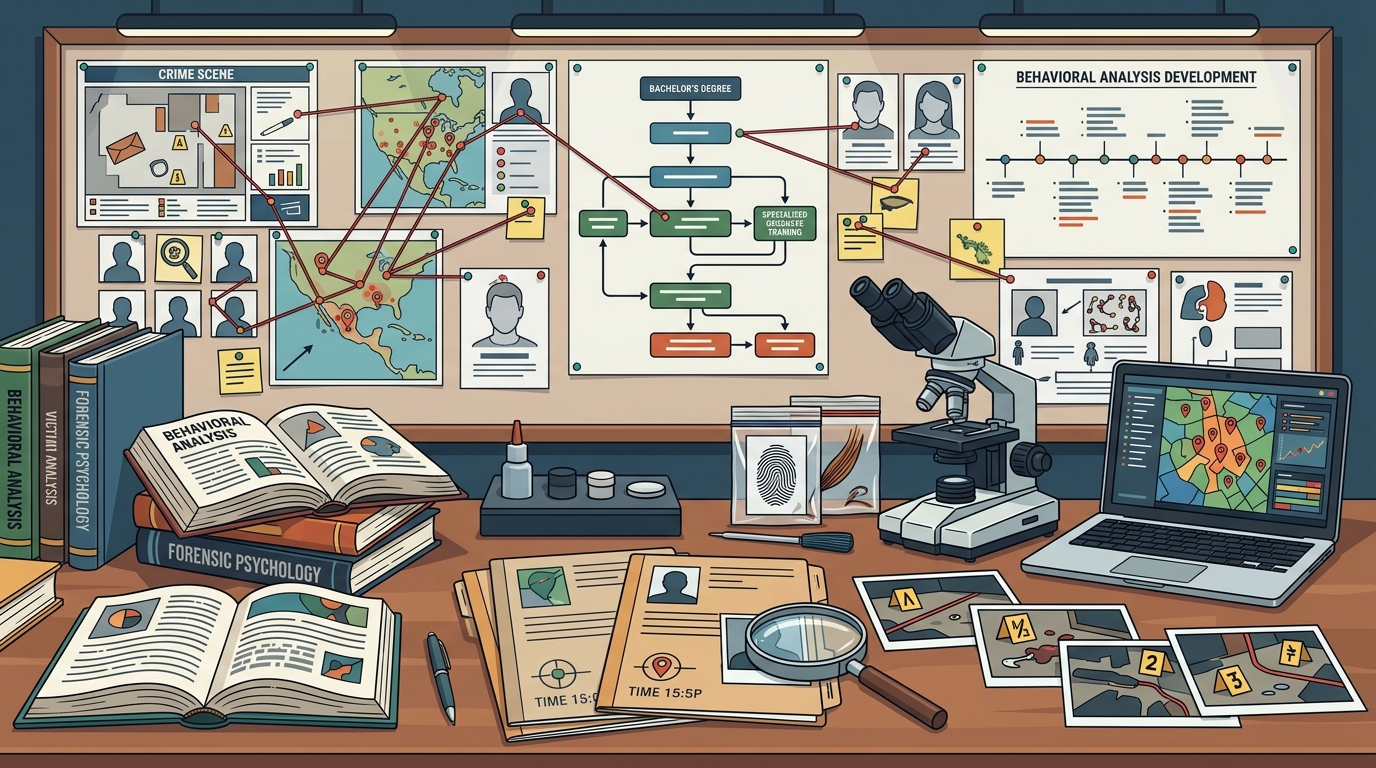
Becoming a certified criminal profiler is a multi-stage process. There is no single "profiler license." Instead, credibility is built through academic rigor and professional experience. The foundation begins with a bachelor's degree in psychology, criminology, or forensic science. However, this is merely the entry ticket.
The critical step is obtaining a graduate degree. Most federal agencies and reputable private firms require a master's degree at a minimum, with many preferring a doctorate. This advanced education provides the theoretical framework necessary to understand deviant behavior, statistical analysis, and legal procedures. Without this academic grounding, practical training is often ineffective because the practitioner lacks the context to interpret behavioral data correctly.
For those already working in law enforcement or security, online graduate programs offer a flexible pathway to specialize without leaving their current job. This allows professionals to apply theoretical concepts to real-world cases immediately, reinforcing learning through practical application.
Choosing the Right Online Graduate Program
Not all online degrees are created equal. The field of behavioral science is niche, and you must choose a program that focuses specifically on the intersection of psychology and criminal behavior. General psychology degrees often lack the forensic depth required for profiling.
When evaluating programs, look for curricula that cover criminal profiling, behavioral economics, and nonverbal communication. These subjects provide the toolkit for analyzing deception and motivation. For example, Evidentia University offers a specialized Master in Criminal Profiling that is designed for professionals seeking to understand the behavioral aspects of crime. This program focuses on the psychological underpinnings of criminal acts rather than just the legal outcomes.
Another critical area is behavioral cybersecurity. As crime moves online, the need for profilers who understand digital behavior is skyrocketing. A Master in Behavioral Cybersecurity & Cybercriminology equips students with the skills to profile cybercriminals, analyzing their digital footprints and psychological drivers. This specialization is increasingly valuable in both public and private sectors.
Accreditation and licensure are also paramount. Ensure the program is licensed by the relevant state department of education, such as the Florida Department of Education, which oversees institutions like Evidentia University. This ensures that your degree meets national standards for academic integrity and professional recognition.
Certification and Professional Credentials
One of the most common misconceptions is that you can simply take a test to become a "certified profiler." In reality, professional certification in this field is often tied to broader forensic psychology or investigative certifications. Organizations like the American Board of Professional Psychology offer board certification in forensic psychology, which is a gold standard for credibility.
However, for those focusing specifically on the behavioral analysis of fraud and deception, specialized certificates are emerging. The Certificate in Antifraud Behavioral Analysis provides targeted training in identifying deception and understanding the motivations behind financial crimes. This is particularly useful for professionals working in compliance, corporate security, or forensic accounting.
It is important to note that certification is not a substitute for experience. Most profiling roles require years of field experience in law enforcement or investigation before a candidate is considered for a behavioral analysis position. The academic credentials serve to validate your theoretical knowledge, while your fieldwork validates your practical judgment.
Career Preparation and Field Experience
Education alone does not make a profiler. The path to becoming a certified criminal profiler typically involves starting in a law enforcement or investigative role. Many profilers begin as police officers, detectives, or military intelligence analysts. This background provides the necessary context for understanding crime scenes, evidence collection, and legal procedures.
Networking is also crucial. Joining professional organizations such as the FBI's Behavioral Analysis Unit alumni networks or the International Association of Forensic Mental Health Professionals can open doors to mentorship and job opportunities. These connections provide insights into the industry that are not available through textbooks.
Additionally, consider specializing in a niche area. Whether it is cybercrime, white-collar fraud, or violent crime, specialization makes you more valuable to employers. The Master in Anti-Fraud Behavioral Analysis is an example of how targeted graduate study can position you for specific high-demand roles in corporate and financial sectors.
Key Takeaways
- Graduate Education is Mandatory: A master's degree in forensic psychology or a related behavioral science is the minimum requirement for most professional profiling roles.
- Online Flexibility: Online programs like those at Evidentia University allow working professionals to specialize in criminal profiling and behavioral cybersecurity without pausing their careers.
- Experience Precedes Profiling: Most successful profilers have prior experience in law enforcement, investigation, or military intelligence before transitioning to behavioral analysis.
- Specialization Matters: Certificates in antifraud behavioral analysis or cybersecurity provide a competitive edge in the growing field of digital and financial crime investigation.
- Accreditation is Critical: Ensure your online program is licensed by a recognized state department of education to maintain academic and professional credibility.
- Networking is Essential: Professional organizations and alumni networks are vital for mentorship and career advancement in this niche field.
- Continuous Learning: The field of behavioral science evolves rapidly. Ongoing education through certificates and advanced programs is necessary to stay current.
Frequently Asked Questions
Can I become a criminal profiler with only an online degree?
Yes, an online master's degree from an accredited institution is fully recognized for professional roles. However, you must also have relevant field experience in law enforcement or investigation to be hired as a profiler.
What is the difference between criminal profiling and forensic psychology?
Forensic psychology is a broad field applying psychological principles to legal issues. Criminal profiling is a specialized subset that focuses specifically on inferring offender characteristics from crime scene behavior.
Do I need to be a police officer to become a profiler?
While many profilers are former law enforcement officers, it is not a strict requirement. Some agencies hire behavioral analysts from academic or private sector backgrounds, particularly for cybercrime and fraud cases.
How long does it take to complete an online master's in criminal profiling?
Most online master's programs take approximately one to two years to complete, depending on the course load and whether you study full-time or part-time.
What is the salary of a criminal profiler?
Salaries vary widely based on experience and employer. Federal agents and senior behavioral analysts can earn significant salaries, while private sector consultants may charge high hourly rates for their expertise.
Is certification required to practice as a profiler?
There is no single government-issued license for "criminal profiler." Credibility is built through advanced degrees, professional certifications in forensic psychology, and extensive field experience.
What skills are most important for a criminal profiler?
Key skills include analytical thinking, understanding of human behavior, attention to detail, knowledge of legal procedures, and the ability to communicate complex psychological concepts clearly.
Start Your Journey in Behavioral Science
The path to becoming a certified criminal profiler is challenging but rewarding. It requires a commitment to academic excellence and practical experience. By choosing the right online graduate program, you can gain the specialized knowledge needed to analyze criminal behavior and contribute to public safety. Explore the Master's programs at Evidentia University to find the specialization that aligns with your career goals. Take the first step toward a career in forensic behavioral science today.