

Transitioning to Online Behavioral Science Learning: A Strategic Guide
The landscape of forensic and behavioral education has shifted dramatically. According to recent industry data, the global e-learning market is projected to reach $457 billion by 2026, driven largely by the demand for specialized, flexible professional development. For professionals in crime, security, and business behavior, this shift is not merely a convenience but a necessity. The ability to study advanced concepts like criminal profiling or behavioral economics without geographic constraints allows practitioners to integrate learning directly into their careers. This guide outlines the precise steps required to successfully transition into this rigorous online academic environment.
Step 1: Define Your Specialization and Career Goals
Behavioral sciences are broad. Before enrolling, you must identify the specific niche that aligns with your professional trajectory. Are you interested in the psychological underpinnings of criminal behavior, or the application of behavioral economics in corporate strategy? Clarity here prevents scope creep and ensures your education yields a direct return on investment.
For those in law enforcement or private investigation, Criminal Profiling offers deep insights into offender behavior. Conversely, corporate security officers may find Behavioral Cybersecurity more relevant for understanding insider threats. The first step is mapping your current role to the specific behavioral competencies you lack. This gap analysis determines whether you need a master's degree for long-term advancement or a certificate for immediate skill application.
Step 2: Evaluate Accreditation and Institutional Credibility
In the online education space, credibility is paramount. Unlike general degrees, specialized forensic and behavioral programs often rely on institutional licensure and faculty expertise to validate their quality. You must verify that the institution is licensed by relevant educational bodies. For example, Evidentia University is licensed by the Florida Department of Education (CIE #9097), ensuring that its programs meet strict regulatory standards for graduate-level behavioral science.
Furthermore, examine the faculty. The transition to online learning is only effective if the instruction comes from practitioners, not just academics. Look for programs where instructors include former FBI agents, retired law enforcement officers, and industry strategists. Their real-world experience bridges the gap between theoretical models and practical application in the field.
Step 3: Assess Technical and Learning Infrastructure
Online behavioral science education requires more than just a stable internet connection. It demands a robust virtual classroom environment capable of supporting complex multimedia content, including video analysis of nonverbal cues and interactive case studies. When evaluating programs, test their Help Center and virtual classroom accessibility before committing.
Key technical requirements include:
- Asynchronous Access: The ability to review lectures and case materials at your own pace is critical for working professionals.
- Interactive Platforms: Look for platforms that allow for direct interaction with faculty and peers, simulating a classroom dynamic.
- Resource Libraries: Access to digital libraries containing forensic journals, behavioral studies, and legal precedents.
According to research on adult learning, self-paced environments increase retention rates by up to 25% when combined with structured mentorship. Ensure the platform you choose supports this balance.
Step 4: Select the Appropriate Credential Level
Your transition strategy depends heavily on the credential you pursue. The market currently offers two primary pathways: Master's degrees and Professional Certificates. Each serves a distinct purpose in your career evolution.
| Credential Type | Duration | Best For | Key Focus |
|---|---|---|---|
| Master's Degree | ~1 Year | Long-term career advancement, leadership roles | Deep theoretical framework, research, comprehensive analysis |
| Professional Certificate | 12 Weeks | Skill acquisition, immediate job application | Practical tools, behavioral indicators, rapid implementation |
| Advanced Program | 8 Weeks | Specialized niche expertise | Targeted psychological perspectives on specific crimes |
If you are already established in your career, a Certificate in Antifraud Behavioral Analysis may provide the quickest ROI. It focuses on the human side of fraud detection, teaching you to read people beyond data flags. For those seeking to lead departments or transition into high-level consulting, a Master of Science in Criminal Profiling offers the necessary depth.
Step 5: Master the Online Learning Workflow
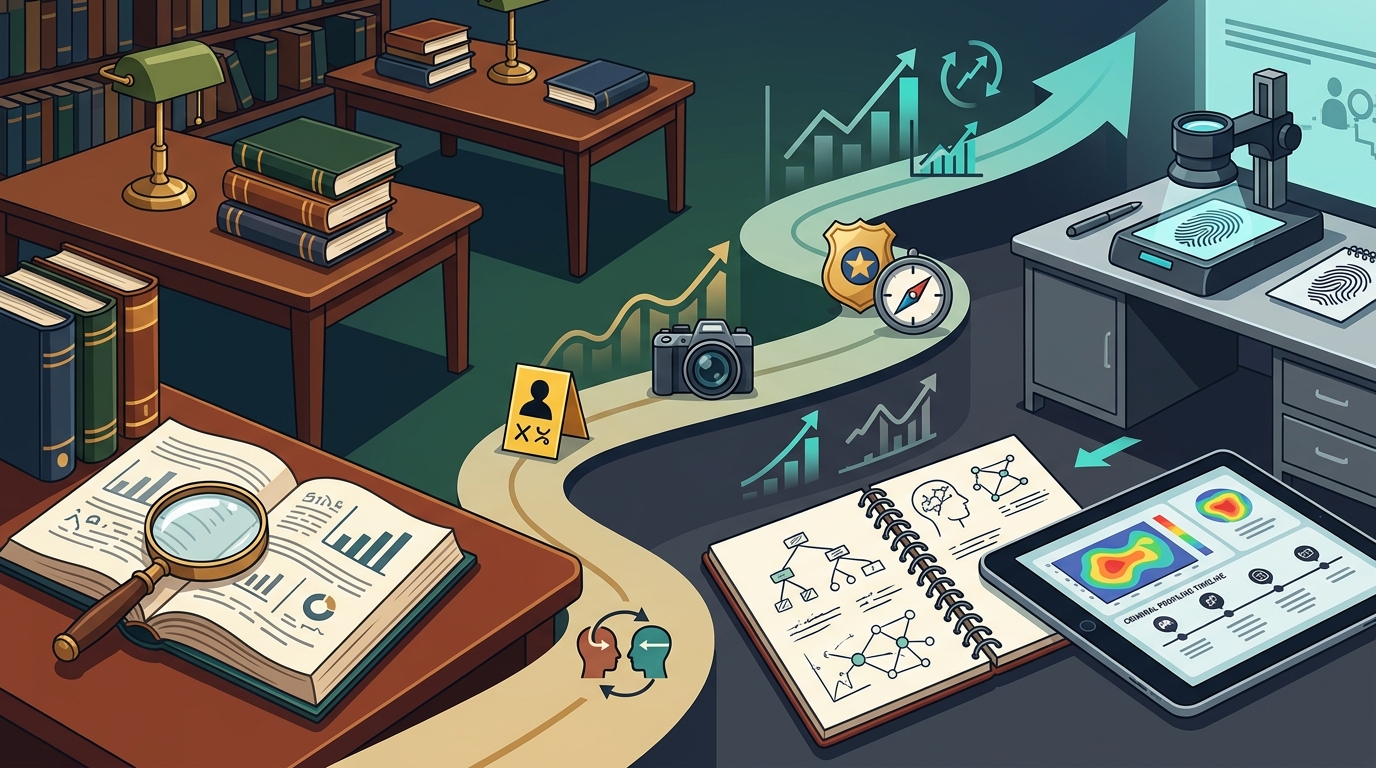
Transitioning to online learning requires a shift in discipline. Without the physical structure of a campus, you must create your own academic environment. This involves time blocking, active participation in virtual discussions, and consistent engagement with course materials.
Effective online learners in behavioral sciences often adopt the following workflow:
- Pre-Session Review: Read case studies or theoretical papers before live or recorded sessions to formulate questions.
- Active Note-Taking: Use digital tools to map behavioral patterns and psychological theories in real-time.
- Peer Collaboration: Engage with classmates from diverse geographic and professional backgrounds to broaden your perspective on behavioral norms.
- Post-Session Application: Immediately apply one concept from the lesson to your current work environment to reinforce learning.
This structured approach ensures that you are not just consuming information but internalizing it. The Academics framework at leading institutions is designed to support this cycle of learning and application.
Step 6: Integrate Behavioral Theory with Professional Practice
The final step in your transition is the practical integration of your new skills. Behavioral science is not an abstract discipline; it is a tool for decision-making. Whether you are analyzing nonverbal communication in negotiations or assessing risk in corporate security, your online education must translate to tangible outcomes.
Consider the Certificate in Sustainability as an example of cross-disciplinary application. While not forensic, it teaches you to apply behavioral economics to organizational change, a skill highly valued in modern leadership. Similarly, understanding Behavioral Cybersecurity allows you to predict and mitigate human error in IT security protocols.
By focusing on these integration points, you ensure that your online education remains relevant and impactful. The goal is not just to earn a credential but to become a more effective practitioner in your field.
Key Takeaways
- Accreditation Matters: Verify institutional licensure, such as the Florida Department of Education (CIE #9097), to ensure program validity.
- Faculty Expertise: Prioritize programs taught by former FBI agents and retired law enforcement professionals for practical insights.
- Credential Choice: Choose between Master's degrees for long-term strategy and 12-week certificates for immediate skill application.
- Technical Readiness: Ensure access to a robust virtual classroom and help center for seamless learning.
- Active Integration: Apply behavioral concepts to your current work to reinforce learning and demonstrate value.
- Market Growth: The e-learning market is projected to reach $457 billion by 2026, indicating strong industry support for online specialization.
- Flexibility: Online programs offer 100% online, self-paced options, allowing you to study in English or Spanish.
Frequently Asked Questions
How long does it take to complete an online behavioral science master's degree?
Most online master's programs in behavioral science, such as those offered by Evidentia University, are designed to be completed in approximately one year. These programs are 100% online and offer bilingual support in English and Spanish.
What is the difference between a certificate and a master's degree in this field?
A certificate, such as the Certificate in Antifraud Behavioral Analysis, is a focused 12-week program designed for rapid skill acquisition in a specific area. A master's degree provides a comprehensive, graduate-level education over a longer period, covering broader theoretical and practical aspects of the discipline.
Are online forensic science degrees accredited?
Accreditation varies by institution. It is crucial to verify that the program is licensed by relevant educational bodies. For instance, Evidentia University is licensed by the Florida Department of Education, ensuring its programs meet specific regulatory standards.
Can I study behavioral economics online?
Yes, many institutions offer online master's degrees and certificates in behavioral economics. These programs focus on decision-making, negotiation, and behavior in organizations, often taught by industry experts.
What technical skills do I need for online behavioral science studies?
You need a reliable internet connection and a device capable of running video conferencing and learning management systems. Familiarity with digital note-taking and collaboration tools is also beneficial for engaging with course materials and peers.
How does online learning prepare me for a career in criminal profiling?
Online programs provide access to case studies, video analysis of nonverbal cues, and mentorship from former FBI agents. This practical exposure allows you to develop profiling skills in a flexible environment that mirrors real-world investigative challenges.
Start Your Transition Today
The transition to online learning in behavioral and forensic sciences is a strategic move that can redefine your career. By following these steps, you ensure that your education is not only accessible but also deeply relevant to your professional goals. Whether you are interested in Criminal Profiling, Sustainability, or Behavioral Cybersecurity, the right program is available to support your journey.
Take the first step by exploring our Catalog or talking to a counselor to find the perfect fit for your career path.