

Which Master's Degree Is Best for a Career in Behavioral Cybersecurity and Cybercriminology?
The intersection of human psychology and digital threat landscapes is rapidly becoming the most critical frontier in modern security. According to recent industry reports, over 80% of all cyber breaches involve some form of human error or social engineering manipulation. This statistic highlights a fundamental truth: technology alone cannot stop a determined attacker. You must understand the mind behind the keyboard. For professionals looking to pivot into this high-demand niche, choosing the right graduate program is not just an academic decision. It is a strategic career move that defines your ability to predict, prevent, and investigate digital crimes. (About Us Evidentia University)
Understanding the Field
Behavioral cybersecurity and cybercriminology are not merely buzzwords. They represent a specialized convergence of forensic psychology, criminology, and information security. Traditional cybersecurity focuses on firewalls, encryption, and network architecture. While these are essential, they are static defenses against dynamic human threats. Behavioral cybersecurity focuses on the attacker's motivation, the victim's vulnerability, and the investigator's analytical approach. (Schools at Evidentia University)
Cybercriminology is the study of criminal behavior in digital spaces. It applies criminological theories to understand why individuals commit cybercrimes. This includes everything from financial fraud to cyberstalking and hacktivism. By understanding the "why," security professionals can build more resilient systems and more effective investigative strategies. This field requires a mindset that blends technical literacy with deep psychological insight. (Certificate in Sustainability Evidentia)
Comparing the Top Programs
When evaluating master's degrees for this career path, you will often encounter two primary options: a specialized Master in Behavioral Cybersecurity & Cybercriminology or a broader Master in Criminal Profiling with a focus on digital crimes. Both paths offer distinct advantages depending on your career goals. The following table summarizes the core differences to help you decide.
| Feature | MS in Behavioral Cybersecurity & Cybercriminology | MS in Criminal Profiling |
|---|---|---|
| Primary Focus | Digital threat actors, online deception, and cyber-incident investigation. | General criminal behavior, offender profiling, and investigative psychology. |
| Target Audience | Security analysts, fraud investigators, and digital forensics experts. (Cybercriminology and Security) | Law enforcement, federal agents, and serious crime investigators. |
| Key Skills | Behavioral analysis of digital footprints, cyber threat intelligence. | Crime scene analysis, offender motivation, and case linkage. |
| Delivery Format | 100% online, self-paced or cohort-based. (Cybersecurity Master s) | 100% online, self-paced or cohort-based. |
The Evidentia University model offers both tracks, allowing you to choose based on whether you want to specialize in the digital realm or maintain a broader criminal investigative scope. The specialized degree is often preferred for corporate security roles, while the profiling degree is ideal for those aiming for federal law enforcement or serious crime units.
Curriculum Deep Dive
A rigorous master's program in this field must bridge the gap between abstract psychological theory and practical digital application. The curriculum should not just teach you how to use security tools. It must teach you how to think like the attacker and the victim.
Core Components of Behavioral Cybersecurity
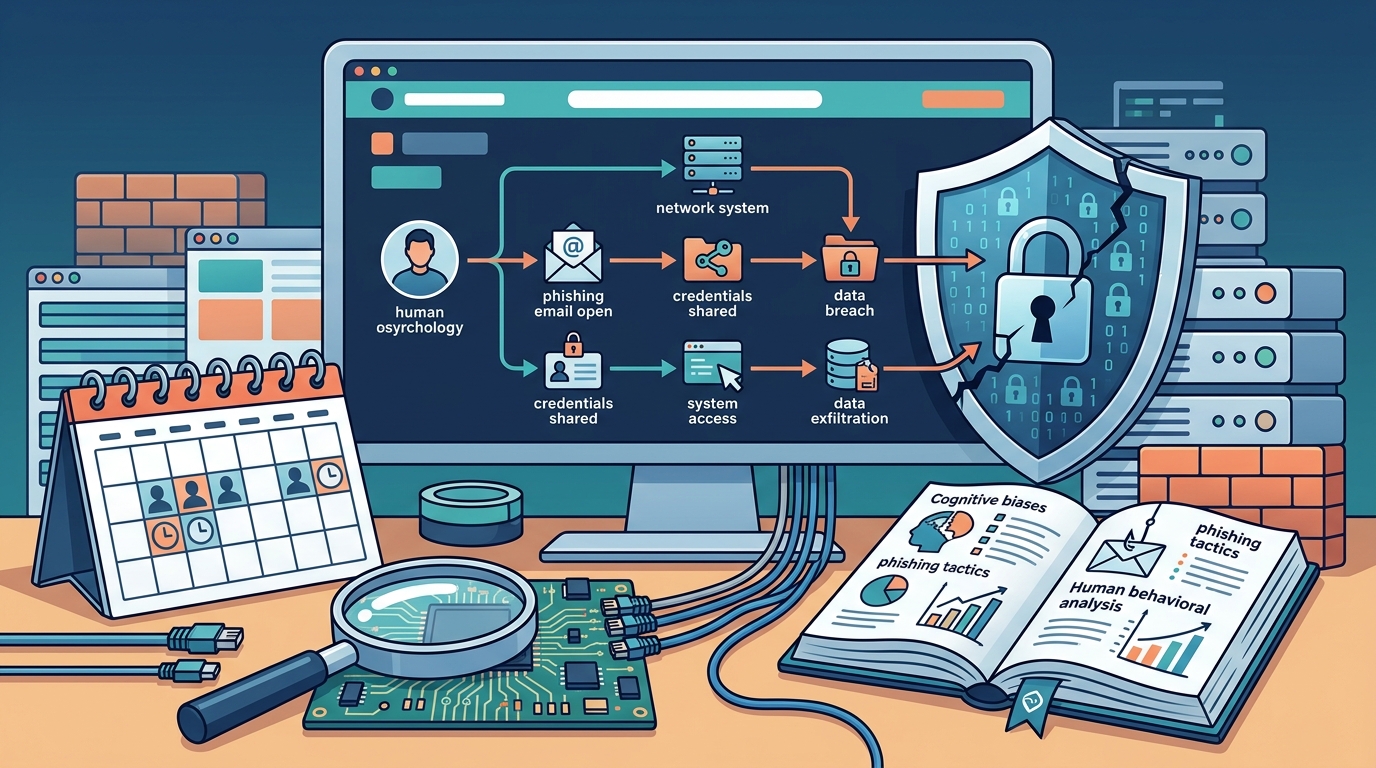
Behavioral cybersecurity is the application of behavioral science to the protection of digital assets. It involves analyzing the human element of security. This includes understanding how social engineers manipulate trust, how insider threats develop, and how to detect deception in digital communications. Courses typically cover:
- Cybercriminal Behavioral Analysis: Studying the patterns, motivations, and rationalizations of cybercriminals.
- Digital Deception Detection: Techniques for identifying lies and manipulation in emails, chats, and video calls.
- Threat Intelligence: Using behavioral data to predict future attacks and identify potential threat actors.
Core Components of Criminal Profiling
Criminal profiling is the process of inferring the characteristics of an offender based on the nature of their crimes. In the context of cybercrime, this involves analyzing digital crime scenes. This includes server logs, communication metadata, and behavioral footprints. The curriculum focuses on: (MS in Criminal)
- Offender Motivation: Understanding the psychological drivers behind violent and non-violent crimes.
- Geographic Profiling: Analyzing the spatial behavior of offenders to predict their location or next target.
- Investigative Psychology: Applying psychological principles to improve investigative decision-making.
Faculty and Methodology
The quality of your education depends heavily on the expertise of your instructors. In this niche, academic theory must be grounded in real-world experience. Look for programs taught by practitioners who have worked in the field. For example, former FBI agents and forensic psychologists bring invaluable insights that textbooks cannot provide.
At Evidentia University, the faculty includes retired FBI Supervisory Special Agents and forensic criminologists. This ensures that students learn from individuals who have actually investigated complex cybercrimes and violent offenses. The methodology emphasizes practical application over rote memorization. Students engage in case studies, behavioral analysis exercises, and simulated investigations.
This approach is critical because cybercrime is evolving rapidly. Static knowledge becomes obsolete quickly. Dynamic, experience-based learning ensures that graduates can adapt to new threats and techniques. The faculty also includes researchers from institutions like George Mason University and MIT GovLab, bringing academic rigor to the practical application of behavioral science.
Career Outcomes and Roles
Earning a master's degree in behavioral cybersecurity or cybercriminology opens doors to specialized roles that are in high demand. These positions often require a blend of technical understanding and psychological insight. Common career paths include:
- Cyber Threat Intelligence Analyst: Analyzing the behavior of threat actors to predict and prevent attacks.
- Insider Threat Specialist: Identifying and mitigating risks posed by employees within an organization.
- Digital Forensics Investigator: Examining digital evidence to support legal proceedings and internal investigations.
- Fraud Behavioral Analyst: Detecting and preventing financial fraud through behavioral pattern recognition.
- Cybercrime Investigator: Working with law enforcement or private firms to track down cybercriminals.
According to industry data, professionals with specialized skills in behavioral analysis command higher salaries and have greater job security. The demand for these roles is growing as organizations realize that human factors are the weakest link in their security chain. By mastering this niche, you position yourself as an expert in a critical area of modern security.
Key Takeaways
- Specialization Matters: The MS in Behavioral Cybersecurity & Cybercriminology is specifically designed for digital threats, while MS in Criminal Profiling offers a broader investigative scope.
- Human Element is Key: Over 80% of breaches involve human error, making behavioral analysis a critical skill for modern security professionals.
- Practical Faculty: Programs taught by former FBI agents and forensic experts provide real-world insights that academic theory alone cannot offer.
- High Demand: The intersection of psychology and cybersecurity is a growing field with specialized roles and competitive salaries.
- Flexible Learning: Many top programs, including those at Evidentia, offer 100% online formats, allowing professionals to study while working.
- Global Recognition: Degrees from accredited institutions like Evidentia University, licensed by the Florida Department of Education, are recognized internationally.
- Career Versatility: Skills in behavioral analysis are applicable in corporate security, law enforcement, fraud prevention, and legal consulting.
Frequently Asked Questions
What is the difference between behavioral cybersecurity and traditional cybersecurity?
Traditional cybersecurity focuses on technical defenses like firewalls and encryption. Behavioral cybersecurity focuses on the human element, analyzing the motivations and behaviors of attackers and victims to prevent and investigate breaches.
Is a master's degree necessary for a career in cybercriminology?
While not always mandatory, a master's degree provides specialized knowledge and credibility. It is often required for senior roles in threat intelligence, fraud analysis, and federal law enforcement.
Can I earn this degree online?
Yes, many reputable institutions, including Evidentia University, offer 100% online master's programs in behavioral cybersecurity and cybercriminology. These programs are designed for working professionals.
What kind of jobs can I get with an MS in Criminal Profiling?
Graduates can pursue roles in law enforcement, federal agencies, private investigation, and corporate security. The skills are also valuable in legal consulting and risk management.
How long does it take to complete the master's program?
The master's programs at Evidentia University are designed to be completed in approximately one year. The format is flexible, allowing students to progress at their own pace.
What is the tuition cost for these programs?
Tuition varies by institution and program. Evidentia University offers competitive pricing for its master's degrees. You can find detailed pricing information on their Tuition / Price page.
Do I need a background in psychology or computer science?
While helpful, it is not always required. Many programs accept students from diverse backgrounds, providing foundational courses to bridge any knowledge gaps.
Next Steps
Choosing the right master's degree is a pivotal step in your career. Whether you opt for the specialized MS in Behavioral Cybersecurity & Cybercriminology or the broader MS in Criminal Profiling, the key is to select a program that offers practical, expert-led instruction. Evidentia University provides both tracks, licensed by the Florida Department of Education, with a faculty of former FBI agents and forensic experts.
Take the first step toward a specialized career in digital security and investigation. Contact Evidentia University today to speak with a counselor and explore your options. Your future in behavioral cybersecurity starts with the right education.