

Applying for a graduate degree in behavioral or forensic sciences requires a strategic approach that goes beyond standard academic metrics. According to recent industry data, the demand for professionals with specialized behavioral analysis skills has grown significantly, with organizations increasingly prioritizing candidates who understand the psychological underpinnings of crime and corporate fraud. This guide outlines the precise steps to secure admission into a reputable online institution, ensuring your application stands out to admissions committees and future employers. (About Us Evidentia University)
Understand the Specialized Fields
Behavioral and forensic sciences are broad disciplines that require specific academic focus. Before applying, you must define your career trajectory. Criminal profiling involves analyzing crime scene evidence to identify offender characteristics. Nonverbal communication analysis focuses on interpreting body language and facial expressions to detect deception. Anti-fraud behavioral analysis applies psychological principles to financial misconduct and corporate compliance. (Certificate in Sustainability Evidentia)
Criminal profiling is the systematic process of identifying the likely characteristics of an offender based on the nature of their crimes. This field requires a strong foundation in psychology and criminology. Similarly, behavioral economics studies how psychological factors influence economic decisions in business and policy. Understanding these distinctions is critical for selecting the correct master's program. (10 Best Careers in)
Reputable institutions often structure their programs around these specific niches. For instance, some universities offer a Master of Science in Criminal Profiling, while others focus on Behavioral Cybersecurity. You must align your academic goals with the specific curriculum offered. Look for programs that emphasize both theoretical knowledge and practical investigative skills.
Choose the Right Program
Not all online programs are created equal. Accreditation and licensure are paramount in forensic sciences. In the United States, ensure the institution is licensed by the relevant state department of education. For example, Evidentia University is licensed by the Florida Department of Education, which adds a layer of legitimacy to its online degrees. This licensure ensures that the curriculum meets strict academic and professional standards.
Faculty expertise is another critical factor. Programs taught by former law enforcement agents, FBI behavioral analysts, or forensic psychologists offer unparalleled practical insight. Review the faculty profiles to see if they have real-world experience in the field you wish to enter. A professor who has worked in the FBI Behavioral Analysis Unit brings a depth of knowledge that textbooks alone cannot provide.
Consider the format and flexibility of the program. Many top-tier online programs offer 100% online, self-paced options. This flexibility allows working professionals to balance their careers with their education. Check if the program offers bilingual support, as many forensic contexts require proficiency in multiple languages. A 12-week certificate or a full master's degree should fit your schedule without compromising academic rigor.
Prepare Your Application Materials
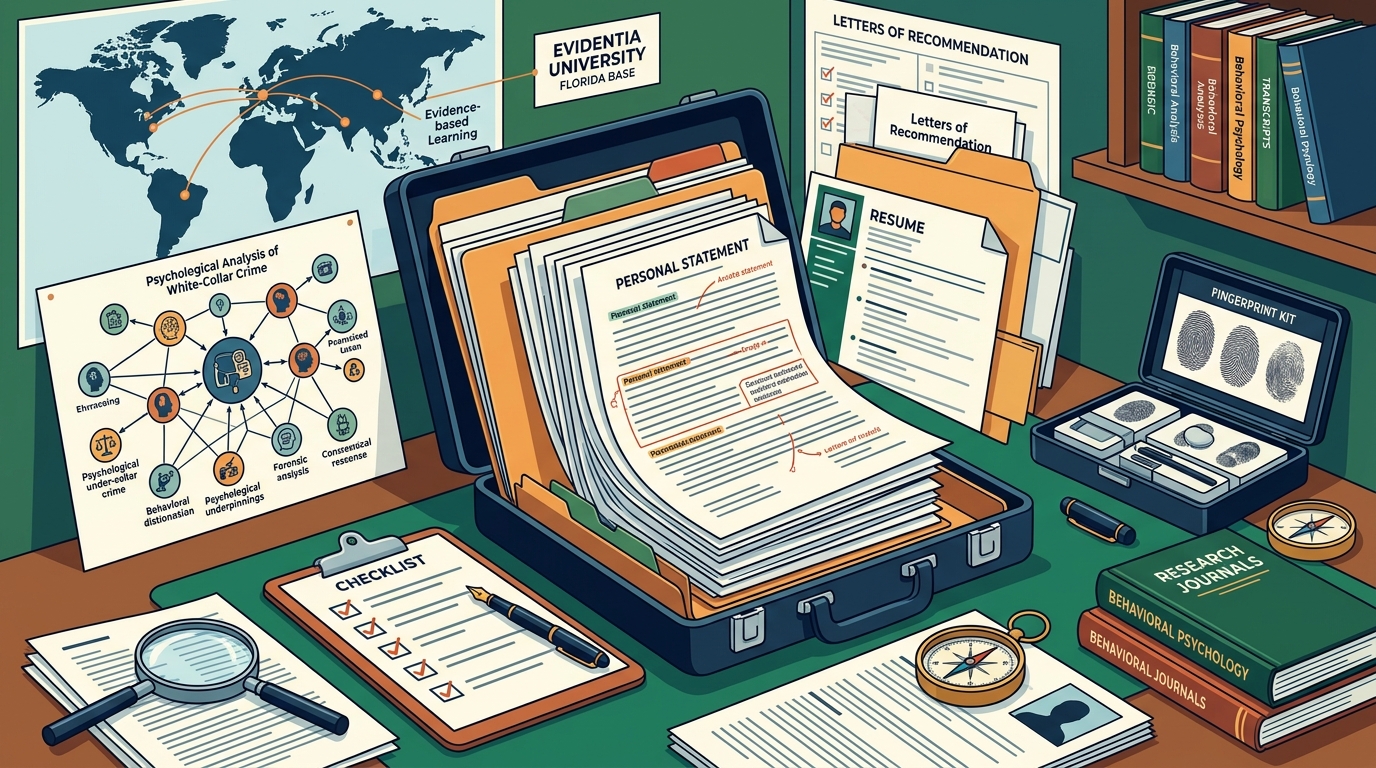
The application process for behavioral sciences often differs from traditional graduate programs. You will typically need to submit a resume, transcripts, and a statement of purpose. Your statement of purpose should clearly articulate your motivation for studying behavioral science. Explain how your previous experiences have prepared you for this specialized field.
Letters of recommendation should come from professionals who can attest to your analytical skills and ethical judgment. If you have worked in law enforcement, compliance, or human resources, seek recommendations from supervisors who can speak to your ability to handle sensitive information. Academic references are also valuable if you have a background in psychology or criminology.
Some programs may require an interview as part of the application process. This interview is not just a formality; it is an assessment of your communication skills and ethical reasoning. Be prepared to discuss case studies or ethical dilemmas you have encountered in your professional life. Your ability to think critically under pressure is a key indicator of your potential success in the field.
Highlight Professional Experience
Admissions committees value practical experience in behavioral sciences. If you are an auditor, highlight your experience with risk assessment and fraud detection. If you are a corporate security professional, emphasize your work with insider threat detection. Your professional background demonstrates your commitment to the field and your ability to apply theoretical concepts to real-world scenarios.
For those without direct experience, relevant coursework or volunteer work can substitute. Participating in community policing initiatives or assisting with compliance audits can provide valuable context. Frame your experiences in terms of behavioral analysis. Show how you have used observation, interviewing, or data analysis to solve problems.
Consider starting with a professional certificate if you are new to the field. A Certificate in Antifraud Behavioral Analysis or a Certificate in Sustainability can provide a foundational understanding of the subject matter. These shorter programs allow you to test your interest in the field before committing to a full master's degree. They also demonstrate to admissions committees that you are serious about your career transition.
Submit and Follow Up
Once you have gathered all your materials, submit your application through the institution's official portal. Ensure that all documents are in the correct format and meet the specified deadlines. Late applications are often rejected regardless of the quality of the candidate.
After submission, follow up with the admissions office to confirm receipt of your documents. This step shows your professionalism and attention to detail. If you are invited for an interview, prepare thoroughly. Research the program's specific focus and align your answers with their mission.
Accepting an offer is just the beginning. Review the curriculum and faculty resources before enrolling. Engage with current students or alumni to get a sense of the program's culture and support systems. A strong network can be invaluable as you progress through your degree and enter the job market.
Key Takeaways
- Accreditation is critical; verify licensure with the state department of education.
- Faculty with real-world experience, such as former FBI agents, provide superior practical training.
- Align your career goals with specific program niches like criminal profiling or anti-fraud analysis.
- Professional certificates can serve as a stepping stone to full master's degrees.
- Highlight practical experience in audits, security, or compliance in your application.
- Interviews assess ethical reasoning and communication skills, not just academic knowledge.
- Follow up with admissions to demonstrate professionalism and ensure document completeness.
Frequently Asked Questions
What is the difference between a master's degree and a certificate in behavioral sciences?
A master's degree provides a comprehensive, graduate-level education with 36 US credits, suitable for long-term career advancement. A certificate offers a focused, short-term intensive program, typically lasting 12 weeks, ideal for skill enhancement or career pivoting.
Are online forensic science degrees respected by employers?
Yes, provided the institution is properly licensed and accredited. Degrees from institutions like Evidentia University, which is licensed by the Florida Department of Education, are recognized for their rigorous curriculum and practical focus.
Do I need a background in psychology to apply?
While a psychology background is helpful, it is not always mandatory. Many programs accept professionals from diverse fields such as law, accounting, and security, provided they demonstrate a strong interest and relevant professional experience.
How long does it take to complete an online master's degree?
Most online master's programs in behavioral sciences are designed to be completed in approximately one year of full-time study. Part-time options may extend this timeline, offering greater flexibility for working professionals.
What career paths are available with a degree in behavioral sciences?
Graduates can pursue careers in criminal profiling, corporate security, fraud investigation, compliance, and behavioral cybersecurity. The skills learned are applicable in law enforcement, financial institutions, and government agencies.
Is financial aid available for online graduate programs?
Financial aid options vary by institution and country. Many online programs offer tuition pricing structures that are competitive with traditional degrees. It is advisable to contact the financial aid office for specific details on scholarships and payment plans.
Can I study behavioral sciences in Spanish?
Yes, some institutions offer bilingual support and tutoring in both English and Spanish. This flexibility allows students to access high-quality education regardless of their primary language.
Start Your Journey in Behavioral Sciences
Applying for a graduate degree in behavioral or forensic sciences is a significant step toward a specialized and impactful career. By understanding the field, choosing the right program, and preparing your materials carefully, you can position yourself for success. Take the first step today by exploring the available programs and connecting with academic counselors to discuss your goals.
Talk to a Counselor to learn more about our master's degrees and certificates. Visit Evidentia University to explore our curriculum and faculty.