

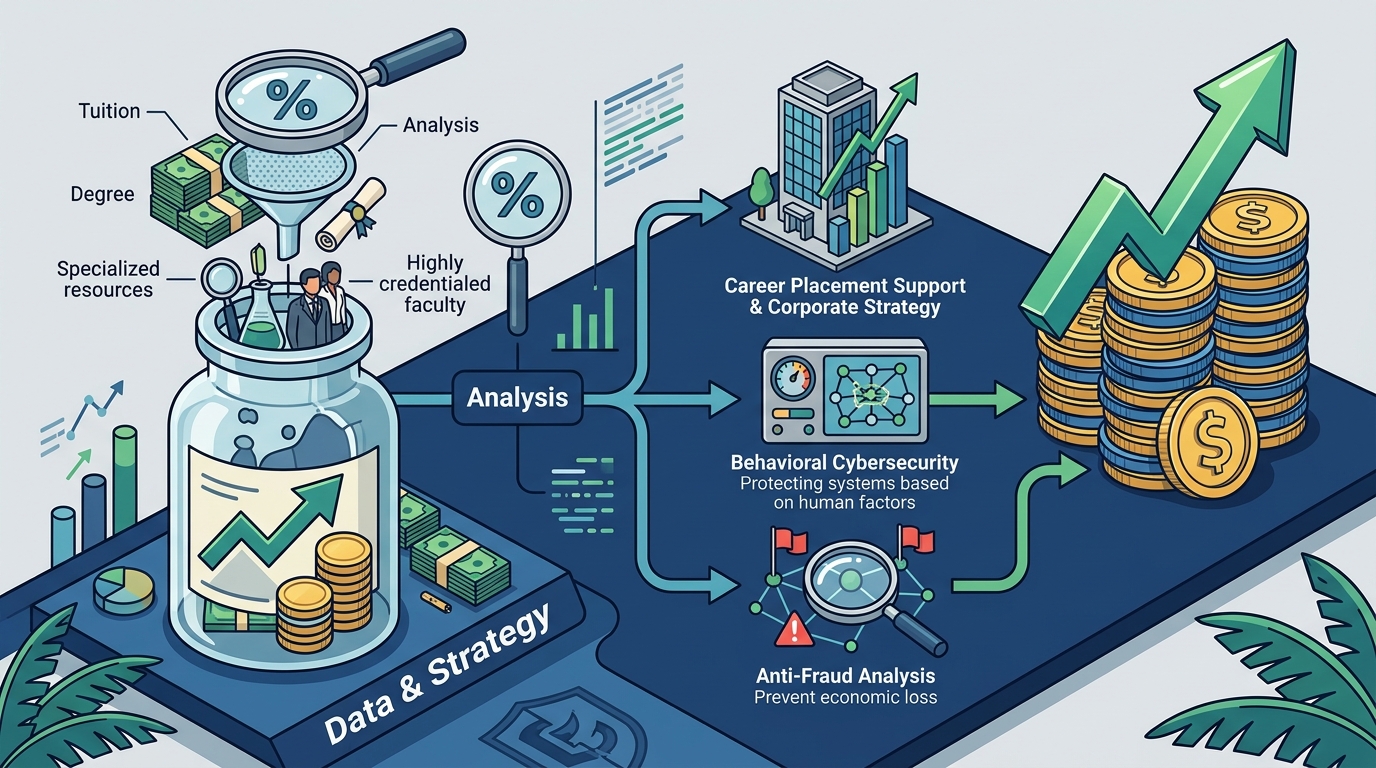
The global market for behavioral insights is expanding rapidly, with organizations increasingly prioritizing the psychological drivers behind consumer and employee decisions. According to recent industry projections, the behavioral economics sector is expected to see significant growth through 2026, driven by the integration of data science and psychological profiling in corporate strategy. This surge in demand has made advanced degrees in behavioral economics and related fields, such as behavioral cybersecurity and anti-fraud analysis, highly valuable for professionals seeking to bridge the gap between human behavior and economic outcomes. Understanding the true cost of these programs requires looking beyond tuition to include the value of specialized faculty, practical application, and career placement support. (About Us Evidentia University)
Curriculum Value and Specialization
Behavioral economics is not merely a theoretical discipline. It is the study of how psychological, cognitive, emotional, cultural, and social factors affect the economic decisions of individuals and institutions. When pursuing a master's degree in this field, you are investing in a curriculum that blends rigorous economic theory with practical psychological application. At institutions like Evidentia University, the focus shifts toward actionable insights, such as the Master in Behavioral Economics, which prepares students to analyze decision-making processes in complex environments. (Certificate in Sustainability Evidentia)
The value of the degree is often tied to its specialization. For instance, a general behavioral economics degree might focus on market trends, while a specialized track in Behavioral Cybersecurity & Cybercriminology addresses the human element of digital threats. This distinction is critical because employers are willing to pay a premium for candidates who can interpret data through a behavioral lens. The curriculum typically includes modules on nonverbal communication analysis, fraud detection, and the psychology of negotiation. These skills are directly transferable to high-stakes industries like finance, law enforcement, and corporate security.
Furthermore, the integration of forensic methodologies into behavioral studies adds a layer of authority to the degree. Students learn to apply the FBI Methodology in Criminal Profiling to economic crimes, creating a unique skill set that is rare in the job market. This interdisciplinary approach ensures that graduates are not just theorists but practitioners capable of solving real-world problems involving fraud, cybercrime, and organizational behavior.
Tuition and Financial Structure
Understanding the cost structure of a master's program requires a clear view of tuition models, payment plans, and potential financial aid. Online graduate programs in behavioral sciences often offer flexible pricing structures designed to accommodate working professionals. For example, Evidentia University provides a transparent Tuition/Pricing page that outlines the costs associated with their various programs, including the Master in Behavioral Economics.
Typically, the cost is calculated per credit hour or as a flat rate for the entire program. Flat-rate structures are increasingly popular in online education because they allow students to complete their degree in a predictable timeframe without worrying about fluctuating credit loads. This model is particularly beneficial for those who wish to accelerate their studies during summer terms or take heavier loads in the fall and spring.
It is also important to consider the hidden costs of education, such as technology fees, library access, and certification exam preparation. However, many online programs bundle these resources into the tuition fee. Additionally, professionals pursuing these degrees often receive employer sponsorship, viewing the education as a direct investment in their career advancement. The return on investment (ROI) is often realized within two to three years of graduation, as graduates move into senior analytical or consulting roles.
Career ROI and Salary Potential
The financial return on a master's degree in behavioral economics is substantial, particularly when compared to traditional economics degrees. Graduates often find themselves in roles such as behavioral analyst, fraud investigator, or cybersecurity consultant. According to data from the Bureau of Labor Statistics, professionals in related fields like psychology and economics see steady growth in median salaries, with senior roles commanding significant premiums.
In the specific niche of anti-fraud and behavioral analysis, the demand is even more acute. The rise in digital fraud has created a shortage of professionals who understand both the technical and psychological aspects of deception. A graduate with a Certificate in Antifraud Behavioral Analysis or a master's in this field can command higher starting salaries due to the specialized nature of the work. Companies are willing to pay for expertise that can directly reduce financial losses from fraud and cybercrime.
Moreover, the flexibility of online learning allows students to maintain their current income while studying. This dual-income strategy significantly improves the net ROI of the degree. When you factor in the avoidance of relocation costs and the ability to network globally through virtual classrooms, the financial barrier to entry becomes much more manageable. The long-term career trajectory in behavioral sciences is upward, with opportunities to move into executive positions in risk management and strategic planning.
Comparing Online vs. Traditional Models
When evaluating the cost structure, it is essential to compare online programs with traditional on-campus degrees. Online programs generally offer lower total costs due to the absence of commuting, housing, and campus facility fees. Additionally, the asynchronous nature of online learning allows students to tailor their study schedules to their work commitments, reducing the opportunity cost of lost wages.
However, the quality of education is the primary concern for many prospective students. Accredited online programs, such as those offered by Evidentia University, maintain the same rigorous academic standards as their on-campus counterparts. The key difference lies in the delivery method. Online programs leverage advanced virtual classrooms and digital resources to facilitate interaction and learning. This model is particularly effective for behavioral sciences, where case studies and digital simulations can replicate real-world scenarios effectively.
Another factor to consider is the network you build. Online programs often attract a diverse, global cohort of professionals, providing a broader networking opportunity than a local campus. This global network can be invaluable for career advancement, offering connections across different industries and regions. The Academics page at Evidentia University highlights the comprehensive support systems in place for online students, ensuring they receive the same level of guidance and mentorship as traditional students.
Key Takeaways
- Specialized Value: Degrees in behavioral economics are valued for their interdisciplinary approach, combining psychology, economics, and forensic analysis.
- Tuition Models: Online programs often use flat-rate tuition structures, providing cost predictability and flexibility for working professionals.
- High ROI: Graduates in anti-fraud and behavioral cybersecurity roles often see rapid salary growth due to high demand and specialized skill sets.
- Cost Efficiency: Online learning reduces hidden costs like relocation and commuting, improving the net financial return on the degree.
- Accreditation Matters: Ensure the program is accredited and recognized by industry bodies to maximize career opportunities and salary potential.
- Employer Sponsorship: Many professionals secure employer funding for these degrees, viewing them as essential for career advancement in risk and strategy roles.
- Global Networking: Online cohorts provide access to a diverse, international network of peers and industry leaders.
Frequently Asked Questions
How much does a master's in behavioral economics typically cost?
The cost varies by institution, but online programs often offer flat-rate tuition models that range from $10,000 to $25,000 for the entire degree. Programs like those at Evidentia University provide transparent pricing on their Tuition/Pricing page to help students plan their finances.
Is an online master's degree in behavioral economics respected by employers?
Yes, accredited online degrees are widely respected, particularly in fields like cybersecurity and fraud analysis where practical skills are prioritized over campus presence. Employers value the self-discipline and technical proficiency demonstrated by online graduates.
What is the difference between behavioral economics and behavioral cybersecurity?
Behavioral economics focuses on the psychological factors influencing economic decisions and market behavior. Behavioral cybersecurity applies these principles to understand and prevent cybercrimes by analyzing the human element of security breaches. Both fields share a foundation in understanding human behavior but differ in their application.
Are there financial aid options for online graduate programs?
Many online programs offer financial aid, scholarships, and employer sponsorship assistance. It is advisable to consult with the university's financial aid office to explore options specific to your situation and location.
How long does it take to complete a master's in behavioral economics online?
Most online master's programs can be completed in 18 to 24 months, depending on the course load and whether you study full-time or part-time. Accelerated tracks may allow for faster completion.
What career paths are available for graduates?
Graduates can pursue careers as behavioral analysts, fraud investigators, cybersecurity consultants, risk managers, and strategic planners. The skills are also valuable in marketing, user experience design, and public policy.
Do I need a background in economics to pursue this degree?
While a background in economics or psychology is helpful, many programs accept students from diverse academic backgrounds. Foundational courses are often provided to ensure all students have the necessary knowledge base.
Next Steps
Investing in a master's degree in behavioral economics is a strategic move for professionals looking to specialize in the intersection of human behavior and economic outcomes. By choosing a reputable online program, you can access high-quality education, flexible scheduling, and significant career advancement opportunities. To learn more about the specific costs and curriculum details, visit the Evidentia University homepage or contact their admissions team directly. Take the first step toward a specialized career in behavioral sciences today.