

Which Master's Degree Is Best for a Career in Behavioral Cybersecurity and Cybercriminology?
The intersection of human psychology and digital threat landscapes has created one of the most urgent demands in modern information security. According to recent industry analyses, the global cybersecurity workforce gap continues to widen, with millions of unfilled positions requiring specialized skills that go beyond technical coding. This shortage highlights a critical need for professionals who understand the human element of cybercrime. As organizations face increasingly sophisticated social engineering attacks, the ability to analyze criminal behavior has become as vital as firewall configuration. This guide explores the specific master's degree pathways designed to bridge this gap, focusing on the programs offered by Evidentia University and how they align with current market demands.
Understanding Behavioral Cybersecurity
Behavioral cybersecurity is a multidisciplinary field that applies psychological principles to the prevention, detection, and investigation of cybercrimes. It moves beyond the traditional view of hackers as purely technical actors, recognizing them as individuals driven by specific motivations, biases, and behavioral patterns. Cybercriminology is the study of the criminal behavior associated with digital technologies, encompassing everything from identity theft to cyberstalking.
Traditional IT security programs often focus on the "how" of protection, such as encryption standards and network architecture. However, they frequently neglect the "why" of the attacker. Understanding the psychological drivers behind a phishing campaign or a ransomware attack allows security teams to predict threats and design more effective countermeasures. This approach is essential for roles in threat intelligence, digital forensics, and corporate security strategy.
Professionals in this space must possess a dual competency. They need the technical literacy to understand digital environments and the behavioral science expertise to interpret human actions within those environments. This combination is rare and highly valued by employers looking to mitigate insider threats and external attacks alike.
Evidentia University's Specialized Degrees
Evidentia University has positioned itself at the forefront of this niche by offering graduate-level programs specifically tailored to the behavioral aspects of crime and security. The university recognizes that standard psychology or computer science degrees do not adequately address the unique challenges of the digital age. Therefore, they have developed specialized tracks that integrate forensic science with behavioral analysis.
The primary pathway for this career is the Master in Behavioral Cybersecurity & Cybercriminology. This degree is designed for professionals who want to understand the criminal mind behind the screen. It does not replace technical training but complements it by providing the analytical framework needed to profile cybercriminals and understand their operational behaviors.
For those interested in the broader context of digital threats, Evidentia also offers the Master in Nonverbal and Deceptive Behavior. While this program is broader, its principles are directly applicable to cybersecurity, particularly in the areas of social engineering detection and interview techniques for digital forensics. Additionally, the Master in Anti-Fraud Behavioral Analysis provides a focused approach on financial crimes, which are a significant subset of cybercrime.
Curriculum and Methodology
The curriculum for a master's in behavioral cybersecurity is rigorous and interdisciplinary. Students engage with topics that range from criminal profiling to the psychology of online harassment. The learning methodology at Evidentia University emphasizes practical application over abstract theory. This is evident in their Virtual Classroom structure, which allows for immersive, case-based learning.
Key components of the coursework typically include:
1. Criminal Profiling Techniques
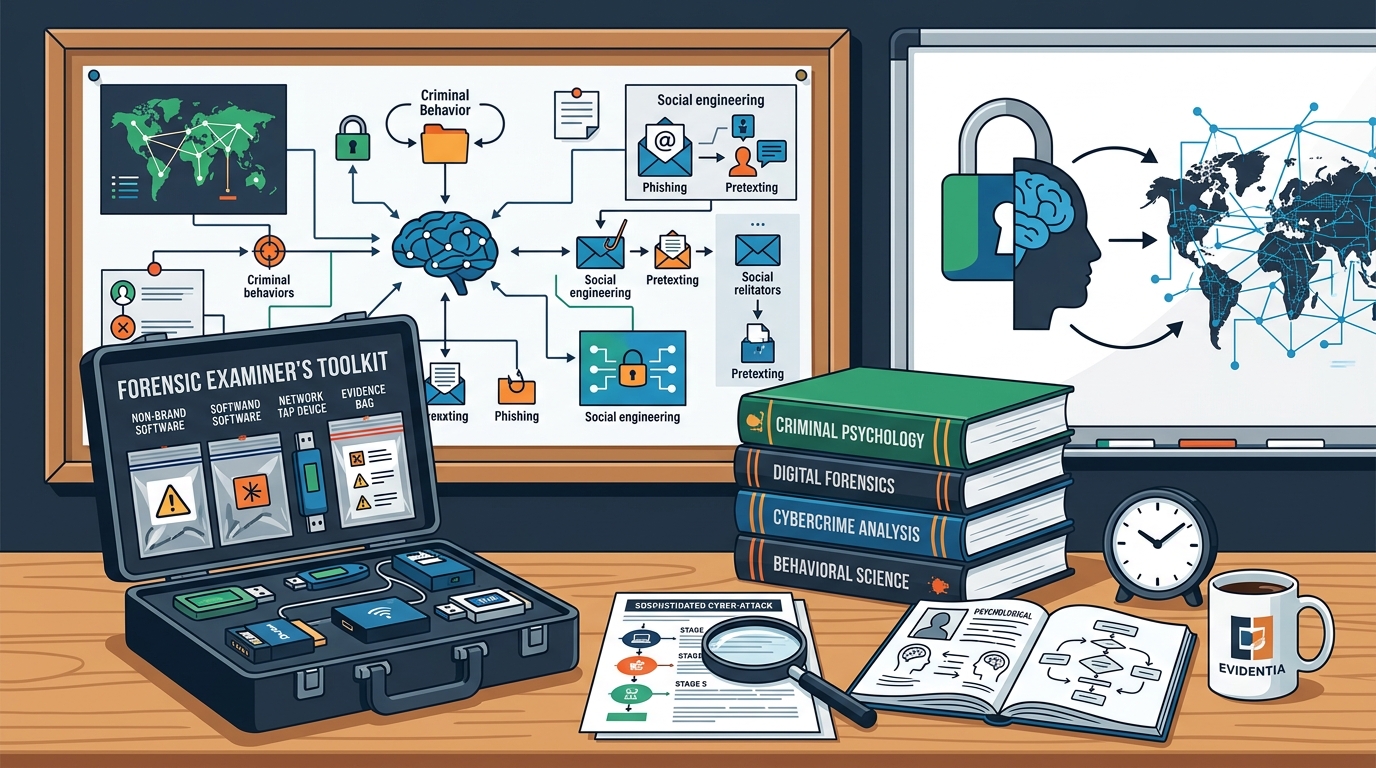
Students learn to construct behavioral profiles of cybercriminals based on digital footprints. This involves analyzing the modus operandi of attackers to predict their next moves. The methodology often draws from established frameworks used by law enforcement agencies, adapted for the digital domain.
2. Nonverbal Communication in Digital Contexts
Even in text-based communications, behavioral cues exist. The study of nonverbal cues helps professionals detect deception in emails, chat logs, and video conferences. This skill is critical for fraud investigation and corporate security interviews.
3. Geographic and Behavioral Profiling
Understanding where a criminal operates is as important as understanding why they operate. Courses on Geographic Profiling teach students how to map criminal activity to physical locations, aiding in the identification and apprehension of cybercriminals.
This structured approach ensures that graduates are not just theorists but practitioners capable of immediate contribution to security teams. The integration of FACS: Codifing the Facial Movements and other advanced behavioral analysis tools provides a scientific basis for detecting deception and intent.
Career Outcomes and Roles
Graduates with a master's in behavioral cybersecurity and cybercriminology enter a specialized job market with high demand. The roles are diverse, spanning law enforcement, corporate security, and private consulting. The unique skill set allows professionals to bridge the gap between technical security teams and legal or investigative bodies. (Cybercriminology and Security)
Common career paths include:
- Cybercriminal Profiler: Working with law enforcement or private firms to analyze the behavior of hackers and predict future attacks.
- Insider Threat Analyst: Identifying employees who may pose a risk to organizational security based on behavioral changes and psychological stressors. (MS in Criminal)
- Fraud Investigator: Specializing in financial cybercrimes, using behavioral analysis to uncover complex fraud schemes.
- Security Consultant: Advising companies on how to protect against social engineering and human-centric attacks.
The demand for these roles is driven by the increasing sophistication of cyber threats. As attacks become more targeted, the ability to understand the attacker's psychology becomes a key defensive strategy. Professionals in this field are often involved in high-stakes investigations where traditional technical evidence is insufficient.
Degree Comparison Matrix
Choosing the right master's degree depends on your specific career goals. Below is a comparison of the relevant programs offered by Evidentia University to help you decide which path aligns with your professional aspirations.
| Program Name | Primary Focus | Best For Career In | Key Methodology |
|---|---|---|---|
| Master in Behavioral Cybersecurity & Cybercriminology | Criminal behavior in digital spaces | Cyber Profiling, Threat Intelligence | Behavioral Analysis, Digital Forensics |
| Master in Nonverbal and Deceptive Behavior | Reading human cues and deception | Interviewing, Social Engineering Defense | FACS, Nonverbal Communication |
| Master in Anti-Fraud Behavioral Analysis | Financial fraud and scam detection | Fraud Investigation, Compliance | Behavioral Economics, Pattern Recognition |
| Master in Criminal Profiling | General criminal behavior profiling | Law Enforcement, Investigative Psychology | FBI Methodology, Personality Profiling |
While the Master in Criminal Profiling offers a broader foundation in general criminal behavior, the Master in Behavioral Cybersecurity & Cybercriminology is specifically tailored to the digital realm. If your goal is to work directly with cyber threats, the specialized degree provides more relevant tools and terminology. However, the Master in Nonverbal and Deceptive Behavior is an excellent complement for those focusing on the interpersonal aspects of security, such as preventing social engineering attacks.
Key Takeaways
- Specialized Knowledge: A master's in behavioral cybersecurity provides unique insights into the psychology of digital criminals, a skill set not found in standard IT degrees.
- High Market Demand: The global cybersecurity workforce shortage creates significant opportunities for professionals with specialized behavioral analysis skills. (MS in Global)
- Interdisciplinary Approach: The field combines psychology, criminology, and technology, requiring a broad and adaptable skill set.
- Practical Application: Programs like those at Evidentia University emphasize real-world case studies and behavioral profiling techniques.
- Career Versatility: Graduates can pursue roles in law enforcement, corporate security, fraud investigation, and private consulting.
- Focus on Human Element: Understanding the attacker's mindset is crucial for predicting and preventing sophisticated cyberattacks.
- Advanced Methodologies: Training includes advanced tools like FACS and geographic profiling, adapted for digital contexts.
Frequently Asked Questions
Is a master's degree necessary for a career in behavioral cybersecurity?
While entry-level technical roles may not require a master's, specialized positions in cyber profiling and behavioral analysis typically do. Advanced degrees provide the theoretical framework and practical skills needed to understand complex criminal behaviors.
What is the difference between cybercriminology and behavioral cybersecurity?
Cybercriminology is the study of the criminal behavior itself, including motivations and patterns. Behavioral cybersecurity applies this understanding to prevent and mitigate threats by analyzing the human factors involved in security breaches.
Can I work in this field without a technical background?
Yes, but technical literacy is essential. These programs are designed for professionals who understand the digital environment but want to add a behavioral layer to their expertise. You do not need to be a programmer, but you must understand how digital systems work.
How does Evidentia University's program differ from traditional psychology degrees?
Traditional psychology degrees focus on clinical or general behavioral theories. Evidentia's programs are specifically tailored to forensic and security applications, focusing on criminal profiling, fraud detection, and digital threat analysis.
What kind of jobs can I get with a Master in Anti-Fraud Behavioral Analysis?
Graduates often work as fraud investigators, compliance officers, or consultants for financial institutions. They specialize in detecting and preventing financial cybercrimes using behavioral analysis techniques.
Are these programs available online?
Yes, Evidentia University offers 100% online programs, including the Virtual Classroom access, allowing students to study from anywhere while maintaining a rigorous academic standard.
What is the duration of the master's programs?
The duration varies by program, but most master's degrees are designed to be completed in a timeframe that accommodates working professionals. Continuing education certificates are shorter, typically lasting 12 weeks or less.
Next Steps for Your Career
The field of behavioral cybersecurity is evolving rapidly, and the demand for skilled professionals is only growing. Choosing the right master's degree is the first step toward a impactful career in this space. Evidentia University offers the specialized training needed to succeed in this niche.
Explore the Master in Behavioral Cybersecurity & Cybercriminology to see how its curriculum aligns with your goals. For more information on admissions and program details, contact Evidentia University directly or speak with a counselor to discuss your career path.