

Behavioral economics and forensic analysis are rapidly expanding fields that bridge psychology, data science, and criminal justice. According to recent industry reports, the global market for behavioral analytics is projected to grow significantly through 2026, driven by the need for deeper insights into human decision-making. For beginners, navigating the vast landscape of online education can be daunting. This guide curates the most authoritative and accessible resources to help you start your journey in these complex disciplines. (Data Sources Economics)
Understanding Behavioral Economics
Behavioral economics is the study of how psychological influences and cognitive biases affect the economic decisions of individuals and institutions. Unlike traditional economics, which assumes rational actors, this field acknowledges that humans often make irrational choices. For beginners, the goal is to understand these deviations from rationality.
Core Concepts to Master
Before diving into courses, familiarize yourself with foundational concepts. Loss aversion is a key principle where people prefer avoiding losses to acquiring equivalent gains. Another critical concept is anchoring, where individuals rely too heavily on the first piece of information offered. Understanding these basics will help you evaluate which resources offer the most practical value.
Recommended Online Resources
Several platforms offer high-quality content for those new to the field. Evidentia University provides a specialized Certificate in Behavioral Economics designed for professionals seeking to apply these principles in business contexts. This program focuses on the practical application of behavioral insights rather than just theoretical models.
For a broader academic perspective, look for courses that integrate psychology with financial decision-making. Resources that emphasize real-world case studies are particularly valuable. They allow you to see how biases play out in actual market scenarios. This approach builds a stronger foundation than abstract theory alone. (Bachelor s in)
Forensic Analysis for Beginners
Forensic analysis is the application of scientific methods and techniques to the circumstances of a crime. It involves examining physical evidence, digital footprints, and behavioral patterns. For beginners, the field can seem intimidating due to its technical nature. However, starting with behavioral forensic analysis provides a more accessible entry point.
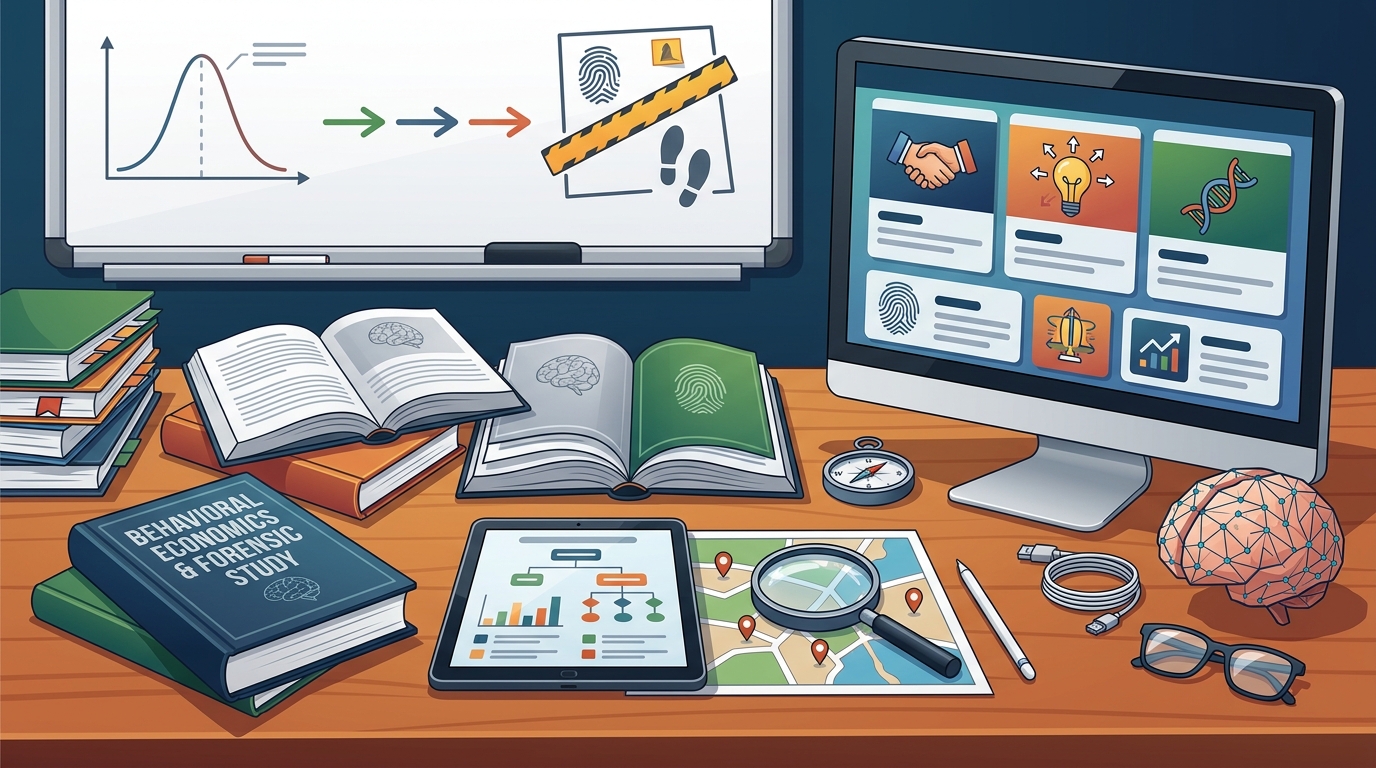
Behavioral vs. Physical Forensics
Traditional forensic science often focuses on DNA, ballistics, or toxicology. Behavioral forensic analysis, on the other hand, examines the psychological aspects of criminal behavior. This includes profiling, nonverbal communication analysis, and understanding the mindset of offenders. This approach is increasingly relevant in cybercrime and fraud investigation.
Essential Learning Materials
To begin your study, consider resources that focus on the human element of crime. Evidentia University offers a Certificate in Antifraud Behavioral Analysis. This program teaches you to read people and identify deceptive behaviors, which is crucial for fraud prevention. It bridges the gap between psychological theory and practical investigative skills.
Another valuable resource is the study of nonverbal communication. Understanding facial expressions and body language can provide critical clues in both forensic and business negotiations. Look for courses that break down these cues into actionable data points. This skill set is transferable across multiple industries, including security and human resources.
Comparing Learning Paths
Choosing the right resource depends on your career goals and current knowledge level. Below is a comparison of the primary types of online resources available for these fields.
| Resource Type | Best For | Depth of Study | Example Focus |
|---|---|---|---|
| Professional Certificates | Career changers | High | Sustainability & Ethics |
| University Courses | Academic foundations | Very High | Theoretical Models |
| Industry Workshops | Practical skills | Medium | Cybersecurity Behavior |
| Open Educational Resources | Exploratory learning | Low | General Concepts |
Professional certificates, such as those offered by specialized institutions, often provide the most direct path to employment. They focus on actionable skills rather than just theory. For example, a Master in Behavioral Cybersecurity program targets the specific needs of modern digital security professionals.
When evaluating resources, check the faculty credentials. Instructors with real-world experience in law enforcement or corporate security bring invaluable context to the material. This practical insight is often missing from purely academic texts.
Key Takeaways
- Behavioral economics focuses on the psychological drivers behind financial decisions, challenging the assumption of rational actor models.
- Forensic analysis has expanded beyond physical evidence to include behavioral patterns, particularly in fraud and cybercrime.
- Professional certificates offer a faster route to practical skills compared to traditional degree programs.
- Nonverbal communication analysis is a critical skill for both forensic investigators and business negotiators.
- Evidentia University provides specialized pathways in Anti-Fraud Behavioral Analysis and related fields.
- Understanding loss aversion and anchoring is essential for anyone studying behavioral economics.
- Industry-specific workshops often provide the most up-to-date techniques for dealing with modern threats.
Frequently Asked Questions
What is the best way to start learning behavioral economics?
Start with foundational texts and online courses that explain core concepts like loss aversion and cognitive biases. A structured program like the Certificate in Behavioral Economics can provide a comprehensive overview.
Is forensic analysis only for law enforcement?
No, forensic analysis is used in corporate security, fraud prevention, and even marketing. Understanding behavioral forensics helps professionals identify risks in various contexts. (Introduction to Statistics)
Can I learn forensic analysis online?
Yes, many online programs offer specialized training. Evidentia University offers a Certificate in Antifraud Behavioral Analysis that can be completed entirely online.
What is the difference between behavioral economics and psychology?
Behavioral economics applies psychological insights to economic decision-making. While psychology studies the mind broadly, behavioral economics focuses specifically on how mental processes affect financial and strategic choices.
Are there free resources for beginners?
Many universities and platforms offer free introductory materials. However, for professional certification, paid programs often provide more structured and recognized credentials.
How long does it take to complete a forensic certificate?
Most professional certificates take between 8 to 12 weeks to complete. Intensive courses may be shorter, while master's programs take longer.
What skills are most important for forensic analysis?
Attention to detail, critical thinking, and an understanding of human behavior are crucial. Knowledge of digital tools and data analysis is also increasingly important.
Next Steps
Ready to advance your career in behavioral sciences? Explore our comprehensive catalog of programs designed for professionals. Visit our Academics page to view all available degrees and certificates. Contact our admissions team to discuss which path aligns with your goals.