

The landscape of online education in behavioral sciences has expanded significantly, with enrollment in related fields growing by over 20 percent in recent academic years. This surge reflects a broader societal shift toward valuing mental health support and social services. Professionals now seek flexible pathways to enter these critical sectors without pausing their current careers. Understanding the specific distinctions between behavioral science and human services is the first step toward selecting the right program.
Understanding the Distinction Between Fields
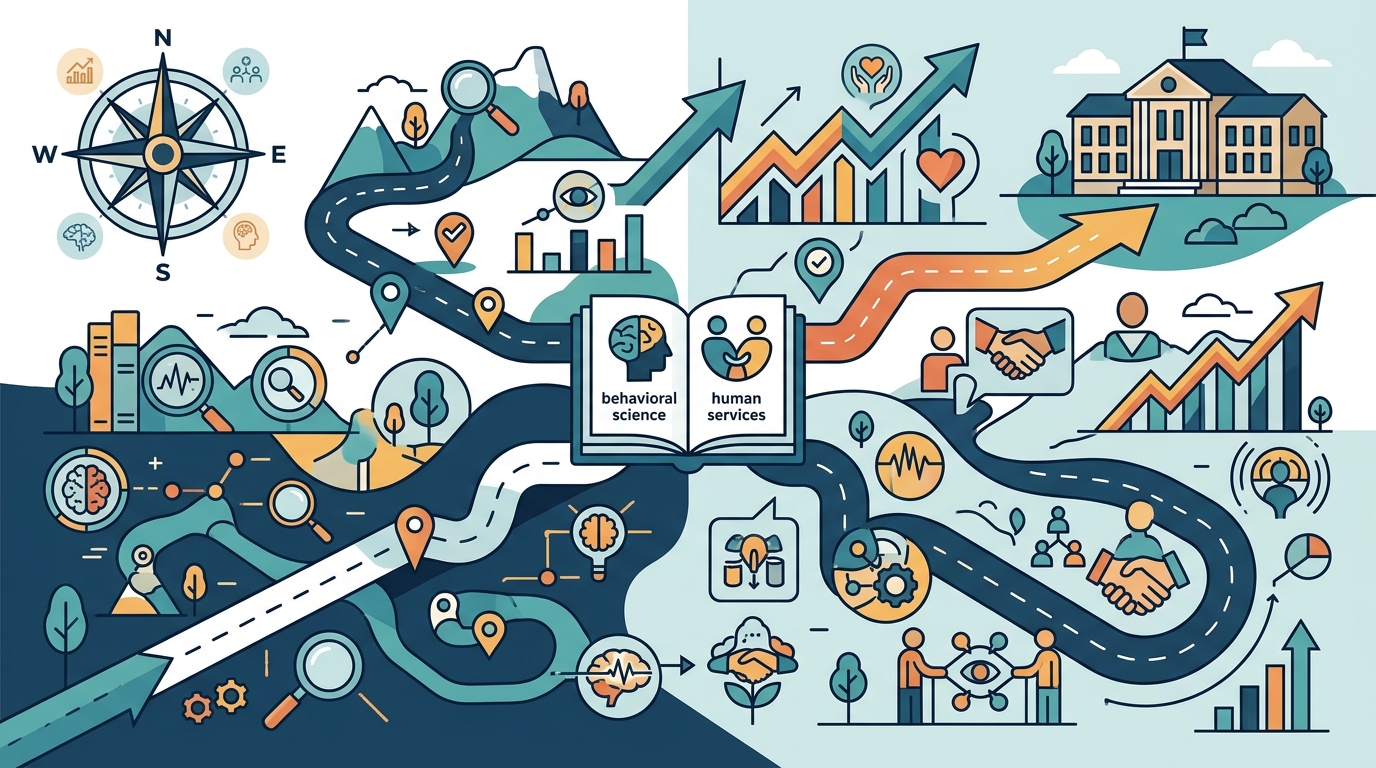
While often used interchangeably, behavioral sciences and human services represent distinct academic and professional domains. Behavioral science focuses on the systematic study of human behavior through research and data analysis. It draws heavily from psychology, sociology, and anthropology to understand why people act the way they do. This field is often rooted in academic research and policy development. (Behavioral Science and)
Human services, on the other hand, is a practice-oriented field dedicated to helping individuals and communities improve their well-being. It emphasizes direct intervention, case management, and community support. Professionals in this area work directly with vulnerable populations to address social issues. The following definition clarifies the core nature of this discipline.
Human services is a professional field focused on providing support and resources to individuals facing personal or social challenges.
Choosing between these paths depends on your career goals. Do you prefer analyzing data to inform policy, or do you want to work directly with clients? Both fields offer robust online learning options that prepare students for meaningful careers.
Degree Options and Specializations
Online programs in these sectors typically offer degrees at the associate, bachelor, and master levels. Each level serves a different career stage and scope of practice. Evidentia University provides flexible online programs designed for working adults who need to balance education with professional responsibilities.
Associate and Bachelor Degrees
Associate degrees provide foundational knowledge in human behavior and social systems. They often serve as a stepping stone to bachelor programs or entry-level support roles. Bachelor degrees offer a more comprehensive curriculum, covering research methods, ethics, and intervention strategies. These programs are ideal for those seeking roles such as case manager or community outreach coordinator. (Online Social and)
Master’s Degrees and Specializations
Master’s degrees allow for deeper specialization in areas like addiction counseling, family therapy, or organizational behavior. These programs often require a practicum or internship component to ensure practical competency. Students learn advanced assessment techniques and therapeutic interventions. The curriculum is designed to meet licensure requirements in many states.
For more information on our specific program offerings, visit our programs page to explore detailed course descriptions and admission requirements.
Curriculum Highlights and Core Skills
A rigorous online curriculum in behavioral sciences and human services covers several core areas. These include research methodology, ethical standards, and cultural competence. Students learn to apply theoretical frameworks to real-world scenarios. The goal is to produce graduates who can think critically and act ethically. (BS in Behavioral)
Key coursework often includes statistics for behavioral sciences, abnormal psychology, and social welfare policies. Students also study group dynamics and conflict resolution. These skills are essential for effective practice in diverse settings. The following definition outlines the academic foundation of the field. (College of Behavioral)
Behavioral science is the interdisciplinary study of human actions and interactions using empirical methods to derive generalizable knowledge.
Online learning platforms facilitate this education through interactive modules, virtual simulations, and discussion forums. This format allows students to engage with peers from various geographic locations. It also provides flexibility for those managing full-time jobs or family obligations. You can learn more about our online learning environment and the technology we use to support student success.
Career Outcomes and Salary Potential
Graduates with degrees in these fields enter a wide range of professions. The demand for mental health and social services professionals continues to grow. According to the U.S. Bureau of Labor Statistics, employment in social and community service occupations is projected to grow much faster than average through 2032. This growth is driven by increasing awareness of mental health issues and social disparities.
Common career paths include social worker, counselor, case manager, and human resources specialist. Salaries vary based on education level, location, and specialization. Master’s degree holders often command higher salaries and have access to licensed positions. The table below summarizes typical roles and their primary focus areas. (How long does)
| Job Title | Primary Focus | Typical Work Setting |
|---|---|---|
| Case Manager | Client coordination and resource linkage | Non-profits, government agencies |
| Mental Health Counselor | Therapeutic intervention and diagnosis | Private practice, clinics |
| Human Resources Specialist | Employee relations and organizational behavior | Corporate offices |
| Community Outreach Coordinator | Program development and public engagement | Community centers, NGOs |
For insights into the current job market and salary trends, refer to the Bureau of Labor Statistics data on social services. Additionally, the American Psychological Association provides valuable resources on career paths in psychology.
The Importance of Accreditation
When selecting an online program, accreditation is a critical factor. Accreditation ensures that the institution meets rigorous standards of educational quality. It also affects your eligibility for financial aid and professional licensure. Graduating from an accredited program is often a prerequisite for state licensure in counseling and social work.
Evidia University is accredited by the Accrediting Commission of Career Schools and Colleges (ACCSC). This accreditation validates our commitment to educational excellence and student support. Prospective students should verify the accreditation status of any program they consider. You can review our accreditation details to understand how this benefits your career.
For more information on the importance of accreditation in higher education, the U.S. Department of Education provides comprehensive guidelines and lists of recognized accrediting agencies.
Key Takeaways
- Behavioral science focuses on research and analysis, while human services emphasizes direct client support and intervention. (Introduction to Statistics)
- Online degrees are available at associate, bachelor, and master levels, offering flexibility for working adults.
- Accreditation is essential for licensure eligibility and ensures educational quality standards are met.
- Career outcomes include roles such as case manager, counselor, and human resources specialist.
- Employment in social and community services is projected to grow significantly through 2032.
- Core curriculum skills include research methods, ethics, and cultural competence.
- Evidia University offers ACCSC-accredited programs designed for professional advancement.
Frequently Asked Questions
What is the difference between behavioral science and human services?
Behavioral science is the study of human behavior through research and data analysis. Human services is a practice-oriented field focused on helping individuals and communities improve their well-being through direct support and intervention.
Can I get a master’s degree in human services online?
Yes, many accredited institutions offer fully online master’s degrees in human services. These programs often include virtual practicums and flexible scheduling options for working professionals.
Is accreditation important for online degrees?
Accreditation is crucial because it ensures the program meets quality standards and is recognized by employers and licensing boards. It also affects eligibility for federal financial aid.
What careers can I pursue with a degree in behavioral sciences?
Graduates can pursue careers in research, policy analysis, human resources, marketing, and organizational development. Many also transition into clinical roles with further specialized training.
How long does it take to complete an online bachelor’s degree?
Typically, a bachelor’s degree takes four years to complete. However, online programs often allow for accelerated timelines, enabling students to graduate in as little as two to three years depending on transfer credits.
Do online programs require in-person practicums?
Many clinical and counseling programs require a certain number of supervised clinical hours. These can often be completed locally in your area with approved preceptors, even if the coursework is online.
What is the average salary for a human services professional?
Salaries vary widely by role, location, and experience. According to recent data, case managers and social workers typically earn between $40,000 and $70,000 annually, while licensed counselors may earn more.
Start Your Journey in Behavioral Sciences
Choosing the right online program is a pivotal step toward a rewarding career in human services or behavioral science. Evidia University offers flexible, accredited programs designed to help you achieve your professional goals. Our dedicated faculty and supportive online community are here to guide you every step of the way. Take the first step toward your future by exploring our contact page or visiting our programs page to learn more about enrollment options.