

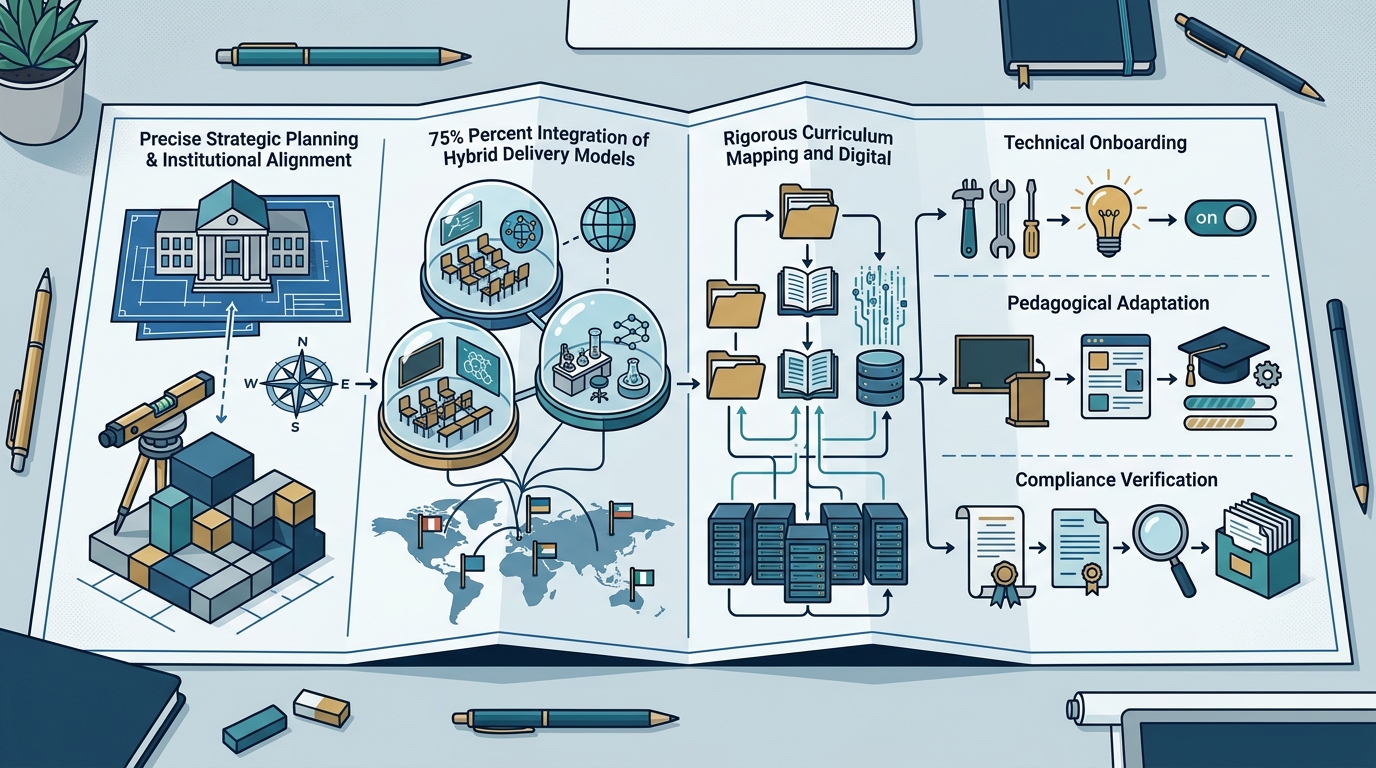
Transitioning to a virtual academic environment requires precise strategic planning and institutional alignment. Recent institutional data indicates that over 75 percent of graduate programs in behavioral sciences have permanently integrated hybrid delivery models to accommodate global enrollment demands. This shift demands rigorous curriculum mapping and robust digital infrastructure. Professionals entering this space must navigate technical onboarding, pedagogical adaptation, and compliance verification. The following framework outlines the essential operational phases for establishing a sustainable online learning ecosystem. This structural evolution directly impacts student retention rates and faculty workload distribution across modern academic institutions.
Curriculum Alignment and Digital Mapping
Effective virtual education begins with comprehensive course restructuring. Curriculum mapping is the systematic process of aligning learning objectives with digital delivery methods. Instructors must translate traditional laboratory exercises and field observations into interactive virtual simulations. Behavioral sciences require specialized software for tracking nonverbal cues and analyzing psychological datasets. Institutions should audit existing course materials to identify gaps in digital accessibility. Faculty members must receive dedicated training on learning management system navigation and content upload protocols. This foundational step ensures that theoretical frameworks remain intact while adapting to screen-based instruction.
Program administrators should prioritize asynchronous module design to accommodate international time zones. Recorded lectures and downloadable reading packets reduce bandwidth constraints for remote students. The academic catalog serves as the primary reference for mapping credit hours to digital competencies. Departments must establish clear milestones for semester progression and digital resource distribution.
Technical Infrastructure and Platform Selection
Reliable connectivity forms the backbone of any successful online program. Digital infrastructure refers to the hardware, software, and network protocols that support continuous academic operations. Institutions must evaluate cloud-based storage solutions and secure video conferencing tools. Forensic science programs often require high-resolution imaging software and behavioral coding platforms. Administrators should conduct bandwidth stress tests before the academic term begins. IT support teams must maintain 24/7 helpdesk coverage to resolve authentication errors and login failures. This technical readiness prevents unnecessary academic delays and maintains institutional credibility.
Security protocols must comply with federal data protection standards. Encryption methods protect sensitive research data and student records. The about page outlines institutional commitments to data privacy and secure server management. Regular vulnerability assessments and firewall updates safeguard against external cyber threats. Institutions that invest in robust technical architecture experience higher student satisfaction and lower dropout rates.
Faculty Development and Pedagogical Training
Teaching methodologies require complete restructuring for virtual environments. Pedagogical adaptation is the strategic modification of instructional techniques to optimize remote student comprehension. Instructors must transition from lecture-heavy formats to interactive discussion forums and collaborative case studies. Behavioral sciences demand specialized facilitation skills for managing sensitive psychological discussions online. Universities should mandate certification programs in digital pedagogy before granting teaching privileges. Faculty mentors must participate in peer observation cycles and instructional design workshops. This continuous professional development ensures consistent educational quality across all course sections.
Administrative leadership must allocate dedicated budget lines for instructor training and software licensing. The 2024 International Summit provides industry leaders with networking opportunities and cutting-edge teaching strategies. Departments should establish teaching assistant pipelines to support large enrollment cohorts. Regular curriculum reviews and student feedback surveys drive iterative instructional improvements. Institutions that prioritize faculty growth consistently outperform competitors in retention metrics.
Student Engagement and Virtual Collaboration
Active participation drives academic success in remote learning environments. Virtual collaboration is the structured interaction between students and instructors through digital communication channels. Behavioral science programs benefit from simulated negotiation exercises and role-playing scenarios. Instructors should design weekly discussion prompts that require critical analysis of case files. Peer review systems and group projects foster community building among isolated learners. Administrators must monitor participation logs to identify at-risk students early in the semester. Proactive outreach and academic counseling prevent course withdrawals and improve completion rates.
Digital wellness initiatives support mental health and cognitive load management. Institutions should offer virtual study groups and peer mentoring programs. The Masters program directory highlights specialized tracks designed for remote professional development. Regular check-ins and progress tracking dashboards keep learners accountable. Programs that integrate social learning elements consistently report higher engagement scores and stronger professional networks.
Assessment Protocols and Academic Integrity
Traditional examination methods fail to capture applied behavioral competencies. Competency-based assessment is the evaluation framework that measures practical skill application rather than rote memorization. Institutions must design performance-based tasks that mirror real-world forensic scenarios. Proctoring software and plagiarism detection algorithms maintain examination security. Faculty members should utilize rubric-driven grading systems to ensure consistent evaluation standards. Students must submit digital portfolios showcasing their analytical reasoning and research methodologies. Transparent grading policies and clear rubric distribution reduce academic disputes and improve fairness.
Continuous feedback loops replace high-stakes final examinations. Instructors should provide detailed written comments and audio recordings for complex assignments. The Admissions portal outlines prerequisite knowledge and foundational skill requirements for incoming cohorts. Regular formative quizzes and milestone checkpoints track student progress throughout the term. Programs that emphasize applied assessment consistently produce graduates who excel in professional forensic settings.
Compliance Verification and Regional Accreditation
Regulatory oversight ensures educational quality and institutional legitimacy. Regional accreditation is the formal recognition granted by authorized agencies to verify educational standards and financial stability. Online programs must submit comprehensive compliance reports detailing faculty qualifications and student outcomes. Institutions should maintain transparent financial aid documentation and tuition transparency policies. State authorization requirements vary across jurisdictions and demand careful legal review. Accreditation bodies evaluate curriculum rigor, learning outcomes, and graduate employment rates. Programs that maintain active accreditation status attract higher enrollment and secure better funding allocations.
Administrative teams must track legislative changes affecting distance education. Regular policy audits and compliance training prevent regulatory violations. The official website provides comprehensive guidance on enrollment procedures and financial assistance options. Institutions that prioritize regulatory compliance consistently maintain strong reputations and secure long-term institutional viability.
Comparative Learning Model Overview
| Learning Modality | Primary Delivery Method | Assessment Focus | Target Audience |
|---|---|---|---|
| Traditional On-Campus | In-person lectures and laboratory sessions | Standardized examinations and written papers | Local students requiring physical presence |
| Hybrid Blended | Combined physical meetings and digital modules | Project submissions and practical demonstrations | Working professionals seeking flexible schedules |
| 100 Percent Online | Asynchronous video content and discussion forums | Competency-based portfolios and case analyses | Global learners requiring geographic independence |
| Executive Certificate | Intensive virtual workshops and masterclasses | Real-time simulations and peer evaluations | Experienced practitioners pursuing specialized credentials |
Key Takeaways
- Over 75 percent of graduate behavioral science programs now utilize hybrid delivery models.
- Curriculum mapping requires direct alignment of learning objectives with digital delivery methods.
- Technical infrastructure demands 24/7 IT support and encrypted cloud storage solutions.
- Faculty development mandates certification in digital pedagogy and instructional design.
- Virtual collaboration structures directly correlate with higher student retention and engagement.
- Competency-based assessment replaces traditional examinations to measure practical forensic skills.
- Regional accreditation ensures institutional legitimacy and secures federal funding eligibility.
Frequently Asked Questions
How long does the curriculum mapping process typically take?
Curriculum mapping generally requires four to six weeks of dedicated faculty collaboration and administrative review. Departments must audit existing materials, identify digital gaps, and redesign assessment rubrics before the semester begins.
What technical requirements do students need to access online forensic programs?
Students require high-speed broadband connectivity, modern web browsers, and specialized software licenses for behavioral coding. Institutions typically provide remote desktop access to specialized forensic imaging platforms.
Can working professionals complete a master degree while maintaining full-time employment?
Yes, asynchronous course structures allow working professionals to complete master degrees within 18 to 24 months. Flexible scheduling and weekend virtual seminars accommodate demanding career schedules.
How do institutions verify academic integrity during online examinations?
Administrative teams utilize AI-driven proctoring software, plagiarism detection algorithms, and randomized question banks. Performance-based portfolios and oral defense sessions further validate student competencies.
What financial aid options are available for distance education students?
Qualified applicants may access federal grants, institutional scholarships, and income-based repayment plans. The admissions office provides comprehensive financial counseling and scholarship application guidance.
Are online forensic science degrees recognized by law enforcement agencies?
Accredited online degrees hold equal recognition to traditional campus programs. Many agencies prioritize specialized master credentials and practical competency demonstrations over delivery format.
How does virtual collaboration impact student networking opportunities?
Digital discussion forums and group projects foster global professional connections. Virtual summits and industry partnerships expand career placement networks across international borders.
What support services are available for remote students during emergencies?
Institutions provide 24/7 technical helpdesks, academic counseling, and mental health resources. Dedicated student success coordinators monitor progress and intervene during academic difficulties.
Begin Your Transition Today
Transitioning to a virtual academic environment requires strategic planning, robust infrastructure, and continuous faculty development. Institutions that master these operational phases consistently produce highly qualified forensic professionals and behavioral analysts. Prospective students should review the comprehensive program catalog and schedule a personalized academic consultation. Visit the official domain root to explore current master degree offerings and secure your Fall 2026 enrollment spot. Early application submission guarantees priority financial aid distribution and dedicated academic advising.