
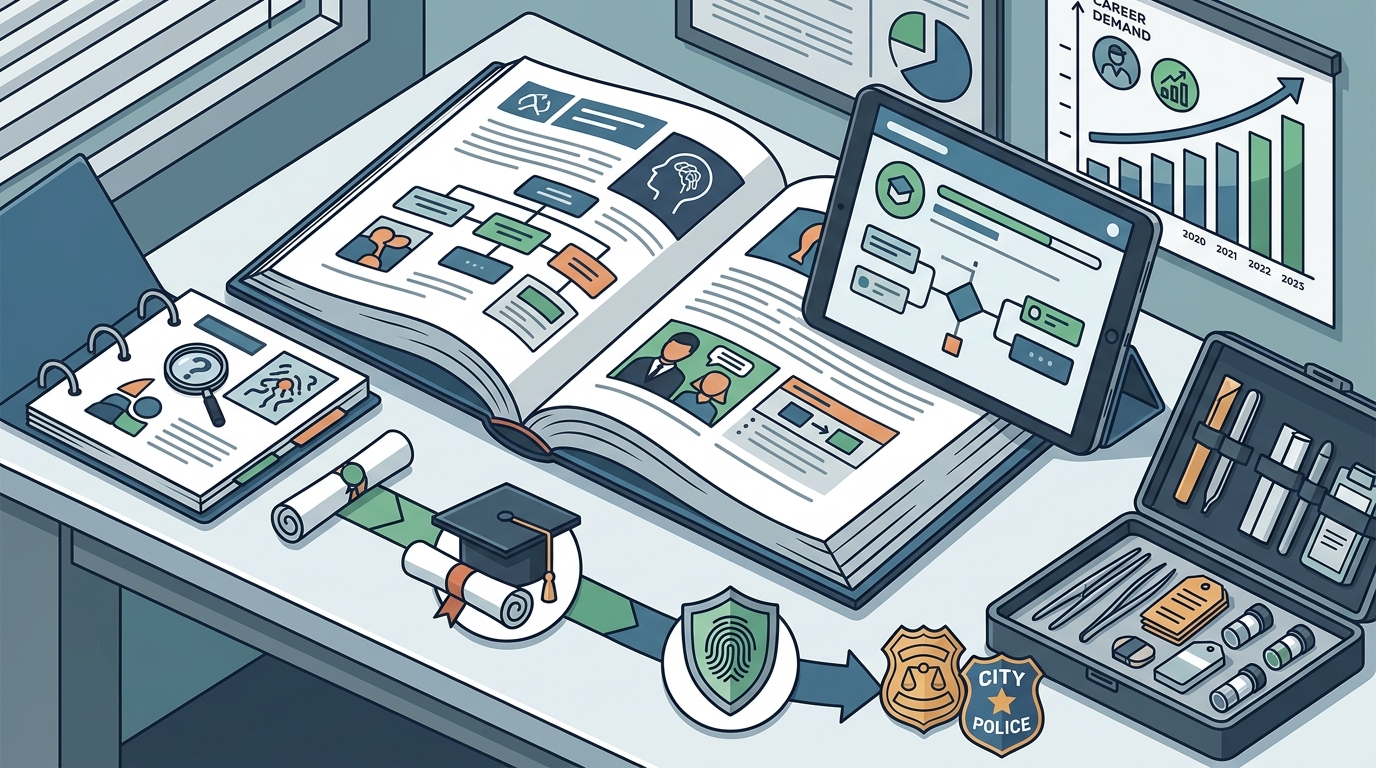
According to the Bureau of Labor Statistics, forensic science careers are projected to grow by 13 percent through 2032. This steady expansion reflects increasing institutional demand for specialized analytical expertise across federal and municipal agencies. Aspiring professionals must navigate rigorous academic pathways to meet modern investigative standards. Online graduate studies now provide structured curricula that mirror traditional campus requirements while offering flexible scheduling. Candidates pursuing advanced degrees must complete core coursework, secure relevant field experience, and adhere to established professional guidelines. This comprehensive roadmap outlines the exact academic and procedural steps required to enter the field successfully. (About Us Evidentia University)
Understanding the Criminal Profiling Pathway
Criminal profiling is the systematic analysis of behavioral evidence to infer offender characteristics. Modern investigative units rely on this methodology to prioritize suspect lists and allocate investigative resources efficiently. Candidates entering this specialized field must first complete undergraduate coursework in psychology, criminology, or sociology. These foundational degrees establish the necessary baseline for advanced behavioral analysis. Many professionals subsequently pursue graduate-level training to master complex investigative frameworks. The transition from general law enforcement to specialized analytical roles requires deliberate academic planning and sustained professional commitment.
Historical Context and Modern Application
Early investigative techniques relied heavily on anecdotal experience and basic psychological observation. Contemporary agencies now integrate data-driven methodologies with established behavioral science principles. This evolution has standardized training protocols across multiple jurisdictions. Candidates must understand how historical case studies inform current analytical frameworks. Modern programs emphasize evidence-based reasoning rather than speculative guessing. This shift ensures that analytical outputs meet rigorous evidentiary standards in court proceedings.
Core Academic Requirements for Online Master Programs
Online graduate studies is a structured academic delivery model utilizing digital platforms for advanced degree completion. Accredited institutions require candidates to complete a minimum of thirty to thirty-six semester credits. Core coursework typically covers research methodology, statistical analysis, and advanced criminal psychology. Students must also complete a capstone project or comprehensive examination demonstrating applied analytical competence. Many programs incorporate asynchronous learning modules to accommodate working professionals. This flexible structure allows candidates to balance full-time employment with rigorous academic demands.
Curriculum Design and Delivery Methods
Leading academic institutions design their curricula to mirror traditional campus standards. Virtual classrooms facilitate real-time discussions, recorded lectures, and collaborative case studies. Candidates interact with faculty members who maintain active professional affiliations with investigative agencies. Digital libraries provide immediate access to peer-reviewed journals and archived case documentation. This infrastructure ensures that remote learners receive identical educational quality as on-campus participants. Program directors regularly update course materials to reflect emerging criminal trends and technological advancements.
Behavioral Analysis and Deception Detection Fundamentals
Behavioral forensic sciences is the interdisciplinary field applying psychological principles to legal investigations. Advanced master programs dedicate substantial coursework to nonverbal communication analysis and deception detection. Students learn to identify microexpressions, posture shifts, and vocal pattern variations during interrogations. These observational skills directly translate to field applications involving suspect interviews and witness evaluations. Candidates also study cognitive bias mitigation to prevent analytical errors during high-stakes investigations. Mastery of these techniques requires consistent practice and supervised field exposure.
Applied Research and Case Simulations
Academic programs integrate simulated case files to bridge theoretical knowledge and practical application. Students analyze archived investigation reports to reconstruct offender behavioral patterns. Faculty members guide candidates through structured debriefing sessions that highlight analytical strengths and procedural gaps. This hands-on approach reinforces classroom concepts while building independent critical thinking skills. Candidates frequently participate in interdisciplinary seminars alongside law enforcement personnel and legal professionals. These collaborative environments foster professional networking and knowledge exchange across multiple disciplines.
Licensing, Certification, and Professional Standards
Professional certification remains optional rather than mandatory across most United States jurisdictions. Candidates pursuing formal credentials must typically complete a minimum of three to five years of relevant field experience. The American Board of Forensic Examiners and similar organizations establish standardized competency benchmarks. Applicants must submit comprehensive portfolios detailing case involvement, analytical methodologies, and continuing education records. Peer review panels evaluate submitted materials against established ethical guidelines and technical standards. Successful candidates receive formal recognition that enhances professional credibility and hiring competitiveness.
Continuing Education and Professional Development
Industry professionals must maintain active certification through ongoing educational requirements. Annual conferences, specialized workshops, and peer-reviewed publications fulfill continuing education mandates. Many agencies require candidates to complete specialized training in digital forensics and cybercrime investigation. This continuous learning model ensures that analytical techniques remain current with evolving criminal methodologies. Professionals who neglect continuing education requirements risk credential suspension or revocation. Maintaining active status requires disciplined scheduling and consistent academic engagement.
Comparing Online Master Program Structures
Prospective students must evaluate multiple program architectures before committing to a specific academic pathway. Different institutions emphasize distinct specializations ranging from criminal profiling to behavioral economics. Candidates should compare tuition structures, faculty credentials, and alumni placement rates before enrollment. Accreditation status directly impacts professional eligibility and institutional recognition. Program duration typically spans twenty-four to thirty-six months depending on course load and prerequisite requirements. Careful comparison ensures alignment between personal career objectives and institutional offerings.
| Program Feature | Standard Online Master | Specialized Forensic Track | Executive Leadership Option |
|---|---|---|---|
| Tuition Range | $18,000 to $24,000 | $22,000 to $28,000 | $25,000 to $32,000 |
| Duration | 24 Months | 30 Months | 36 Months |
| Core Focus | General Psychology | Criminal Profiling | Administrative Strategy |
| Delivery Format | Asynchronous | Hybrid Virtual | Live Interactive |
Key Takeaways
- Criminal profiling requires advanced graduate education and specialized field experience.
- Online master programs deliver identical academic rigor as traditional campus curricula.
- Behavioral forensic sciences integrates psychological principles with legal investigation protocols.
- Professional certification remains voluntary but significantly enhances hiring competitiveness.
- Accredited institutions maintain strict quality standards across all digital delivery formats.
- Continuing education mandates ensure analytical techniques remain current with criminal trends.
- Program selection should prioritize faculty expertise and alumni placement success rates.
Frequently Asked Questions
Is criminal profiling legally recognized as a standalone profession?
Criminal profiling operates as a specialized analytical function within broader investigative units rather than an independent occupational category. Agencies typically assign profiling responsibilities to experienced detectives or forensic psychologists who complete additional graduate training. Candidates must understand that profiling supplements traditional investigative methods rather than replacing standard procedural protocols.
Can I complete a criminal profiling degree entirely online?
Accredited institutions offer fully online master programs that satisfy all academic requirements without mandatory campus attendance. Virtual classrooms facilitate synchronous discussions, recorded lectures, and digital case simulations. Candidates must verify institutional accreditation status before enrollment to ensure professional eligibility and credential recognition.
What undergraduate majors prepare students for graduate profiling studies?
Psychology, criminology, sociology, and criminal justice degrees provide the strongest foundational preparation for advanced analytical coursework. Candidates with non-traditional backgrounds must complete prerequisite statistics and research methodology courses before matriculation. Program advisors evaluate individual academic transcripts to determine specific bridging requirements.
How long does the professional certification process typically require?
Professional certification applications generally require three to five years of documented field experience alongside completed graduate degrees. Candidates must submit comprehensive portfolios detailing case involvement, analytical methodologies, and continuing education records. Peer review panels evaluate submitted materials against established ethical guidelines and technical standards.
Do online degrees carry the same weight as traditional campus degrees?
Accredited online degrees maintain identical academic standards and institutional recognition as traditional campus programs. Employers evaluate candidates based on demonstrated analytical competence rather than delivery format. Candidates should verify program accreditation status and alumni placement metrics before enrollment to ensure professional alignment.
What software and analytical tools do profiling programs teach?
Modern programs integrate statistical analysis software, geographic profiling mapping tools, and behavioral pattern recognition platforms. Students learn to utilize industry-standard databases for tracking suspect movements and communication networks. Technical proficiency requirements vary by institution but consistently emphasize data-driven investigative methodologies.
Are financial aid options available for online forensic master programs?
Accredited institutions typically offer federal financial aid, institutional scholarships, and employer tuition reimbursement programs. Candidates should complete standard financial aid applications and consult academic advisors regarding specific funding opportunities. Many programs provide structured payment plans to accommodate working professionals managing educational expenses.
Next Steps for Your Forensic Education
Advancing your career in behavioral forensic sciences requires immediate academic planning and strategic program selection. Prospective candidates should review comprehensive academic catalogs and schedule admissions consultations with program directors. Early engagement with academic advisors ensures proper prerequisite alignment and streamlined matriculation processes. You can explore available master programs and begin your application journey by visiting Evidentia University to secure your place in the upcoming academic cycle. Professional success in this specialized field demands deliberate preparation and unwavering academic commitment.