

Modern academic institutions are rapidly shifting toward digital delivery models to accommodate global enrollment demands. Recent data shows that online graduate programs in behavioral sciences experienced a forty percent enrollment increase between 2020 and 2024 according to federal education tracking reports. This digital expansion requires structured preparation to maintain academic rigor and student success. Professionals entering this space must navigate technical infrastructure, asynchronous communication protocols, and specialized forensic research methodologies. Understanding these operational shifts ensures a seamless academic transition. Institutions now prioritize scalable virtual classrooms that replicate traditional laboratory environments through digital simulation tools. (About Us Evidentia University)
Step One: Evaluate Digital Infrastructure Requirements
Successful digital academic transitions begin with rigorous hardware and bandwidth verification. Students must confirm their devices meet minimum processing thresholds for running complex behavioral modeling software. High-speed internet connections remain non-negotiable for streaming recorded lectures and participating in live virtual seminars. Technical readiness eliminates preventable academic delays. Institutions typically publish detailed system requirements within their academic portals. Prospective students should verify processor speed, memory allocation, and storage capacity before enrollment. Network stability directly impacts the quality of real-time data synchronization during collaborative research projects.
Hardware Specifications and Bandwidth Standards
Modern forensic analysis requires substantial computational resources. Students should maintain at least sixteen gigabytes of random access memory and dedicated graphics processing units. Bandwidth allocations must support continuous video streaming and large file uploads without interruption. Regular system diagnostics prevent unexpected disruptions during critical assignment deadlines. Universities often provide technical support desks to troubleshoot connectivity issues during peak academic periods.
Software Licensing and Platform Integration
Digital learning environments rely on integrated learning management systems. Students must configure their accounts to support document sharing, version control, and secure data storage. Many programs require specialized analytical tools for processing behavioral datasets. Licensing agreements typically cover the entire academic duration. Users should verify compatibility with their operating system before purchasing additional plugins. Platform integration ensures seamless communication between faculty members and enrolled students.
Step Two: Select Accredited Virtual Programs
Choosing the correct academic pathway requires careful evaluation of curriculum depth and institutional reputation. Accredited online degrees maintain identical rigor to traditional campus programs while offering flexible scheduling. Students should review faculty credentials and research publication histories before committing. Program alignment with career objectives prevents unnecessary financial expenditure. Accreditation bodies verify that digital curricula meet established pedagogical standards. Prospective learners must compare tuition structures, financial aid availability, and graduation rates across competing institutions.
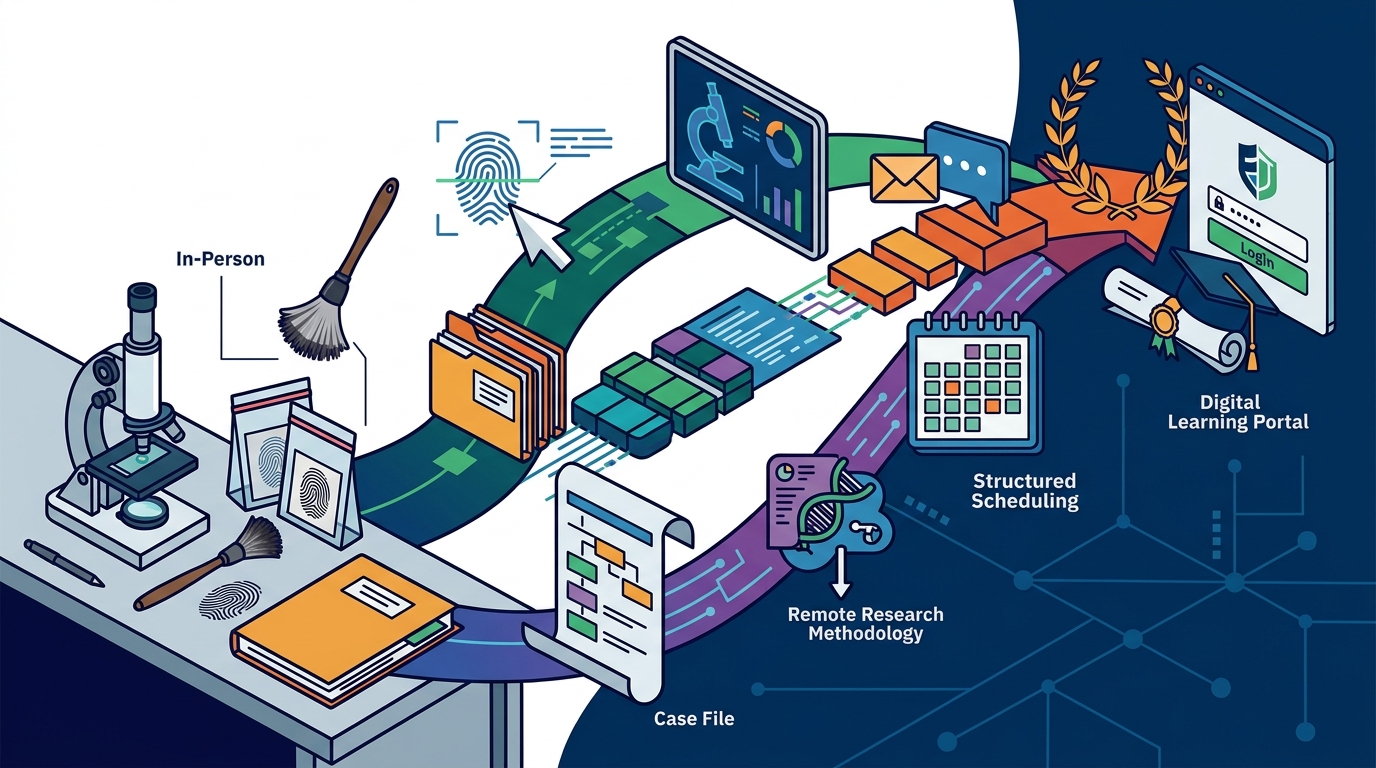
Reviewing Curriculum Depth and Faculty Credentials
Behavioral sciences demand specialized instruction in psychological profiling and crime scene analysis. Students should verify that instructors possess active industry certifications and published research portfolios. Curriculum maps must cover core competencies including evidence handling, statistical analysis, and legal compliance. Faculty accessibility directly influences student retention and academic performance. Programs featuring active research laboratories provide superior practical training opportunities.
Comparing Certificate Versus Masters In Forensics
Academic pathways vary significantly based on career aspirations and prior educational background. Certificate programs focus on targeted skill acquisition and professional certification preparation. Master degree tracks require comprehensive research projects and advanced theoretical coursework. Students should evaluate their long-term professional goals before selecting a track. Many institutions offer bridge programs that convert certificate credits toward full degree completion. Understanding these structural differences ensures optimal academic investment.
Step Three: Master Asynchronous Communication Protocols
Digital academic success depends on disciplined time management and proactive engagement strategies. Students must adapt to self-directed learning environments that lack traditional classroom supervision. Regular participation in discussion forums and peer review sessions maintains academic momentum. Proactive communication prevents isolation and accelerates knowledge retention. Virtual learning platforms require consistent login schedules and timely assignment submissions. Instructors expect detailed written responses and structured debate participation. Students should establish dedicated study routines that mirror traditional academic hours.
Participating in Live Virtual Summits
Interactive digital events bridge the gap between theoretical knowledge and practical application. Students should register for annual academic conferences and industry networking sessions. These events feature keynote speakers, panel discussions, and specialized workshop tracks. Registration typically includes digital certificates and continuing education credits. Participants gain exposure to emerging research trends and technological innovations. Virtual summits also facilitate direct mentorship opportunities with established industry professionals.
Managing Cross-Cultural Academic Collaboration
Global enrollment creates diverse classroom environments that enrich analytical perspectives. Students must navigate language barriers and varying educational backgrounds with cultural sensitivity. Collaborative projects require clear communication guidelines and structured conflict resolution protocols. Digital platforms enable real-time translation tools and asynchronous messaging features. Successful teams establish shared expectations regarding response times and deliverable formats. Cross-cultural competence remains a highly valued skill in international law enforcement agencies.
Step Four: Implement Behavioral Analysis Workflows
Digital forensic training requires systematic approaches to data collection and pattern recognition. Students must master standardized documentation procedures to ensure legal admissibility. Digital evidence handling follows strict chain of custody protocols that prevent contamination. Methodological precision separates professional analysts from amateur investigators. Training modules emphasize the importance of maintaining unaltered source materials. Students practice reconstructing digital crime scenes using specialized simulation software. These exercises develop critical thinking skills and attention to procedural detail.
Conducting Digital Crime Scene Documentation
Modern investigations rely heavily on electronic records and network traffic analysis. Students learn to extract metadata, recover deleted files, and trace communication pathways. Documentation standards require precise timestamps and geographic location markers. Digital forensics is the systematic examination of electronic devices to recover and analyze data. Training programs emphasize courtroom presentation skills and expert witness testimony preparation. Students practice translating technical findings into accessible language for legal professionals.
Applying Psychological Profiling Methodologies
Behavioral analysis requires understanding human motivation, decision-making patterns, and environmental triggers. Students study established typologies and risk assessment frameworks used in criminal investigations. Profiling methodologies integrate criminology, psychology, and sociology to predict offender behavior. Behavioral profiling is the systematic evaluation of crime scene evidence to infer offender characteristics. Training exercises involve case study reviews and simulated investigation scenarios. Students develop hypotheses and test them against established empirical data.
Step Five: Complete Capstone and Certification Requirements
Academic completion demands rigorous final projects that demonstrate comprehensive knowledge acquisition. Students must submit original research papers, case analyses, or practical portfolios. Capstone projects often require collaboration with law enforcement agencies or private security firms. Final deliverables validate readiness for professional industry placement. Institutions provide dedicated faculty advisors to guide research design and methodology. Students must defend their findings before a committee of academic and industry experts. Successful completion awards formal certification and degree conferral.
Submitting Research Publications and Case Studies
Academic journals and industry publications provide platforms for sharing groundbreaking findings. Students should target peer-reviewed outlets that align with their specialized focus areas. Publication processes involve rigorous editorial review and anonymous peer evaluation. Research contributions advance field knowledge and establish professional credibility. Students learn to format manuscripts according to specific style guides and submission requirements. Published work enhances resume competitiveness and facilitates academic networking opportunities.
Navigating International Student Admissions
Global programs accommodate diverse educational backgrounds through flexible admission pathways. International applicants must provide translated transcripts, language proficiency scores, and financial documentation. Visa requirements and immigration compliance vary significantly across destination countries. Many institutions offer dedicated international student support services and orientation programs. Students should verify credential evaluation standards and degree recognition policies before enrollment. International partnerships facilitate cross-border research collaborations and exchange programs.
Transition Phase Comparison
| Phase | Primary Objective | Key Deliverables | Estimated Duration |
|---|---|---|---|
| Infrastructure Setup | Verify hardware and network compatibility | System diagnostics report | One to two weeks |
| Program Selection | Align curriculum with career goals | Admission application package | Two to four weeks |
| Academic Integration | Establish study routines and communication habits | First assignment submission | First semester |
| Specialized Training | Master analytical tools and documentation standards | Midterm project portfolio | Second semester |
| Capstone Completion | Demonstrate comprehensive knowledge acquisition | Final research defense | Final semester |
Key Takeaways
- Online enrollment in behavioral sciences increased by forty percent between 2020 and 2024 according to federal education tracking reports.
- Minimum system requirements typically include sixteen gigabytes of memory and dedicated graphics processing units.
- Accredited virtual programs maintain identical rigor to traditional campus programs while offering flexible scheduling.
- Virtual summits feature keynote speakers, panel discussions, and specialized workshop tracks open to worldwide participants.
- Digital forensics is the systematic examination of electronic devices to recover and analyze data.
- Behavioral profiling is the systematic evaluation of crime scene evidence to infer offender characteristics.
- Programs founded in 2008 have expanded internationally with special incidence in Latin America and Florida.
Frequently Asked Questions
What technical specifications are required for online forensic coursework?
Students must maintain at least sixteen gigabytes of random access memory, dedicated graphics processing units, and high-speed internet connections. These specifications ensure smooth operation of behavioral modeling software and large file transfers.
How do accredited online programs compare to traditional campus degrees?
Accredited virtual degrees maintain identical rigor to traditional campus programs while offering flexible scheduling. Curriculum maps, faculty credentials, and graduation rates remain consistent across delivery formats.
Can certificate programs convert toward a full master degree?
Many institutions offer bridge programs that convert certificate credits toward full degree completion. Students should evaluate their long-term professional goals before selecting a track.
What resources are available for international students?
Institutions provide dedicated international student support services, orientation programs, and credential evaluation standards. Visa requirements and immigration compliance vary significantly across destination countries.
How are digital crime scenes documented and preserved?
Digital evidence handling follows strict chain of custody protocols that prevent contamination. Students practice reconstructing digital crime scenes using specialized simulation software and courtroom presentation skills.
What career outcomes are associated with behavioral sciences degrees?
Forensic career opportunities include crime scene analyst, behavioral profiler, fraud investigator, and policy consultant. The Bureau of Labor Statistics projects steady growth in specialized analytical roles through 2030.
Are virtual summits recognized for continuing education credits?
Registration typically includes digital certificates and continuing education credits. Participants gain exposure to emerging research trends and technological innovations.
How do students access financial aid for online programs?
Institutions offer financial aid to those who qualify through federal grants, scholarships, and payment plans. Prospective learners should verify tuition structures and funding availability before enrollment.
Begin Your Virtual Academic Journey
Transitioning to online learning requires strategic planning, technical preparation, and disciplined execution. Students who follow these structured steps will navigate digital academic environments with confidence and precision. Institutions now prioritize scalable virtual classrooms that replicate traditional laboratory environments through digital simulation tools. Visit the official admissions portal to review current master degree offerings and schedule a consultation with an academic advisor. Explore comprehensive program catalogs and secure your enrollment today.