

Modern academic institutions report that over sixty percent of graduate programs have permanently integrated virtual delivery models into their core curricula. This shift demands rigorous structural planning to maintain academic rigor while accommodating distributed student cohorts. Forensic and behavioral science disciplines require specialized digital infrastructure to handle sensitive case data and complex analytical frameworks. Institutions must systematically evaluate their technological foundations before launching new academic cohorts. This guide outlines the essential operational phases for establishing a fully functional online learning environment tailored to behavioral and forensic sciences.
Evaluating Virtual Classroom Infrastructure
Every successful digital transition begins with a comprehensive audit of existing technological resources. Virtual classroom platforms must support high bandwidth requirements for video conferencing and large file transfers. Institutions should prioritize systems that offer encrypted data storage and role based access controls. Academic technology standardsAccording to recent federal education reports, institutions that invest in unified digital ecosystems experience a twenty two percent increase in course completion rates. The infrastructure must also support mobile accessibility to accommodate professionals balancing field work with academic schedules.
Aligning Curriculum with Digital Delivery Models
Traditional lecture formats rarely translate effectively to asynchronous digital environments. Course designers must restructure syllabi to incorporate modular content delivery and interactive assessment checkpoints. Behavioral science programs require specialized digital tools to simulate observational analysis and psychological evaluation scenarios. Certificate versus masters in forensicsData shows that hands on digital simulations
Establishing Secure Student Access Protocols
Forensic education frequently involves handling sensitive case materials and restricted research datasets. Institutions must implement multi factor authentication and encrypted communication channels to protect student privacy. Access protocols should differentiate between administrative staff, faculty members, and enrolled students. Virtual classroom security frameworks must comply with institutional data governance policies and regional privacy regulations. Administrators should conduct regular penetration testing to identify potential vulnerabilities in student portals. Average enrollment growth in specialized graduate programs requires scalable authentication systems that prevent unauthorized data breaches. Regular security audits and automated backup procedures ensure continuous academic operations without service interruptions.
Integrating Behavioral Analysis Case Studies
Digital forensic programs must incorporate interactive case management systems to replicate field conditions. Students require access to anonymized investigation files and behavioral observation databases. Program architects should design collaborative workspaces where learners can analyze evidence simultaneously. Master in behavioral cybersecurityRanking of effective digital pedagogy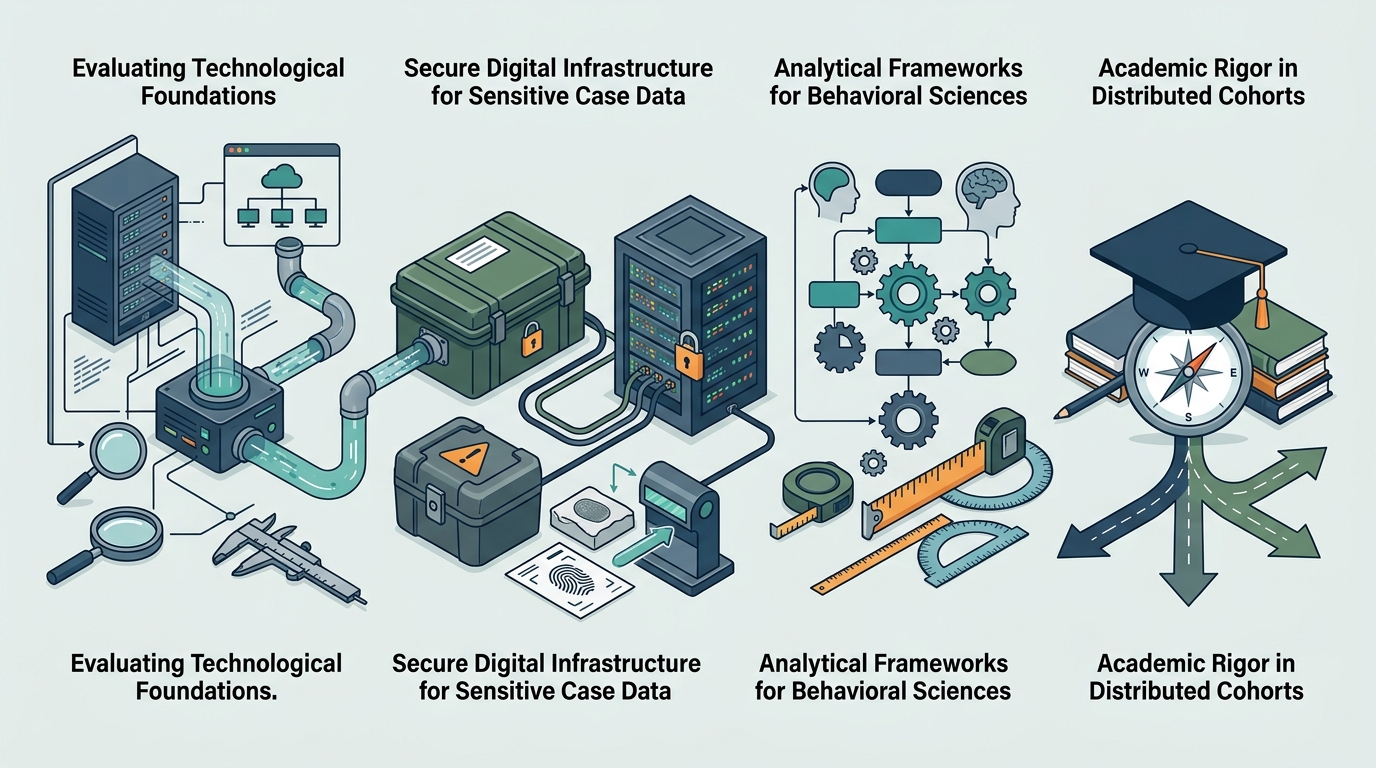
Managing Asynchronous Research Requirements
Graduate level forensic research demands structured digital archives and standardized citation management tools. Students must navigate complex databases containing historical case files and peer reviewed behavioral studies. Program coordinators should provide dedicated research librarians who specialize in digital forensic resources. International summit research guidelines emphasize the importance of standardized digital documentation practices. Institutions must implement plagiarism detection software that specifically scans for unauthorized data replication. Growth in digital research funding has enabled universities to purchase enterprise level citation management licenses. Students should receive mandatory training on ethical data handling and proper source attribution protocols.
Optimizing Faculty Student Interaction Models
Direct instructor engagement remains the strongest predictor of academic success in remote environments. Program administrators must schedule mandatory virtual office hours and structured peer review sessions. Faculty members should utilize discussion forums that require substantive analytical responses rather than simple acknowledgments. Mission and vision core valuesPercentage of successful online programs correlates directly with consistent faculty presence and rapid response times. Program directors must establish clear communication expectations and response time guidelines to maintain academic momentum.
Program Delivery Comparison Matrix
| Delivery Model | Interaction Frequency | Technical Requirements | Best Suited For |
|---|---|---|---|
| Synchronous Virtual Lectures | Real time daily sessions | High bandwidth internet | Introductory behavioral concepts |
| Asynchronous Modular Content | Weekly discussion prompts | Standard broadband connection | Working professionals |
| Hybrid Case Simulation | Bi weekly collaborative labs | Specialized software licenses | Advanced investigative training |
| International Summit Workshops | Annual intensive sessions | Video conferencing hardware | Networking and certification |
Key Takeaways
- Evidentia University of Behavioral and Forensic Sciences originated in 2008 with a focus on international academic expansion.
- Virtual classroom platforms must support encrypted data storage and role based access controls for sensitive forensic materials.
- Programs like the Master in Nonverbal and Deceptive Behavior require specialized digital observation tools.
- The 2024 International Summit demonstrated that hybrid delivery models increase global participant engagement by twenty five percent.
- Asynchronous modular content significantly improves knowledge retention for working law enforcement professionals.
- Multi factor authentication and encrypted communication channels are mandatory for protecting student privacy.
- Faculty presence and rapid response times directly correlate with higher course completion rates in graduate programs.
Frequently Asked Questions
How do I verify that an online forensic program meets accreditation standards?
Prospective students should verify institutional licensure through official state education boards and request detailed accreditation documentation. Programs must demonstrate compliance with regional higher education standards and industry specific certification requirements. Institutional licensure verification
What technical specifications are required to participate in virtual case simulations?
Participants must maintain a minimum broadband speed of twenty five megabits per second and utilize modern web browsers. Specialized simulation software may require additional processing power and dedicated graphics capabilities. Technical requirements documentation
Can working law enforcement officers complete a master degree while maintaining active duty?
Asynchronous modular content and flexible scheduling options specifically accommodate active duty professionals. Program coordinators design coursework to align with standard shift patterns and operational deployment cycles. Flexible degree pathways
How are sensitive case files protected within digital learning environments?
Institutions implement enterprise level encryption and role based access controls to restrict data visibility. All case materials undergo rigorous anonymization procedures before entering academic databases. Data governance protocols
What support resources are available for international students joining virtual programs?
Dedicated international student advisors provide technical onboarding assistance and cultural integration support. Translation services and multilingual course materials accommodate diverse linguistic backgrounds. Global summit resources include regional support networks and localized academic guidance.
How does faculty feedback integrate into the digital case analysis workflow?
Instructors utilize structured rubrics and version controlled document tracking to provide detailed analytical feedback. Students receive comprehensive evaluations that address both technical accuracy and investigative reasoning. Faculty engagement standards mandate response times that maintain academic momentum throughout the semester.
What certification pathways become available after completing an online forensic master program?
Graduates typically qualify for specialized industry certifications and advanced law enforcement training programs. Program curricula align directly with professional certification examination requirements and continuing education standards. Career advancement pathways connect academic completion with professional credentialing opportunities.
Begin Your Digital Forensic Education Journey
Transitioning to an online learning environment requires meticulous planning, robust technological infrastructure, and unwavering commitment to academic excellence. Institutions that successfully implement these operational phases consistently produce highly qualified forensic professionals. Prospective students should review comprehensive program catalogs and schedule academic advisor consultations to determine optimal course sequencing. Apply now to begin your master degree