

Fraudulent financial activities continue to escalate across digital platforms. According to the Federal Reserve, global financial institutions lose approximately 1.5 billion dollars annually to sophisticated cyber fraud schemes. This massive financial drain demands specialized academic training. Professionals now require structured education that merges psychological profiling with economic modeling. Leading institutions have responded by launching fully remote master’s tracks. These programs focus on predictive behavioral patterns and transactional risk assessment. (About Us Evidentia University)
Understanding Behavioral Economics in Modern Fraud Prevention
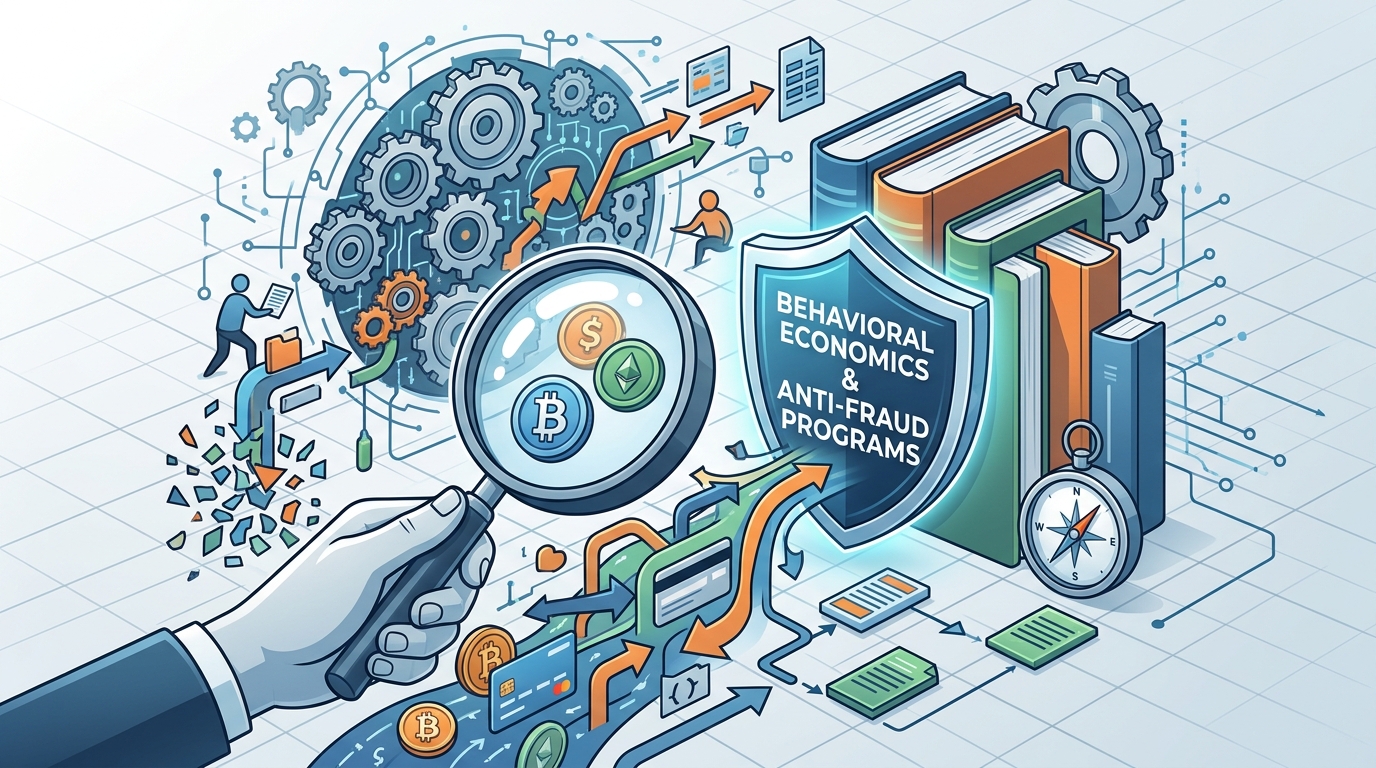
Behavioral economics is the systematic study of how psychological factors influence financial decision-making. Traditional economic models assume rational actors, but real-world transactions reveal consistent cognitive biases. Fraudsters exploit these predictable mental shortcuts to bypass security protocols. Modern academic programs address this gap by teaching students to map decision pathways. Learners analyze how stress, urgency, and social engineering trigger impulsive financial actions. This analytical framework allows compliance teams to design more resilient verification systems. Institutions now integrate these concepts directly into their core curriculum. Students examine how environmental cues alter risk tolerance and spending habits. The academic approach emphasizes empirical research and applied case studies. Professionals who master these concepts can predict fraudulent behavior before financial damage occurs.
Core Components of Anti-Fraud Behavioral Analysis
Anti-fraud behavioral analysis is the structured evaluation of human actions to detect deceptive transaction patterns. Programs in this field train analysts to identify micro-expressions, linguistic markers, and digital footprints. Students examine case studies involving identity theft, money laundering, and synthetic fraud. The curriculum emphasizes pattern recognition across multiple data streams. Learners also study how institutional policies interact with human error. This dual focus ensures graduates can design both technical controls and human-centric protocols. Academic institutions prioritize hands-on simulation labs over abstract lectures. Participants learn to cross-reference financial data with psychological profiling metrics. The training prepares analysts for high-stakes environments. Organizations increasingly rely on these specialized graduates to secure digital infrastructure.
Evaluating Online Master’s Program Structures
Distance learning has matured into a highly structured academic environment. Top-tier virtual classrooms utilize synchronous lectures, asynchronous case reviews, and live simulation labs. Students engage directly with faculty members who possess active law enforcement or financial compliance backgrounds. The pedagogical model prioritizes applied research over theoretical abstraction. Participants complete capstone projects that address current industry challenges. This hands-on approach bridges the gap between academic theory and operational reality. Institutions maintain rigorous academic standards while offering flexible scheduling. Learners access recorded sessions, discussion forums, and direct faculty mentorship. The virtual format eliminates geographic barriers while preserving educational quality. Graduates consistently report high satisfaction with the practical skill acquisition.
Comparing Certificate Pathways Versus Degree Tracks
Short-term certifications focus on immediate operational skills and regulatory compliance. Degree tracks provide comprehensive research methodology, statistical modeling, and ethical frameworks. Professionals seeking leadership roles typically pursue the full master’s curriculum. Organizations often subsidize degree programs because they yield higher long-term retention rates. Learners must weigh time commitments against career advancement objectives. Certificate programs serve as excellent entry points for mid-career professionals. Master’s degrees require extensive thesis work and comprehensive examinations. Both pathways deliver valuable credentials, but the depth of knowledge varies significantly. Students should review the certificate versus master’s comparison page to understand credit requirements. Financial institutions frequently prefer candidates holding advanced degrees for senior compliance roles.
Institutional Accreditation and Global Recognition
Regional accreditation ensures that academic standards meet rigorous governmental benchmarks. Institutions operating across multiple jurisdictions must navigate complex compliance requirements. Students should verify that their chosen program maintains recognized institutional status. Graduates from accredited programs gain eligibility for federal financial aid and professional licensing boards. International recognition further expands career mobility across multinational corporations. Always verify accreditation status before committing tuition funds. The institutional history demonstrates a commitment to academic excellence since 2008. Programs with global reach typically maintain partnerships with international law enforcement agencies. These partnerships enhance student networking opportunities and post-graduation placement rates. Accredited institutions also undergo regular external audits to maintain quality standards.
Program Delivery Models and Curriculum Focus
Virtual education platforms have evolved to support complex academic workflows. Modern learning management systems integrate video conferencing, secure document sharing, and automated grading tools. Students access the academic catalog to review specific course sequences and credit distributions. Behavioral economics tracks emphasize market psychology, consumer behavior, and risk assessment. Anti-fraud analysis programs focus on transaction monitoring, identity verification, and regulatory compliance. Both disciplines require strong analytical reasoning and attention to detail. Institutions offer financial aid packages to qualified applicants. The behavioral economics examples page illustrates how academic concepts apply to current financial markets. Students benefit from interdisciplinary coursework that bridges psychology, finance, and technology.
Career Impact and Industry Integration
Graduates from specialized behavioral science programs secure roles in financial compliance, risk assessment, and law enforcement. The 2024 International Summit connects academic researchers with active agency stakeholders. These networking events provide direct pathways to professional employment. Organizations increasingly hire behavioral analysts to design fraud prevention strategies. The demand for skilled professionals continues to outpace academic production. Professionals who complete advanced degrees command higher salaries and faster promotion timelines. Institutions maintain strong alumni networks that facilitate job placement. Students gain access to industry conferences, publication opportunities, and research grants. The career trajectory for behavioral analysts remains highly stable and financially rewarding.
Program Comparison Overview
| Program Focus | Delivery Format | Typical Duration | Career Outcome |
|---|---|---|---|
| Master in Behavioral Economics | 100% Online Virtual Classroom | 18 to 24 Months | Financial Compliance Analyst |
| Master in Anti-Fraud Behavioral Analysis | 100% Online Virtual Classroom | 18 to 24 Months | Fraud Prevention Specialist |
| Graduate Certificate Track | Asynchronous Modules | 6 to 12 Months | Regulatory Compliance Officer |
| International Law Enforcement Summit | Live Online Conference | 2 Days | Agency Networking & Certification |
Key Takeaways
- Programs originated in 2008 with a focus on behavioral and forensic sciences.
- Virtual classrooms support 100% online delivery with multilingual translation options.
- International summits connect law enforcement stakeholders with academic researchers.
- Financial aid availability reduces out-of-pocket tuition expenses for qualified candidates.
- Degree completion typically requires 18 to 24 months of structured coursework.
- Graduates frequently secure roles in financial compliance, risk assessment, and law enforcement.
- Institutions maintain recognized accreditation status across multiple international jurisdictions.
Frequently Asked Questions
How long does it take to complete an online behavioral economics master’s degree?
Most structured programs require 18 to 24 months of full-time study. Part-time schedules often extend the timeline to 36 months. Students can accelerate completion by transferring previously earned graduate credits.
Are online forensic behavioral programs recognized by law enforcement agencies?
Yes, accredited virtual programs maintain direct partnerships with international law enforcement networks. Many institutions host annual summits that connect students with active agency stakeholders.
What is the difference between a certificate and a master’s degree in anti-fraud analysis?
Certificates focus on immediate operational skills and regulatory compliance. Master’s degrees require comprehensive research methodology, statistical modeling, and ethical frameworks.
Can international students enroll in fully remote behavioral science programs?
International enrollment is fully supported through virtual classroom infrastructure. Institutions provide multilingual translation services and standardized admission pathways.
How do behavioral economics programs address modern cybercrime trends?
Curricula integrate digital footprint analysis, transactional risk mapping, and psychological profiling. Students learn to predict fraudulent behavior using established cognitive bias models.
What financial aid options are available for graduate behavioral science students?
Accredited institutions typically offer federal grants, institutional scholarships, and income-based repayment plans. Eligible candidates can access financial assistance during the standard application window.
Begin Your Specialized Training Today
Ready to advance your career in financial compliance and forensic analysis? Apply now for the Fall 2026 intake and secure your place in a fully accredited virtual master’s program. Visit the official admissions portal to review tuition schedules, transfer credit policies, and financial aid requirements. Begin your specialized training today.