

Cybercrime costs the global economy an estimated 6 trillion dollars annually, and that figure continues to climb as digital infrastructure expands. According to the FBI reports, law enforcement agencies processed over 800,000 internet crime complaints in a single recent fiscal year. Professionals who understand the psychological drivers behind digital attacks are now in higher demand than ever. Organizations require analysts who can predict attacker behavior, map criminal networks, and design proactive defense strategies. This specialized field requires advanced academic training that bridges technical security protocols with human behavioral analysis.
Understanding Behavioral Cybersecurity and Cybercriminology
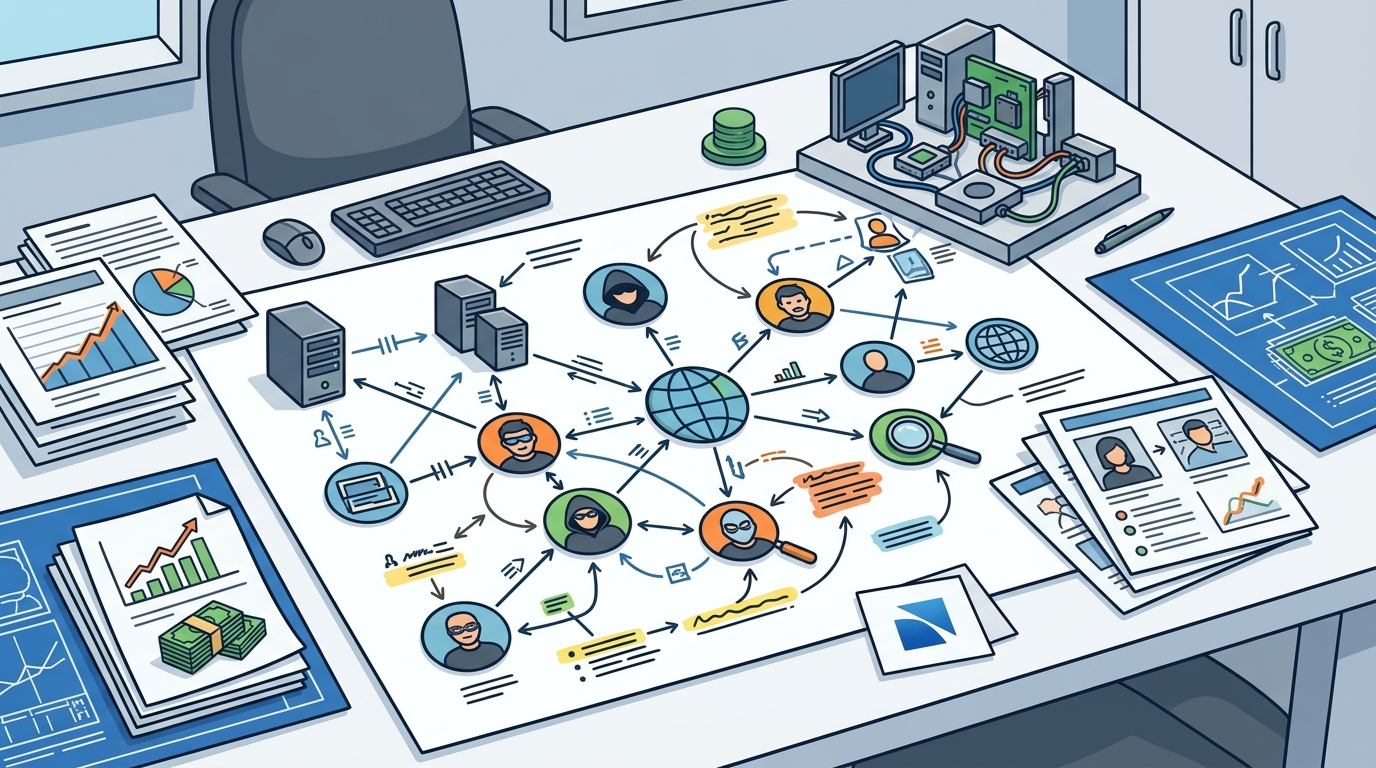
Behavioral cybersecurity is the systematic study of human decision-making processes within digital threat environments. Cybercriminology is the academic discipline that examines the psychological, sociological, and economic motivations behind digital offenses. Traditional IT security programs focus heavily on firewalls, encryption, and network architecture. These technical controls fail when attackers exploit human error, social engineering, or organizational culture gaps. Evidentia University addresses this gap by integrating behavioral science directly into cybersecurity curricula. Students learn to profile threat actors, analyze deception patterns, and predict attack vectors before they materialize. This approach transforms defensive strategies from reactive patching to proactive behavioral forecasting.
Core Curriculum of the Behavioral Cybersecurity Master's
The Master in Behavioral Cybersecurity and Cybercriminology delivers a rigorous academic framework designed for modern threat landscapes. Coursework covers advanced topics like behavioral economics, anti-fraud analysis, and nonverbal communication in digital contexts. Learners study how threat actors manipulate organizational vulnerabilities through psychological triggers. The program emphasizes practical application through case studies, simulated breach scenarios, and real-time threat mapping. Students also examine regulatory compliance frameworks and international data protection standards. This comprehensive structure ensures graduates can operate effectively across corporate, governmental, and private intelligence sectors. Social engineering is the psychological manipulation technique used to trick individuals into revealing confidential information or bypassing security protocols. Graduates leave the program equipped to design employee training modules, conduct insider threat assessments, and lead incident response teams with a behavioral-first mindset.
Alternative Degrees for Cybercrime Professionals
Professionals seeking adjacent specializations should evaluate related master's programs that align with specific career objectives. The Master in Criminal Profiling focuses heavily on offender behavior, geographic mapping, and investigative psychology. The Master in Behavioral Economics explores decision-making biases, market manipulation, and financial fraud mechanisms. The Master in Nonverbal and Deceptive Behavior trains analysts to detect subtle cues in digital communications and virtual negotiations. Each program offers distinct methodological tools that complement core cybersecurity operations. Prospective students must align their academic choice with their target industry, whether that involves corporate fraud, national security, or digital forensics. Reviewing the certificate versus masters in forensics guide clarifies the credential differences and career outcomes for each track.
Comparing Program Formats and Admission Requirements
Modern graduate programs increasingly prioritize accessibility without compromising academic rigor. Evidentia University delivers all master's programs through a 100% online format that accommodates working professionals. The Fall 2026 intake cycle accepts applications from candidates worldwide, including international students seeking specialized training. Admission typically requires a bachelor's degree, professional experience, and a demonstrated commitment to behavioral research. Financial aid options are available to qualified applicants, reducing the financial barrier to advanced education. Prospective students should review the detailed academics page and tuition structures before submitting their applications. The institution also hosts an annual International Law Enforcement Summit that connects students with industry leaders and law enforcement stakeholders.
Career Trajectories and Industry Demand
The global cybersecurity workforce faces a persistent talent shortage, with millions of unfilled positions across multiple sectors. According to the Bureau of Labor Statistics, information security analysts will experience significantly faster than average job growth through 2032. Organizations now hire behavioral cybersecurity specialists to lead incident response, conduct threat intelligence analysis, and design employee training programs. Government agencies recruit these professionals to investigate state-sponsored cyberattacks and organized digital crime syndicates. Private consulting firms deploy behavioral analysts to audit corporate security cultures and mitigate insider threat risks. This sustained demand ensures long-term career stability and competitive compensation packages. The Cybersecurity and Infrastructure Security Agency actively promotes behavioral training as a critical component of national defense strategies.
Program Comparison Matrix
| Master's Program | Primary Focus Area | Target Career Path | Program Link |
|---|---|---|---|
| Behavioral Cybersecurity & Cybercriminology | Threat actor psychology, digital fraud patterns, predictive defense | Cyber Threat Analyst, Incident Response Lead, Corporate Security Director | View Program Details |
| Criminal Profiling | Offender mapping, investigative psychology, crime scene analysis | Federal Investigator, Crime Analyst, Law Enforcement Consultant | View Program Details |
| Behavioral Economics | Decision bias, financial fraud, market manipulation tactics | Financial Fraud Examiner, Risk Compliance Officer, Policy Advisor | View Program Details |
| Nonverbal and Deceptive Behavior | Digital communication cues, virtual negotiation, deception detection | Digital Forensics Examiner, Corporate Trainer, Intelligence Analyst | View Program Details |
Key Takeaways
- Cybercrime costs exceed 6 trillion dollars annually, driving massive hiring surges for behavioral analysts.
- The FBI processed over 800,000 internet crime complaints in a single recent fiscal year, highlighting urgent workforce needs.
- Behavioral cybersecurity integrates psychological profiling with technical defense to predict and neutralize digital threats.
- 100% online delivery and Fall 2026 admissions make advanced training accessible to working professionals worldwide.
- Information security analysts will experience significantly faster than average job growth through 2032 according to federal labor data.
- Financial aid and structured admission pathways reduce barriers to entry for qualified candidates.
- Industry summits and alumni networks provide direct access to law enforcement and corporate security decision-makers.
Frequently Asked Questions
Is behavioral cybersecurity different from traditional IT security?
Yes. Traditional IT security focuses on hardware, software, and network configurations. Behavioral cybersecurity examines the human element, including attacker psychology, employee vulnerabilities, and organizational culture. Both approaches are necessary for comprehensive digital defense.
Can I earn a master's degree in behavioral cybersecurity while working full-time?
Absolutely. The program is delivered 100% online, allowing working professionals to maintain their current employment while completing coursework. Asynchronous modules and flexible deadlines accommodate demanding schedules.
What career roles does this degree prepare me for?
Graduates qualify for positions such as Cyber Threat Analyst, Incident Response Manager, Corporate Security Director, Digital Forensics Examiner, and Risk Compliance Officer. Government agencies and private consulting firms actively recruit these specialists.
How does the Master in Criminal Profiling compare to behavioral cybersecurity?
Criminal profiling emphasizes offender mapping, geographic analysis, and investigative psychology for physical and digital crime scenes. Behavioral cybersecurity focuses specifically on digital threat actors, network vulnerabilities, and predictive defense strategies. Both degrees share foundational behavioral science coursework.
Are financial aid options available for international students?
Yes. The institution offers financial aid to qualified applicants regardless of geographic location. International students can access the same funding resources, scholarship opportunities, and tuition structures as domestic candidates.
What technical prerequisites do I need before applying?
Applicants must hold a bachelor's degree from an accredited institution. Prior IT certifications are not required, but professional experience in security, law enforcement, or behavioral research strengthens applications. The about page outlines detailed admission requirements.
How long does it take to complete the program?
Most students finish the master's degree within 18 to 24 months. Accelerated tracks and part-time schedules are available to match individual pacing preferences. Transfer credits from previous graduate coursework may reduce total completion time.
Next Steps for Aspiring Cyber Analysts
Securing a specialized master's degree in behavioral cybersecurity positions you at the forefront of digital defense. Organizations across government, finance, healthcare, and technology sectors are actively recruiting professionals who understand the psychology behind digital attacks. Review the comprehensive academics page to explore curriculum details, tuition structures, and admission timelines. Apply now for the Fall 2026 intake and join a global network of behavioral science professionals. Visit the official website to schedule a consultation with an admissions counselor and begin your application today.