

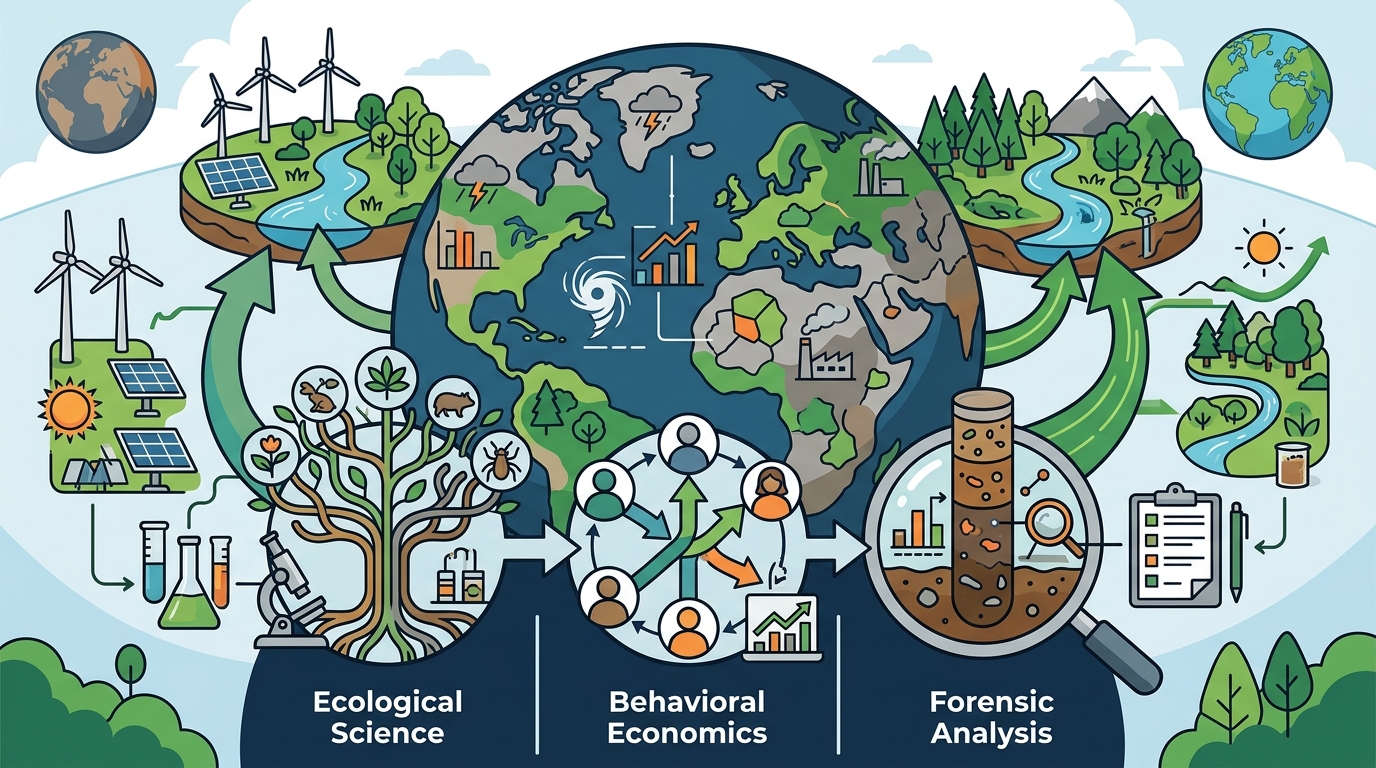
Global environmental degradation continues to accelerate, with recent climate reports indicating that extreme weather events have increased by approximately forty percent over the last decade. Climate data shows that industrial output and resource depletion remain primary drivers of ecological instability. A Master's in Sustainability directly addresses these systemic failures by merging ecological science with behavioral economics and forensic analysis. Students learn to diagnose complex environmental violations, design regenerative policies, and implement measurable conservation strategies. This academic framework transforms theoretical knowledge into actionable field operations.
Understanding Modern Environmental Pressures
Environmental systems face unprecedented stress from industrial expansion and population growth. UN reports confirm that over half of the global population now lives in urban centers that strain local ecosystems. Sustainability programs teach students to map these stressors using advanced geospatial analytics and behavioral forecasting. Forensic auditing methods help professionals trace pollution sources back to specific corporate or municipal liabilities. This diagnostic approach ensures that interventions target root causes rather than surface symptoms.
Core Curriculum and Behavioral Integration
Behavioral economics is the systematic study of how psychological factors influence economic decision-making. Behavioral economics courses at Evidentia University examine how human habits drive resource consumption and waste generation. Students analyze consumer behavior patterns to design interventions that reduce carbon footprints without sacrificing economic productivity. The curriculum integrates forensic auditing techniques to track environmental compliance across supply chains. This dual focus on human behavior and regulatory compliance creates highly adaptable professionals.
Data-Driven Policy and Resource Management
Resource management is the strategic allocation of finite ecological assets to maximize long-term viability. EPA data shows that municipal water systems face increasing contamination risks due to aging infrastructure and agricultural runoff. Master's candidates learn to deploy predictive modeling tools that forecast resource depletion timelines. These analytical frameworks allow graduates to draft binding conservation ordinances and corporate sustainability mandates. Organizations now require professionals who can translate raw environmental metrics into enforceable policy language.
Career Pathways and Industry Placement
The job market for environmental specialists continues to expand as regulatory agencies tighten compliance standards. World Bank reports that green technology investments have surpassed traditional fossil fuel funding for the first time in recorded history. Graduates secure roles as environmental compliance officers, sustainability consultants, and forensic auditors. Evidentia University connects students with law enforcement stakeholders and municipal planning committees through its 2024 International Summit. This networking infrastructure accelerates professional placement and provides real-world case study exposure.
Strategic Leadership and Operational Compliance
Operational compliance is the mandatory adherence to environmental regulations and corporate governance standards. About our institution reveals that Evidentia University has operated since 2008, establishing a strong foundation in behavioral and forensic sciences. Students master risk assessment protocols that identify regulatory vulnerabilities before audits occur. Leadership modules emphasize crisis communication, stakeholder negotiation, and cross-border environmental treaty enforcement. These competencies prepare graduates to direct large-scale conservation initiatives and corporate sustainability divisions.
| Program Focus | Core Methodology | Primary Career Outcome |
|---|---|---|
| Behavioral Forecasting | Academic research and consumer behavior mapping | Sustainability Consultant |
| Forensic Auditing | Supply chain liability tracing and pollution source identification | Environmental Compliance Officer |
| Policy Development | Predictive resource modeling and regulatory drafting | Municipal Planning Director |
| Crisis Management | Stakeholder negotiation and treaty enforcement protocols | Corporate Sustainability Director |
Key Takeaways
- Global environmental stressors have increased extreme weather frequency by approximately forty percent over the last decade.
- Behavioral economics courses directly link human consumption habits to measurable carbon footprint reductions.
- Forensic auditing methodologies enable professionals to trace pollution liabilities across complex corporate supply chains.
- Green technology investments have officially surpassed traditional fossil fuel funding in recent market cycles.
- Evidentia University has maintained continuous academic operations since 2008, establishing deep institutional expertise.
- Graduates secure high-demand roles in municipal planning, corporate compliance, and environmental forensics.
Frequently Asked Questions
How does a Master's in Sustainability integrate behavioral science?
The program merges psychological forecasting with ecological data to predict how human habits impact resource depletion. Students learn to design interventions that modify consumption patterns while maintaining economic stability.
What specific forensic techniques are taught in the curriculum?
Candidates master supply chain liability tracing, pollution source identification, and regulatory compliance auditing. These methods allow professionals to pinpoint environmental violations and assign legal responsibility accurately.
Is the program delivered online or on campus?
Evidentia University delivers all master's coursework through a fully virtual classroom structure. This format accommodates working professionals and international students across multiple time zones.
How does the university support career placement after graduation?
Students gain direct access to the 2024 International Summit and industry networking events. These connections facilitate rapid placement in compliance, consulting, and planning roles.
What regulatory frameworks do graduates learn to navigate?
The curriculum covers municipal conservation ordinances, corporate governance standards, and cross-border environmental treaties. Professionals are trained to draft binding policy language that aligns with current legislative requirements.
Next Steps for Aspiring Sustainability Leaders
Environmental challenges require immediate, data-driven intervention rather than theoretical speculation. Apply now to secure your position in the next academic cohort. Our admissions team provides personalized guidance on financial aid, transfer credits, and program specialization. Visit the Academics portal to review detailed course syllabi and faculty credentials. Begin your transition into high-impact environmental leadership today.