

Research indicates that individuals transmit approximately fifty five percent of their communicative intent through physical gestures and facial movements. This foundational statistic underscores why modern institutions prioritize structured academic training in behavioral analysis. Professionals seeking advanced credentials now pursue specialized graduate programs that decode subtle human signals. These academic pathways equip analysts with rigorous frameworks for identifying concealed information. The following guide outlines the exact institutional requirements, curriculum structures, and admission timelines for prospective students. (Translational Research in)
Understanding the Core Curriculum
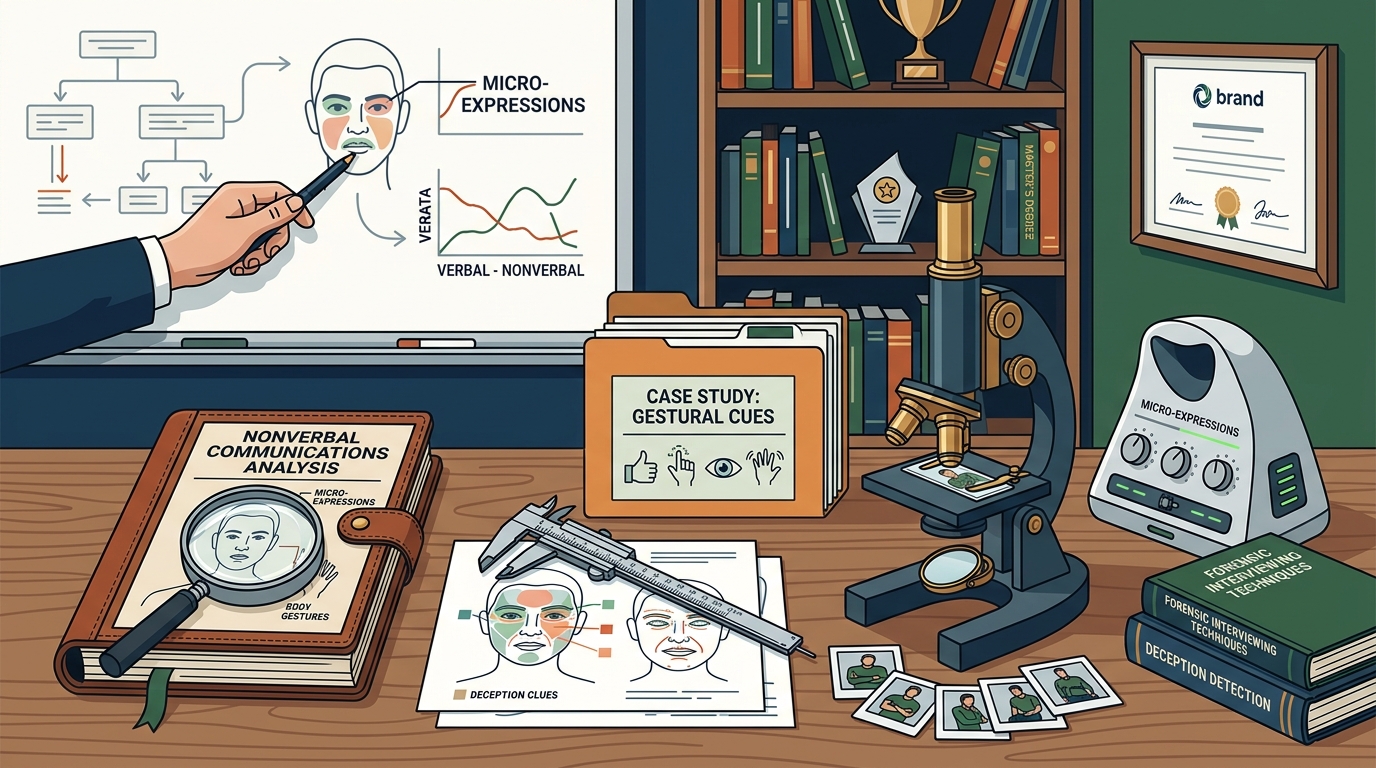
Advanced graduate programs in behavioral sciences require students to master complex observational frameworks. Nonverbal communication is the systematic study of physical signals that convey meaning without spoken language. Students analyze microexpressions that flash across facial muscles in less than a quarter of a second. These rapid physiological responses often reveal concealed emotional states. Deception detection is the structured methodology used to identify inconsistencies between verbal statements and physical behavior. Academic modules focus on identifying baseline behavioral patterns before measuring stress indicators. Learners practice mapping physiological shifts against established psychological benchmarks. This rigorous training prepares graduates for high stakes investigative environments.
Microexpressions and Rapid Analysis
Graduate coursework emphasizes the identification of fleeting facial movements. These involuntary signals typically last between one tenth and one quarter of a second. Students learn to categorize these rapid shifts against standardized emotional databases. The curriculum requires repeated practice in controlled laboratory settings. Analysts must distinguish between genuine emotional leakage and deliberate masking techniques.
Behavioral Cues and Baseline Mapping
Effective field analysis requires establishing a subject baseline before measuring deviations. Behavioral deviation is the measurable difference between a subject normal state and their current physiological response. Students practice documenting posture shifts, hand placements, and vocal tonality changes. These metrics form the foundation of credible investigative reports. Instructors emphasize the importance of contextual environmental factors during observation sessions.
Analytical Frameworks and Documentation
Academic programs require students to compile comprehensive analytical reports. These documents must correlate observed physical cues with verbal contradictions. Students utilize standardized scoring matrices to quantify behavioral confidence levels. The final capstone project typically involves analyzing recorded interview footage. Graduates emerge with the ability to construct legally defensible behavioral assessments.
Institutional Credentials and Historical Context
Selecting the correct academic institution requires verifying accreditation status and historical operational data. Evidentia University of Behavioral and Forensic Sciences operates with an international reach because of its strategic location in Florida. The institution traces its operational origins back to two thousand eight in Europe. This early European foundation established the initial academic frameworks for behavioral law enforcement training. The organization subsequently expanded its operational footprint across Latin America and North America. Prospective students should verify institutional licensure through official state education databases. The university maintains active partnerships with international law enforcement agencies. These partnerships ensure that academic curricula remain aligned with current field requirements.
European Origins and Academic Foundations
The initial academic programs emerged from specialized European research initiatives. Early faculty members focused on translating academic behavioral theories into practical field applications. The original curriculum emphasized observational psychology and investigative methodology. These foundational concepts remain central to the current master degree requirements. Modern students benefit from decades of refined pedagogical frameworks. (Higher Education Research)
Florida Expansion and Global Reach
Subsequent institutional expansion established a permanent academic headquarters in the United States. The Florida location provides access to diverse demographic populations for observational research. The university now processes applications from international students across multiple continents. This global student body enriches classroom discussions with cross cultural behavioral perspectives. The institution maintains strict adherence to regional accreditation standards.
Program Delivery and Academic Structure
Modern academic institutions prioritize flexible delivery models to accommodate working professionals. The target program operates as a one hundred percent online educational platform. This delivery model eliminates geographic barriers while maintaining rigorous academic standards. Students access virtual classroom environments through secure institutional portals. The platform supports synchronous lectures and asynchronous discussion board participation. All recorded sessions include translation support for international cohorts. The academic calendar aligns with standard semester structures across North American institutions.
Online Format and Virtual Classrooms
Virtual learning environments replicate traditional classroom dynamics through digital interfaces. Students participate in live behavioral analysis exercises with remote faculty supervision. The platform supports high resolution video playback for frame by frame analysis. Learners submit digital portfolios documenting their observational progress. Technical support teams ensure seamless access to institutional resources.
Admission Timelines and Fall 2026 Intake
Institutional admissions offices process applications on a rolling basis with specific cohort start dates. The current academic cycle accepts applications for the fall semester beginning in September two thousand twenty six. Prospective students must submit official transcripts and standardized test scores. The admissions committee evaluates candidates based on academic history and professional experience. Financial aid packages remain available for qualified applicants who meet institutional criteria.
Career Trajectories and Professional Application
Graduates with specialized behavioral analysis credentials pursue diverse professional pathways. Law enforcement agencies increasingly require behavioral assessment certifications for investigative units. Corporate security departments utilize these analytical frameworks for internal fraud investigations. Academic institutions hire graduates to teach observational psychology and behavioral economics. The Bureau of Labor Statistics projects steady employment growth for specialized behavioral analysts. Professionals with advanced degrees typically command higher starting salaries in investigative fields. (Reading People Behavioral)
Law Enforcement and Investigative Units
Police departments and federal agencies integrate behavioral analysis into standard investigative protocols. Detectives utilize observational frameworks to identify suspect deception during interrogations. Behavioral analysts collaborate with forensic psychologists to construct comprehensive case profiles. These specialized units require graduates who can translate academic theory into field applications. The demand for certified behavioral analysts continues to expand across municipal agencies.
Corporate Security and Fraud Prevention
Financial institutions and insurance companies employ behavioral analysts to detect claim fraud. Corporate security teams utilize observational frameworks during employee background investigations. Behavioral risk assessment specialists monitor internal communications for potential data breaches. These professionals apply deception detection methodologies to protect organizational assets. The corporate sector increasingly recognizes the financial value of behavioral screening. (Advancing Fraud Detection)
Financial Aid and Tuition Models
Graduate education requires careful financial planning and institutional budgeting. The target program structures tuition payments across standard semester billing cycles. Institutional financial aid offices evaluate applicants for merit based scholarships and need based grants. Prospective students should request detailed tuition schedules before submitting formal applications. The university maintains transparent pricing structures across all academic departments. Financial advisors assist students in navigating federal loan programs and institutional payment plans.
Scholarship Opportunities and Institutional Grants
Academic institutions allocate specific funding pools for high performing candidates. Merit based scholarships recognize students with exceptional undergraduate academic records. Need based grants assist applicants who demonstrate financial constraints during the application process. Institutional financial aid offices process scholarship disbursements alongside standard tuition billing. Students should submit scholarship applications concurrently with their degree program requests.
Payment Structures and Budgeting Guidelines
Graduate programs typically require tuition payments before the start of each academic term. Institutional billing departments accept electronic fund transfers and standard credit card payments. Students may utilize federal student loans to cover remaining educational expenses. Financial advisors recommend creating detailed budget projections before accepting formal admission offers. The university maintains dedicated financial counseling services for all enrolled students.
Key Takeaways
- Institutional operations trace back to two thousand eight with initial European academic foundations.
- Program delivery operates as a one hundred percent online platform with synchronous and asynchronous components.
- Admissions cycles process applications for the fall semester beginning in September two thousand twenty six.
- Curriculum modules emphasize microexpression identification and baseline behavioral mapping techniques.
- Financial aid packages remain available for qualified applicants who meet institutional criteria.
- Graduates pursue careers in law enforcement, corporate security, and academic research environments. (Admission Procedures and)
- The institution maintains active partnerships with international law enforcement agencies across multiple continents.
Frequently Asked Questions
What specific academic credentials are required for admission?
Applicants must submit official transcripts from accredited undergraduate institutions. The admissions committee evaluates candidates based on cumulative grade point averages and relevant coursework. Professional experience in investigative or psychological fields strengthens application portfolios. Prospective students should verify program specific prerequisites before submitting formal applications.
How does the online format accommodate working professionals?
The virtual classroom platform supports flexible scheduling through recorded lecture archives. Students access course materials through secure institutional portals at any time. Synchronous discussion sessions occur during designated evening hours to accommodate global time zones. Technical support teams provide continuous assistance throughout the academic semester.
Are financial aid packages available for international students?
Institutional financial aid offices evaluate all applicants regardless of geographic origin. Merit based scholarships recognize exceptional academic performance across all demographic groups. Need based grants assist candidates who demonstrate financial constraints during the application process. International students should consult institutional financial advisors regarding visa compliant funding options. (Financial Aid Statistics)
What career pathways typically follow program completion?
Graduates pursue positions in law enforcement investigative units and corporate security departments. Academic institutions hire behavioral analysts to teach observational psychology and research methodology. Insurance companies employ specialized analysts to detect fraudulent claim submissions. Professionals with advanced degrees typically command higher starting salaries in investigative fields.
How long does the complete master degree program require?
The standard academic curriculum requires two full academic years of continuous study. Students complete core behavioral analysis modules alongside specialized elective coursework. The final capstone project typically requires six months of independent research. Graduates receive official transcripts and institutional diplomas upon successful program completion.
Does the institution offer continuing education certificates?
Academic departments provide specialized certificate programs for working professionals. These shorter educational pathways focus on specific behavioral analysis techniques. Students may pursue certificate credentials alongside traditional master degree requirements. Institutional admissions offices process certificate program applications through standard channels.
What technological requirements must students meet for virtual coursework?
Students require high speed internet connections and standard computing hardware. The virtual classroom platform supports Windows and macOS operating systems. Institutional technical support teams provide software installation guides for all enrolled students. Learners must maintain active institutional email accounts throughout the academic semester.
How does the curriculum address cross cultural behavioral differences?
Academic modules incorporate global behavioral databases to ensure cross cultural applicability. Students analyze observational data from diverse demographic populations across multiple continents. Faculty members emphasize the importance of cultural context during behavioral interpretation. The curriculum prepares graduates to operate effectively in international investigative environments.
Next Steps and Application Process
Prospective students should initiate the formal application process through the official institutional portal. The admissions office provides comprehensive guidance throughout the entire enrollment journey. Financial aid counselors assist candidates in securing appropriate funding packages before term start dates. Institutional representatives remain available to answer specific program inquiries via official communication channels. Visit the primary institutional homepage to begin your academic journey today.
| Program Component | Academic Structure | Professional Application |
|---|---|---|
| Core Curriculum | Behavioral Analysis Modules | Investigative Frameworks |
| Delivery Format | One Hundred Percent Online | Flexible Scheduling |
| Admission Cycle | Fall 2026 Intake | Rolling Applications |
| Financial Support | Institutional Scholarships | Federal Loan Options |
| Credential Path | Master Versus Certificate | Professional Certification |