

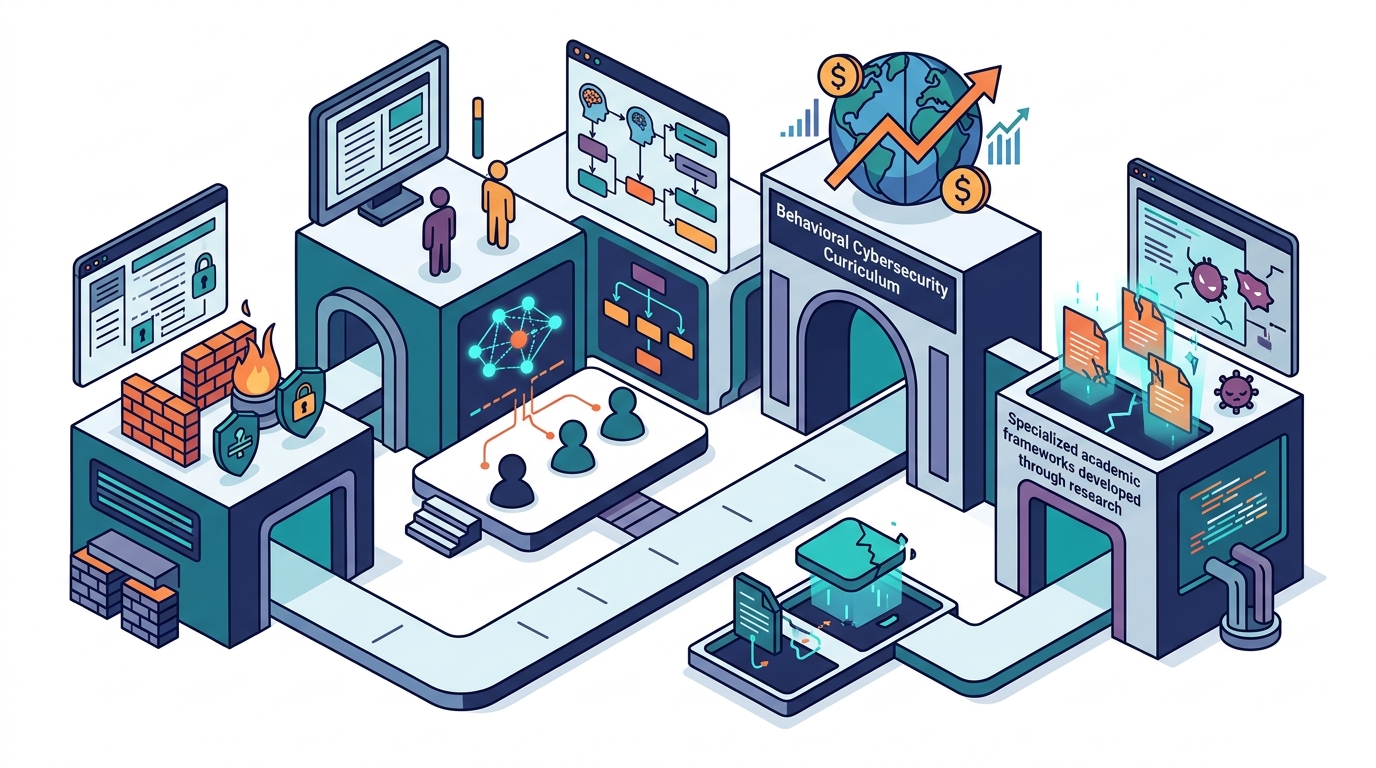
Modern digital threats require specialized academic frameworks. According to recent industry reports, global cybercrime costs exceed two trillion dollars annually. Leading online institutions address this crisis by integrating behavioral science with technical security protocols. Students access structured modules through a centralized virtual classroom. These programs emphasize human decision-making patterns rather than purely technical defenses. This educational model prepares graduates to anticipate attacker psychology and mitigate organizational risk. Academic administrators design these pathways to ensure continuous skill development across multiple security disciplines. (About Us Evidentia University)
Platform Architecture
Online universities construct learning environments that mirror real-world security operations. The infrastructure supports asynchronous collaboration and synchronous case studies. Students navigate a centralized dashboard that tracks progress across multiple disciplines. Behavioral cybersecurity education requires tools that simulate threat environments without exposing learners to actual vulnerabilities. The platform integrates tracking metrics, discussion forums, and assignment repositories into a single interface. This architecture reduces cognitive load and allows students to focus on analytical reasoning.
Curriculum Design
Academic programs in this field follow a structured progression from foundational concepts to advanced threat modeling. Learners begin with core principles of human-computer interaction and risk assessment. The syllabus then advances to specialized modules covering deception detection and fraud prevention. Cybercriminology master tracks require students to map behavioral patterns against digital footprints. Instructors design case-based assessments that mirror actual incident response workflows. This pedagogical approach ensures graduates can translate theoretical knowledge into actionable defense strategies.
Virtual Classroom Mechanics
Distance learning platforms utilize interactive modules to replicate laboratory conditions. Students participate in guided simulations that test response protocols under pressure. The system records interaction timestamps and decision pathways for later review. Virtual classroom mechanics is a structured learning environment that integrates asynchronous modules with synchronous case studies and interactive tracking metrics. Participants analyze recorded security breaches to identify psychological triggers and operational failures. This method builds muscle memory for high-stakes decision making.
Behavioral Analysis Integration
Forensic behavioral sciences provide the theoretical backbone for modern security training. Nonverbal communication patterns and cognitive bias mapping form the core of advanced modules. Forensic behavioral sciences is a specialized academic discipline that examines how human error creates exploitable vulnerabilities in digital infrastructure. Students learn to identify micro-expressions and linguistic markers that indicate insider threats. The curriculum emphasizes proactive monitoring rather than reactive patching. This shift in perspective reduces organizational exposure to social engineering attacks.
Global Access and Certification
International institutions remove geographic barriers by offering fully remote degree pathways. Learners from diverse regulatory environments access the same standardized curriculum. The program issues recognized certificates upon successful completion of all core competencies. Behavioral cybersecurity education prepares graduates for roles in law enforcement, corporate security, and academic research. Alumni networks facilitate knowledge sharing across multiple continents. This global distribution strengthens collective defense capabilities against transnational threats.
| Program Focus | Delivery Format | Certification Outcome | Target Audience |
|---|---|---|---|
| Behavioral Cybersecurity Track | 100% Online | Master Degree | Security Analysts |
| Continuing Education Modules | Asynchronous | Professional Certificate | Law Enforcement |
| International Summit Series | Synchronous Webinar | Attendance Credential | Industry Stakeholders |
| Admissions and Financial Aid | Application Portal | Enrollment Confirmation | Prospective Students |
Key Takeaways
- Global cybercrime expenditures exceed two trillion dollars annually according to recent industry reports.
- Online platforms utilize centralized dashboards to track student progress across multiple disciplines.
- Behavioral cybersecurity education emphasizes human decision-making patterns over technical defenses.
- Virtual classroom mechanics record interaction timestamps for later analytical review.
- Forensic behavioral sciences examine how human error creates exploitable vulnerabilities.
- International institutions remove geographic barriers by offering fully remote degree pathways.
- Programs issue recognized certificates upon successful completion of all core competencies.
Frequently Asked Questions
What defines behavioral cybersecurity education?
Behavioral cybersecurity education is a specialized academic framework that studies human decision-making patterns to predict and mitigate digital threats.
How do online universities structure their virtual classrooms?
Online universities structure their virtual classrooms by integrating asynchronous modules with synchronous case studies and interactive tracking metrics.
What technical skills do students acquire through these programs?
Students acquire technical skills in threat modeling, risk assessment, and incident response protocol design.
Are these programs recognized by international law enforcement agencies?
Yes, these programs are recognized by international law enforcement agencies and corporate security departments worldwide.
How does the curriculum address social engineering attacks?
The curriculum addresses social engineering attacks by mapping cognitive biases and linguistic markers against digital footprints.
What certification do graduates receive upon completion?
Graduates receive a master degree or professional certificate depending on their chosen academic track.
Can working professionals enroll in these online programs?
Working professionals can enroll in these online programs through flexible scheduling and asynchronous learning options.
Begin Your Cybersecurity Education Today
Transform your career by mastering the intersection of human behavior and digital defense. Apply now to secure your place in the upcoming academic term. Visit the official admissions portal to review tuition structures and financial aid opportunities. Schedule a consultation with our academic advisors to discuss your professional goals. Start your application process today and join a global network of security professionals.