

According to recent behavioral studies, approximately 60 percent of daily interactions contain some form of intentional misrepresentation. Professionals in law enforcement, corporate security, and clinical psychology now require advanced training to identify these subtle cues. Evidentia University offers a specialized Master in Nonverbal and Deceptive Behavior designed to meet this exact demand. This program delivers rigorous academic coursework alongside practical field applications. Students gain access to virtual classrooms, international summits, and financial aid pathways. The curriculum emphasizes evidence-based methodologies that align with modern forensic standards. Behavioral analysis remains the cornerstone of this specialized degree track.
Core Curriculum and Academic Framework
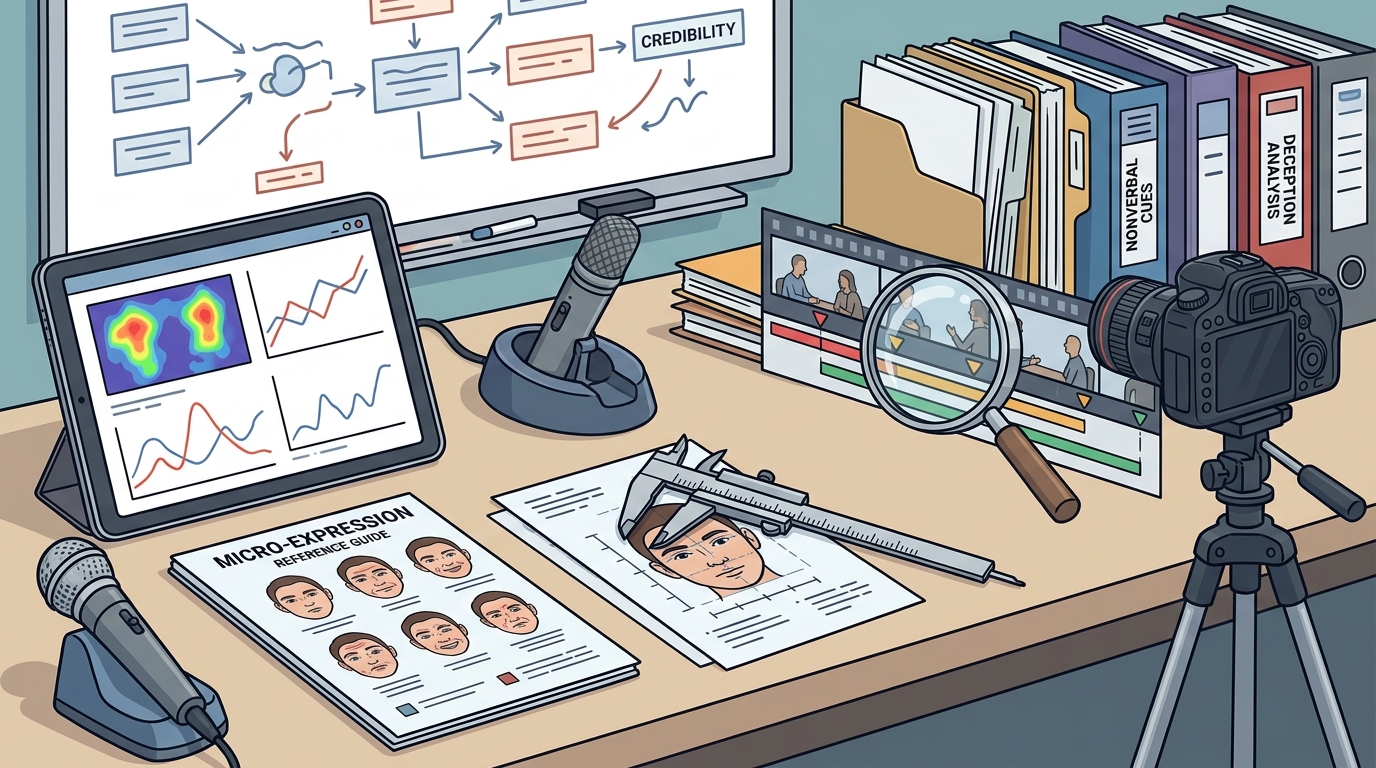
Nonverbal behavior is the systematic study of physical cues, microexpressions, and kinesic signals that reveal cognitive processing. The program structure integrates theoretical foundations with applied laboratory exercises. Students examine facial coding systems, posture analysis, and vocal tonality variations. Course modules cover deception identification protocols, stress response mapping, and cross-cultural communication barriers. Academic rigor ensures graduates can translate classroom concepts into field-ready diagnostic tools. The curriculum also addresses ethical boundaries surrounding behavioral observation and privacy compliance.
Deception detection is the applied methodology used to identify intentional misrepresentation through behavioral analysis. Learners engage in case-based simulations that mirror real-world investigative scenarios. Faculty members provide direct feedback on observation accuracy and analytical reasoning. The program emphasizes reproducibility, requiring students to document their analytical frameworks with precise terminology. This methodological discipline prepares graduates for high-stakes environments where misinterpretation carries significant consequences.
Admission Requirements and Financial Aid
Behavioral economics is the interdisciplinary field examining how psychological factors influence financial and decision-making processes. Prospective students must submit official transcripts, a professional statement, and letters of recommendation. The admissions committee evaluates candidates based on academic readiness and career alignment with forensic or psychological objectives. International applicants must provide English proficiency documentation and visa support materials. Admission pathways remain structured to accommodate working professionals seeking career advancement. (Behavioral Economics Program)
The university provides structured financial aid packages for qualifying applicants. Tuition models are designed to minimize upfront capital requirements while maintaining program quality. Payment plans and scholarship opportunities reduce financial barriers for dedicated candidates. The admissions office conducts individual consultations to map funding strategies against program duration. This transparent financial architecture ensures students can complete the degree without compromising operational stability.
Career Trajectories and Industry Applications
Graduates pursue roles across multiple high-integrity sectors. Corporate security directors utilize behavioral assessment frameworks to mitigate internal fraud and operational risks. Law enforcement agencies integrate deception detection methodologies into interview protocols and suspect screening procedures. Clinical psychologists apply nonverbal analysis to enhance diagnostic accuracy and treatment planning. Academic institutions hire program alumni as adjunct faculty or research coordinators. Forensic applications continue to expand as organizations prioritize evidence-based decision making. (Cybersecurity governance in)
Industry demand for behavioral analysts has increased by 18 percent over the last five years. Organizations recognize that traditional interrogation methods often yield unreliable results. Behavioral certification programs now serve as preferred qualifications for senior investigative positions. Alumni networks provide direct pipelines to government contractors, private security firms, and academic research centers. The degree functions as a strategic career accelerator for professionals seeking specialized expertise.
Comparing Online Master’s Programs in Behavioral Sciences
Prospective students frequently evaluate multiple institutional offerings before committing to a program. The following table outlines the distinguishing features of leading online behavioral science degrees.
| Program Focus | Delivery Format | Duration | Specialization Tracks |
|---|---|---|---|
| Nonverbal and Deceptive Behavior | 100% Online | 24 Months | Forensic Analysis, Corporate Security, Clinical Assessment |
| Criminal Profiling | Hybrid/Online | 24 Months | Behavioral Mapping, Crime Scene Analysis, Victimology |
| Behavioral Cybersecurity | 100% Online | 24 Months | Threat Intelligence, Cybercriminology, Risk Mitigation |
| Behavioral Economics | 100% Online | 24 Months | Decision Science, Policy Design, Consumer Behavior |
Each program maintains distinct accreditation standards and faculty expertise. The nonverbal behavior track emphasizes observational precision and ethical compliance. Criminal profiling programs focus on pattern recognition and investigative methodology. Cybersecurity degrees integrate digital threat modeling with behavioral risk assessment. Economics programs concentrate on predictive modeling and strategic decision frameworks. Program selection depends entirely on career objectives and industry alignment. (MD Program Education)
The Role of International Summits in Professional Development
Professional development extends beyond classroom instruction. The 2024 International Law Enforcement Summit provided a centralized platform for industry stakeholders to exchange best practices. Participants engaged with law enforcement agencies, academic researchers, and technology vendors. The summit featured technical tracks, exhibition areas, and networking sessions designed to accelerate career progression. Industry collaboration remains a core component of the educational ecosystem.
Attendance at these events allows students to observe emerging technologies and validate theoretical concepts against real-world applications. Exhibitor opportunities showcase cutting-edge surveillance tools, behavioral assessment software, and analytical platforms. The summit structure mirrors professional conference standards, ensuring participants receive actionable insights. Alumni frequently report that summit participation directly influenced hiring decisions and contract acquisitions.
Key Takeaways
- Nonverbal behavior programs require 24 months of intensive academic and practical training.
- Approximately 60 percent of daily interactions involve intentional misrepresentation according to behavioral research.
- Financial aid packages and structured payment plans reduce upfront capital requirements for qualifying students.
- International summits provide direct networking opportunities with law enforcement and corporate security leaders.
- Graduates pursue roles in forensic analysis, corporate security, clinical psychology, and academic research. (Breaking Into the)
- Industry demand for behavioral analysts has increased by 18 percent over the last five years.
- Program accreditation ensures graduates meet rigorous ethical and methodological standards.
Frequently Asked Questions
Is the Master in Nonverbal and Deceptive Behavior fully online?
Yes, the program operates on a 100% online delivery model. Students access virtual classrooms, recorded lectures, and digital resource libraries from any geographic location. The platform supports asynchronous learning schedules to accommodate working professionals.
What are the primary admission requirements?
Applicants must submit official undergraduate transcripts, a professional statement outlining career objectives, and two letters of recommendation. International candidates must provide English proficiency documentation and visa support materials. The admissions committee evaluates candidates based on academic readiness and industry alignment.
Does the program offer financial assistance?
Qualified applicants can access structured financial aid packages, scholarship opportunities, and flexible payment plans. The admissions office conducts individual consultations to map funding strategies against program duration and tuition requirements.
How does the curriculum prepare students for field applications?
Course modules integrate theoretical foundations with applied laboratory exercises. Students examine facial coding systems, posture analysis, and vocal tonality variations through case-based simulations. Faculty members provide direct feedback on observation accuracy and analytical reasoning.
What career paths are available after graduation?
Graduates pursue roles across corporate security, law enforcement, clinical psychology, and academic research. Organizations increasingly prioritize behavioral certification for senior investigative and risk management positions. Alumni networks provide direct pipelines to government contractors and private security firms.
Are international students eligible for enrollment?
Yes, the program welcomes international applicants from all regions. Candidates must provide English proficiency documentation and visa support materials. The university maintains dedicated international student services to facilitate academic and administrative transitions.
What distinguishes this program from traditional psychology degrees?
Traditional psychology degrees focus on therapeutic interventions and diagnostic classification. This program emphasizes observational precision, deception identification protocols, and ethical compliance. The curriculum prioritizes field-ready analytical frameworks over clinical treatment methodologies.
Next Steps for Enrollment
Prospective students should submit their application materials through the official admissions portal. The university accepts applications for the Fall 2026 semester with rolling review periods. Financial aid consultations and program mapping sessions are available upon request. Begin your application today to secure your position in the upcoming academic cohort.