

Where Can I Get a Master's Degree in Nonverbal Behavior and Deception Detection?
If you have ever wondered how law enforcement officers, corporate investigators, or intelligence analysts learn to read the unspoken signals people give off, the answer often starts with advanced education. A Master of Science in Nonverbal and Deceptive Behavior is a graduate degree that trains professionals to scientifically analyze body language, micro-expressions, and verbal cues to assess credibility and detect deception. Very few universities worldwide offer a dedicated program at this level, which makes choosing the right one a high-stakes decision. This guide covers everything you need to know, from curriculum and faculty to admissions requirements and career paths.
What Is a Master's in Nonverbal Behavior and Deception Detection?
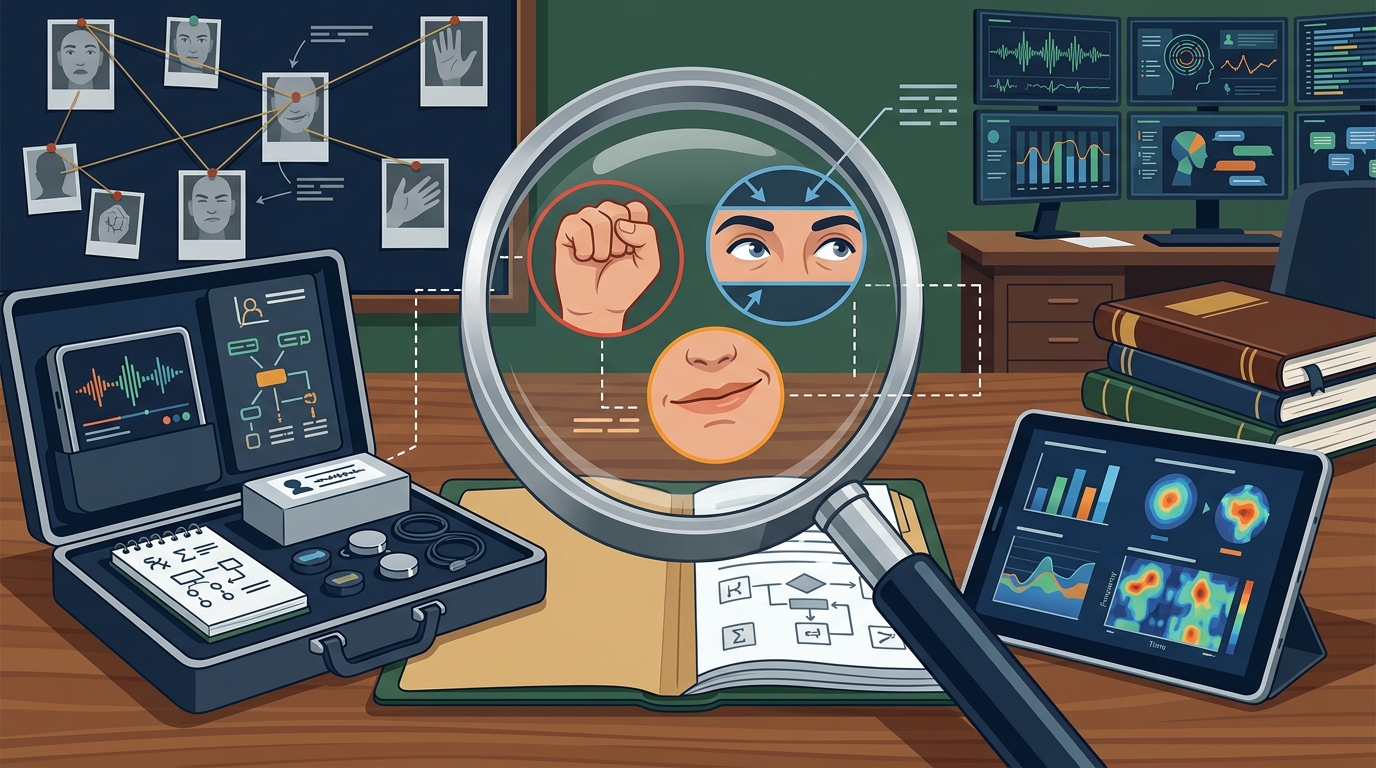
Nonverbal behavior analysis is the scientific study of how people communicate through gestures, posture, facial expressions, and spatial relationships rather than words. Deception detection is the systematic process of identifying dishonest communication using validated behavioral and psychological methods. A master's degree in this field combines both disciplines, giving graduates a rigorous, evidence-based framework grounded in psychology and criminology.
Pioneering researcher Paul Ekman demonstrated that training observers to recognize micro-expressions can enhance deception detection accuracy well beyond untrained levels. His Facial Action Coding System (FACS) remains a foundational tool taught in credible graduate programs today.
Why Pursue This Degree Now?
The demand for professionals who can accurately read nonverbal cues is growing across sectors. According to workplace communication research, approximately 93% of effective communication is nonverbal, yet most professionals receive zero formal training in reading those signals. Meanwhile, studies show that untrained individuals detect deception at roughly 54% accuracy, barely above chance.
Organizations in law enforcement, corporate security, human resources, and legal services increasingly seek specialists who can bridge this gap. A graduate credential signals scientific competence that self-study courses cannot match, making it a strategic career differentiator.
The Evidentia University MS Program
Evidentia University's Master of Science in Nonverbal and Deceptive Behavior is one of the few dedicated programs available globally. Based in Florida, USA, Evidentia University is licensed by the Florida Department of Education (CIE) under annual license number 9097, ensuring its programs meet the highest standards.
The degree comprises 36 U.S. academic credits (equivalent to 64.8 European ECTS) and is delivered 100% online, making it accessible to working professionals worldwide. Students earn the official title of Master of Science in Nonverbal Behavior and Deception Detection upon completion.
Who Is It For?
You do not need to be a psychologist to enroll. The program is designed for professionals from any sector, including leaders, sales professionals, lawyers, and HR specialists. Evidentia University provides the scientific tools to apply nonverbal analysis within your professional context.
Curriculum Highlights and Learning Outcomes
The curriculum blends rigorous theory with real-world application. From day one, students analyze real videos of depositions, interviews, and negotiations. Core areas of study include:
- Micro-expression recognition using validated protocols
- Proxemics, the study of how people use personal space in communication
- Forensic linguistics and verbal credibility assessment
- Personality profiling and behavioral baseline analysis
- Expert report writing for legal and corporate settings
Graduates leave with a reliable framework for accurately interpreting gestures, posture, and micro-expressions, grounded in psychology and criminology rather than pop-culture myths.
World-Class Faculty and Research
Evidentia University's faculty includes PhDs in psychology, criminal psychologists, forensic criminologists, and FACS-certified experts. The program director, Yirsa Jimenez, PhD, also leads the School of Behavioral Sciences and has conducted international research stays at institutions such as the University of Valparaiso.
Faculty members advise law enforcement agencies, major corporations, and governments, providing students with a strategic vision and practitioner insights unavailable elsewhere. Guest speakers have included specialists in forensic linguistics, one of the most powerful methods of deception detection used today.
Admissions Requirements and Process
The admissions process at Evidentia University is straightforward. Applicants must hold a bachelor's degree from a U.S. or international institution. Additional requirements include three letters of recommendation, a current resume or CV, and language proficiency documentation if studying in a non-native language.
Financial Support
Evidentia University offers institutional grants covering up to 60% of tuition, plus additional direct discounts for early applicants. Income-based and community grants are also available, ensuring cost is not a barrier to enrollment.
Career Paths and Professional Impact
Graduates apply their skills across a wide range of high-impact roles:
- Law enforcement and intelligence: interrogation support, witness credibility assessment
- Corporate security and anti-fraud: behavioral analysis in internal investigations (see the related MS in Anti-Fraud Behavioral Analysis)
- Legal practice: jury consulting, deposition analysis
- Human resources: interview optimization, conflict resolution
- Consulting: negotiation coaching, leadership training
The ability to scientifically decode behavior is also increasingly relevant in cybersecurity and cybercriminology, where understanding the psychological tactics behind social engineering attacks is essential.
Program Comparison at a Glance
| Feature | Evidentia University MS | Typical General Psychology MS |
|---|---|---|
| Focus | Nonverbal behavior and deception detection exclusively | Broad psychology curriculum |
| Credits | 36 U.S. credits (64.8 ECTS) | 30-60 credits (varies) |
| Delivery | 100% online, flexible schedule | Often hybrid or on-campus |
| Practical Training | Real-case video analysis from day one | Varies; often research-thesis heavy |
| Faculty Background | Forensic psychologists, law enforcement advisors, FACS experts | Academic researchers |
| Authorization | Florida Dept. of Education (CIE) | Regional accreditation (varies) |
| Open to Non-Psychologists | Yes | Often requires psychology prerequisite |
Key Takeaways
- A Master's in Nonverbal Behavior and Deception Detection is a specialized graduate degree focused on the science of reading human behavior.
- Evidentia University in Florida offers one of the few fully dedicated MS programs in this field, comprising 36 U.S. credits delivered entirely online.
- The program is open to professionals from any background, not only psychologists.
- Faculty include PhDs, forensic experts, and advisors to law enforcement and government agencies worldwide.
- Untrained people detect deception at roughly 54% accuracy; scientific training can significantly improve that rate.
- Graduates pursue careers in law enforcement, corporate anti-fraud, legal consulting, HR, and cybersecurity.
- Institutional grants covering up to 60% of tuition make the program financially accessible.
Frequently Asked Questions
Do I need a psychology degree to enroll?
No. Evidentia University's MS in Nonverbal and Deceptive Behavior is designed for professionals from any sector, including lawyers, business leaders, HR specialists, and sales professionals.
Is the degree internationally recognized?
Yes. The degree comprises 36 U.S. credits (equivalent to 64.8 European ECTS) and is awarded by Evidentia University, an institution licensed by the Florida Department of Education. It is valid for applying to doctoral programs in Europe following each university's equivalence process.
How long does it take to complete?
The program is designed for working professionals with a flexible, 100% online format. Completion time depends on individual pacing, but the curriculum is structured around 36 credit hours of coursework.
What is the difference between this master's and a nonverbal communication certificate?
A certificate, such as Evidentia's 12-week Nonverbal Communication Certificate, is an intensive specialization focused on applicable methods. A master's degree is longer, deeper, and results in an official graduate credential. Many learners use the certificate as a first step before pursuing the full MS.
What research methods will I learn?
Students study validated behavioral analysis protocols including micro-expression recognition, proxemics, forensic linguistics, content analysis, and personality profiling. Coursework emphasizes applying these tools to real case videos and producing expert technical reports.
Are there financial aid options?
Yes. Evidentia University offers institutional grants covering up to 60% of tuition, direct enrollment discounts, and income-based grants. Early applicants may receive additional benefits valued at over $900 USD.
Can I study in Spanish?
Yes. Evidentia University offers its programs in both English and Spanish, with tutoring available in either language.
What makes deception detection training scientific?
Scientific deception detection relies on validated frameworks such as the Facial Action Coding System (FACS) developed by Paul Ekman, combined with evidence from peer-reviewed research in psychology and criminology. This approach replaces intuition and pop-culture myths with measurable, replicable protocols.
Take the Next Step Toward Mastering Human Behavior
Ready to turn nonverbal behavior analysis into your professional advantage? Request information about Evidentia University's MS in Nonverbal and Deceptive Behavior today. An admissions advisor will walk you through program details, grant eligibility, and enrollment timelines with no obligation. Your journey toward becoming a scientifically trained behavior analyst starts here.