

Where Can You Get a Master's Degree in Nonverbal Behavior and Deception Detection?
If you have ever wondered how professionals in law enforcement, corporate security, or human resources learn to read body language and spot deception with scientific precision, the answer often starts with an advanced degree. A Master of Science in Nonverbal and Deceptive Behavior is a graduate program that trains students to analyze facial micro-expressions, gestures, posture, and verbal cues using validated research methods rather than pop-psychology myths. Earning this degree can open doors in forensic consulting, intelligence analysis, negotiation, and fraud investigation. This guide explains what the degree covers, who offers it, what the admissions process looks like, and why the field is growing fast.
What Is a Master's in Nonverbal Behavior and Deception Detection?
Nonverbal behavior analysis is the systematic study of how humans communicate through body movement, facial expressions, vocal tone, and spatial distance. Deception detection is the applied science of identifying dishonesty by examining behavioral, linguistic, and physiological indicators. A master's degree combining these disciplines gives graduates a rigorous, evidence-based framework grounded in psychology and criminology.
Research published in the Journal of Nonverbal Behavior notes that the last two decades have seen dramatic growth in interviewing techniques, automated coding methods, and facial research in the deception field. This momentum makes advanced academic training more relevant than ever for professionals who need reliable tools, not guesswork.
Why Study Deception Detection at the Graduate Level?
Popular culture often oversimplifies lie detection. According to a widely cited meta-analysis, observing nonverbal behavior alone without structured methods yields accuracy of roughly 54 to 55 percent, barely above chance. Graduate-level programs address this gap by teaching validated scientific protocols rather than intuition-based shortcuts.
The Cognitive Load Approach
Modern deception science has shifted from pure emotion-based models to cognitive theories. A 2017 meta-analysis of 14 studies found that increasing cognitive demands on interviewees raised lie detection accuracy from 47% to 67%. Learning to apply these techniques correctly requires structured graduate coursework, supervised practice, and faculty mentorship.
Beyond Myths
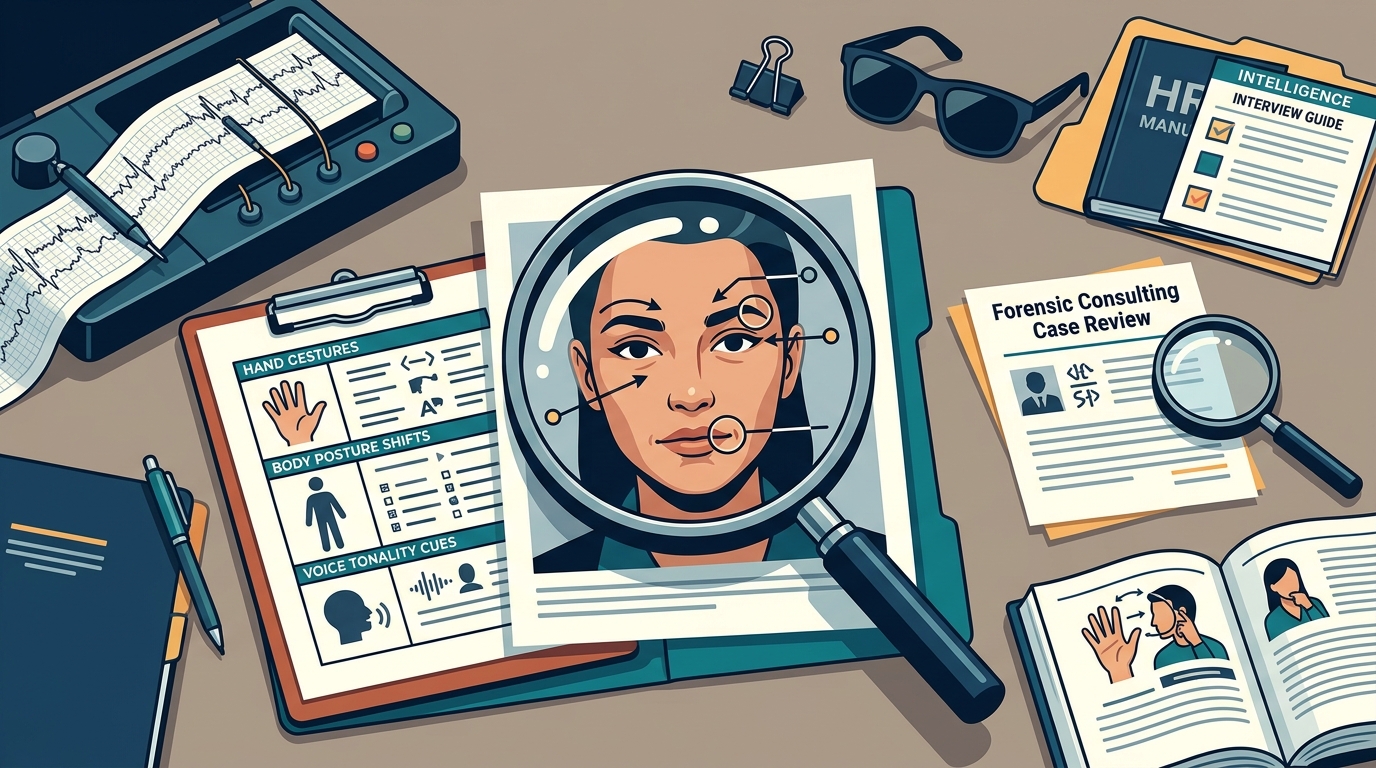
Many police manuals still emphasize outdated nonverbal cues. A scientifically trained analyst understands that no single gesture reliably signals deception. Graduate programs equip professionals with multi-channel analysis skills covering verbal content, facial action coding, voice stress, and linguistic patterns.
Where to Earn This Degree Online
Evidentia University's Master of Science in Nonverbal and Deceptive Behavior is one of the few programs worldwide dedicated entirely to this specialization. The university is licensed by the Florida Department of Education (CIE) under license number 9097 and offers the program 100% online.
| Feature | Evidentia University MS in Nonverbal & Deceptive Behavior |
|---|---|
| Degree Title | Master of Science in Nonverbal and Deceptive Behavior |
| Credits | 36 U.S. credits (64.8 European ECTS) |
| Format | 100% Online |
| Languages | English and Spanish |
| Authorization | Florida Department of Education (CIE), License #9097 |
| Faculty | 70+ international experts in psychology, criminology, and forensic science |
| Practical Component | Real-video analysis of depositions, interviews, and negotiations |
Students analyze real videos of depositions, interviews, and negotiations from day one, building applicable skills rather than accumulating theory alone. The faculty includes PhDs in psychology and criminology who advise law enforcement agencies and governments internationally.
Curriculum and Core Competencies
The Evidentia University academic catalog structures the program around several core domains:
Micro-Expression and Kinesic Analysis
Students learn to code facial action units and body movement using systems rooted in the work of Paul Ekman and other pioneers. Kinesics is the study of how body movements, gestures, and posture convey meaning during communication.
Forensic Linguistics and Verbal Credibility
The curriculum includes forensic linguistics, one of the most powerful methods of deception detection in modern practice. Students apply techniques such as Criteria-Based Content Analysis (CBCA) and Reality Monitoring to evaluate statement credibility.
Proxemics and Contextual Analysis
Proxemics is the study of how humans use personal space and distance to communicate. The proxemics module teaches students to interpret spatial behavior across cultural and professional contexts, an essential skill for investigators and negotiators.
Career Paths and Professional Applications
Graduates apply their training across a wide range of sectors. The program is designed for professionals from any background, including leaders, sales professionals, lawyers, and human resources specialists. Common career paths include:
- Law enforcement and intelligence: behavioral analysis in investigative interviews and interrogations.
- Corporate security and fraud prevention: the Master in Anti-Fraud Behavioral Analysis offers a complementary specialization for this path.
- Legal consulting: advising attorneys on witness credibility and jury behavior.
- Human resources: improving hiring interviews and internal investigations.
- Negotiation and diplomacy: reading counterparts in high-stakes settings.
Organizations from law enforcement to national security and the business world have demonstrated growing interest in utilizing reliable behavioral indicators in interviews and investigations.
Admissions Requirements and Process
The Evidentia University admissions process is straightforward. You do not need to be a psychologist to enroll. Key requirements include:
- A bachelor's degree from any accredited institution (U.S. or international).
- Three letters of recommendation.
- A current resume or CV.
- Language proficiency assessment if studying in a non-native language.
Evidentia University also offers income-based financial aid and community scholarships covering up to 65% of program costs. Early applicants may access institutional grants and additional direct discounts.
Key Takeaways
- A Master's in Nonverbal and Deceptive Behavior provides scientific training to detect deception far beyond intuition-based guesswork.
- Evidentia University in Florida offers one of the few fully dedicated MS programs in this field, comprising 36 U.S. credits delivered 100% online.
- The program is open to professionals from any discipline, not only psychologists.
- Modern deception science relies on cognitive load techniques that can raise detection accuracy from 47% to 67%.
- Career applications span law enforcement, corporate fraud prevention, legal consulting, HR, and negotiation.
- The degree is authorized by the Florida Department of Education and recognized internationally with ECTS equivalency.
- A 12-week Nonverbal Communication Certificate is available as a stepping stone before committing to the full master's program.
Frequently Asked Questions
Do I need a psychology degree to enroll in a master's in nonverbal behavior?
No. Evidentia University's program is designed for professionals from any sector, including business leaders, lawyers, HR specialists, and sales professionals. The curriculum provides the scientific foundations you need regardless of your undergraduate major.
Is an online master's in deception detection academically credible?
Yes. Evidentia University is licensed by the Florida Department of Education (CIE) under license number 9097. The program consists of 36 U.S. academic credits, equivalent to 64.8 European ECTS, and is taught by an international faculty of over 70 experts.
How long does the program take to complete?
The program is designed for working professionals with flexible scheduling. There are no fixed class times, so students organize study around their professional and personal commitments. Typical completion timelines vary based on pace.
Can I use this degree to apply for a doctoral program?
Yes. The 36-credit degree with ECTS equivalency is valid for applying to doctoral programs in Europe following the equivalence processes established by each university.
What is the difference between the master's degree and the nonverbal communication certificate?
The certificate is a 12-week intensive specialization focused on concrete, applicable methods. The master's degree is longer and deeper, offering comprehensive scientific training and an official MS designation. Many learners use the certificate as a first step before pursuing the full degree.
What research methods will I learn?
Students study forensic linguistics, Criteria-Based Content Analysis (CBCA), Reality Monitoring, facial action coding, proxemics, and cognitive interview techniques. The emphasis is on multi-channel behavioral analysis grounded in peer-reviewed research.
Are scholarships available?
Evidentia University offers income-based grants and community scholarships covering up to 65% of tuition. Early applicants may qualify for additional discounts and complimentary access to continuing education courses.
Take the Next Step in Your Career
If you are ready to move beyond intuition and gain a scientific edge in understanding human behavior, explore the Master of Science in Nonverbal and Deceptive Behavior at Evidentia University. Request information today and discover how flexible, 100% online graduate education can transform your professional future.