

Cybersecurity is no longer just a technology problem. With social engineering attacks ranking as the number-one threat vector in 2025, organizations urgently need professionals who understand the human side of cyber risk. Behavioral cybersecurity is an emerging discipline that merges psychology, criminology, and digital security strategy to address this gap. Evidentia University, a Florida-based institution specializing in behavioral and forensic sciences, has built dedicated online programs that train the next generation of human-factor security experts. This guide explains what behavioral cybersecurity education looks like, why it matters, and how Evidentia University delivers it through a flexible online platform.
What Is Behavioral Cybersecurity?
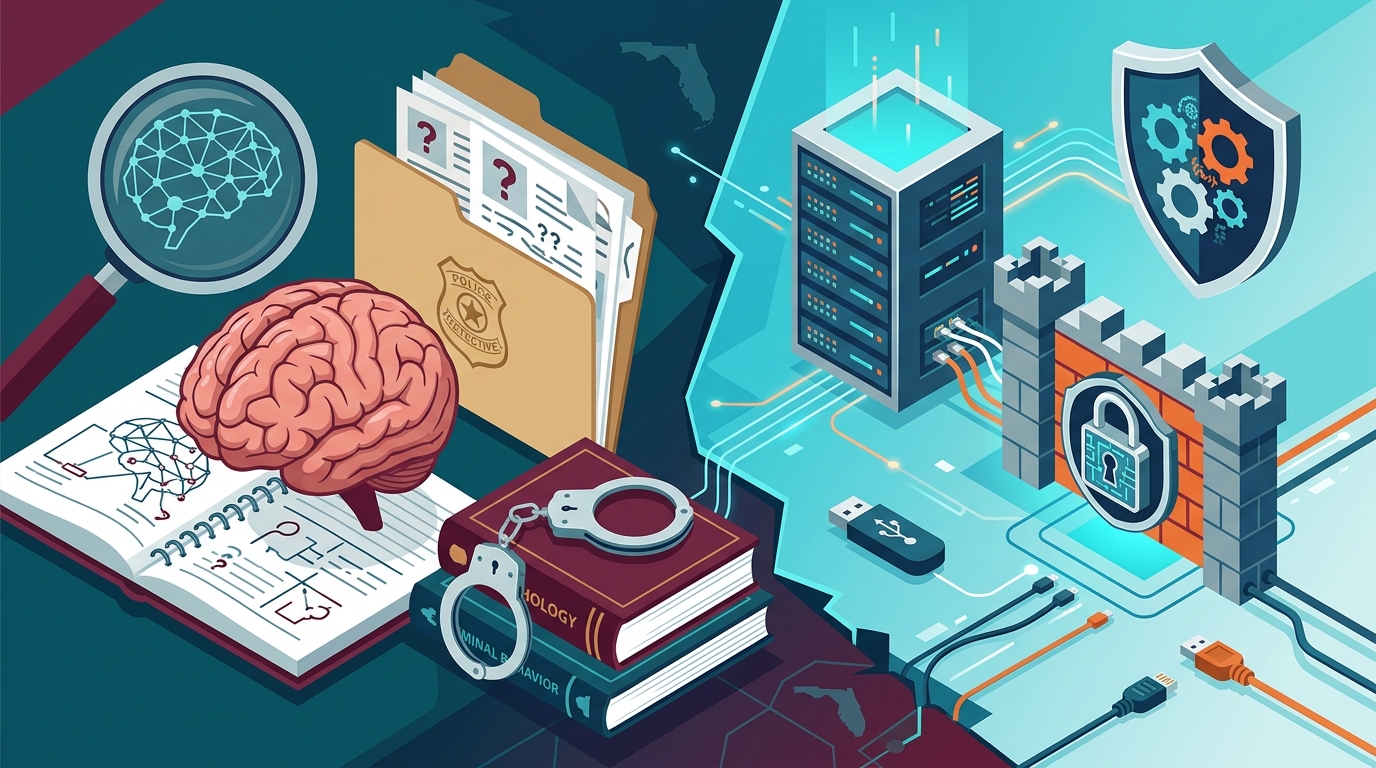
Behavioral cybersecurity is the study of how human cognition, emotion, and decision-making influence digital security outcomes. Unlike traditional cybersecurity, which focuses on firewalls and encryption, this field examines why people click phishing links, reuse weak passwords, or fall victim to social engineering.
Research published in Frontiers in Psychology highlights that fundamental psychological principles such as cognition, motivation, and perception form the basis for a security-by-design philosophy. By studying attacker tactics and victim psychology together, practitioners can build defenses that account for real human behavior rather than idealized compliance.
Why the Human Factor Is the Biggest Cyber Risk
Technology alone cannot stop cyberattacks when the weakest link is a person. According to ISACA's State of Cybersecurity 2025 report, 44 percent of organizations cited social engineering as the top attack type used against them. Phishing texts, for instance, are carefully designed to exploit urgency and routine clicking habits.
Psychology of Cyber Victims
A study in the Journal of Experimental Criminology found that 34 percent of risky cybersecurity behavior was significantly predicted by personality traits, password knowledge, and general risk-taking tendencies. This means victim profiles must account for individual psychological differences, not just technical awareness.
Social Engineering at Scale
Cybercriminals exploit cognitive biases systematically. Scam messages trigger urgency; deepfakes leverage trust; and pretexting relies on authority compliance. Organizations that train employees only on technical protocols miss these behavioral attack vectors entirely.
The Cybersecurity Workforce Gap in 2025
The demand for cybersecurity talent far outpaces supply. The table below summarizes critical workforce statistics that underscore the urgency of behavioral cybersecurity education.
| Metric | Value | Source |
|---|---|---|
| Global unfilled cybersecurity positions | 4.8 million | ISC2 2024 |
| U.S. cybersecurity job openings | 470,000+ | CyberSeek 2025 |
| Projected U.S. job growth (2024-2034) | 33% | Bureau of Labor Statistics |
| Teams reporting understaffing | 55% | ISACA 2025 |
| Top attack type (social engineering) | 44% of organizations | ISACA 2025 |
| Organizations prioritizing upskilling | 51% | SANS 2025 |
With 3.5 million positions remaining unfilled globally since 2021 and social engineering dominating the threat landscape, professionals who combine psychology with security strategy are uniquely positioned to fill this gap.
Evidentia University Programs in Behavioral Cybersecurity
Evidentia University offers two primary pathways for students pursuing behavioral cybersecurity education, each designed for different career stages.
Master in Behavioral Cybersecurity and Cybercriminology
The Master in Behavioral Cybersecurity and Cybercriminology is a graduate-level degree program designed for professionals seeking to go beyond technical cybersecurity. The curriculum integrates psychology, criminology, and strategy to analyze and neutralize advanced cyber threats. Students learn to profile cybercriminals, study victimology, and analyze real social engineering cases.
Professional Certificate Program
The Professional Certificate Program in Behavioral Cybersecurity and Cybercriminology is a shorter credential for professionals who want applied behavioral analytics skills in cybersecurity management. It is ideal for analysts and technicians who already master the technology but need to understand the psychology behind attacks.
Continuing Education Courses
Through the School of Continuing Education, Evidentia University offers over 100 online courses in forensic and behavioral sciences, including a standalone course on Cybersecurity from a Psychological Perspective. These shorter programs let working professionals build targeted skills without committing to a full degree.
How the Online Learning Platform Works
Evidentia University is a fully online institution, which means every program is accessible from anywhere with an internet connection. Courses are delivered through video lessons, comprehensive reading materials, and tutor support. All learning is self-paced within a defined timeframe, and there are no mandatory live classes.
Assessment typically includes quizzes (50 percent of the final grade) and a capstone final activity (50 percent). Students need a minimum score of 7 out of 10 to earn their certificate or degree. Course materials remain accessible for review after completion, reinforcing long-term retention.
This flexible model is particularly well-suited for cybersecurity professionals who are already working full-time. As the 2025 ISC2 Workforce Study notes, organizations must invest in upskilling existing personnel despite budgetary constraints, and asynchronous online education makes that practical.
Expert Faculty and Strategic Partnerships
A university is only as strong as its instructors. Evidentia University employs a team of more than 70 experts, including professors with PhDs in psychology, criminology, and economics, as well as guest practitioners from law enforcement and corporate security. The faculty brings real-world experience from threat intelligence teams, criminal behavior analysis units, and behavioral economics research.
Evidentia University has also partnered with Fundacion Borreda, an institution dedicated to promoting security in all its dimensions. This partnership strengthens the program's ability to prepare students for real-world challenges in the ever-changing digital landscape. Students benefit from a curriculum informed by both academic rigor and frontline security practice.
Prospective students can explore the full academic catalog and learn more about tuition, grants, and financial aid options on the university website.
Key Takeaways
- Behavioral cybersecurity is the intersection of psychology, criminology, and digital security, addressing the human factor behind most cyberattacks.
- Social engineering is the top attack vector in 2025, making behavioral expertise essential for modern security teams.
- The global cybersecurity workforce gap stands at 4.8 million unfilled positions, with the U.S. alone facing over 470,000 openings.
- Evidentia University offers both a Master's degree and a Professional Certificate in Behavioral Cybersecurity and Cybercriminology, fully online.
- The asynchronous, self-paced learning model allows working professionals to upskill without leaving their current roles.
- A faculty of 70+ credentialed experts and a strategic partnership with Fundacion Borreda ensure curriculum quality and real-world relevance.
- Investing in behavioral cybersecurity education positions graduates for high-demand roles in consulting, risk management, and corporate security.
Frequently Asked Questions
What is behavioral cybersecurity?
Behavioral cybersecurity is the scientific study of how human psychology, cognitive biases, and social dynamics influence cybersecurity outcomes. It focuses on understanding why people fall for scams, how attackers exploit behavior, and how organizations can design better human-centered defenses.
Who should study behavioral cybersecurity?
The field is ideal for cybersecurity analysts, IT professionals, law enforcement personnel, HR managers, risk consultants, and anyone interested in the psychology behind cybercrime. Evidentia University's programs are designed for professionals who already have technical skills but want to master the human factor.
Is the Evidentia University program fully online?
Yes. All programs at Evidentia University are delivered 100 percent online. Students access video lessons, materials, and tutor support through the learning platform and study at their own pace within a set timeframe.
How long does the Master's program take to complete?
The Master in Behavioral Cybersecurity and Cybercriminology is a structured graduate program. Students should consult the university catalog for the most current duration and credit requirements.
What career paths does behavioral cybersecurity open?
Graduates can pursue roles in cybersecurity consulting, threat intelligence, corporate security strategy, risk management, cybercrime investigation, and behavioral analysis within public or private organizations.
Does Evidentia University offer financial aid?
Yes. Evidentia University provides institutional scholarships and grants based on financial need, as well as special grants for nonprofit associations and public entities. Details are available on the tuition and fees page.
Why is the human factor so important in cybersecurity?
Research consistently shows that human error and psychological manipulation are behind the majority of successful cyberattacks. Technical defenses are necessary but insufficient when employees can be tricked through phishing, pretexting, or social engineering tactics.
Is Evidentia University accredited?
Evidentia University is officially licensed by the Florida Department of Education. Certificates and degrees carry the academic standards of the U.S. education system.
Start Your Behavioral Cybersecurity Career Today
The cybersecurity industry needs professionals who understand people, not just code. If you are ready to bridge the gap between psychology and digital security, explore the Master in Behavioral Cybersecurity and Cybercriminology at Evidentia University and take the first step toward a high-impact career.