

Behavioral Cybersecurity Education: How Evidentia University Leads Online Learning
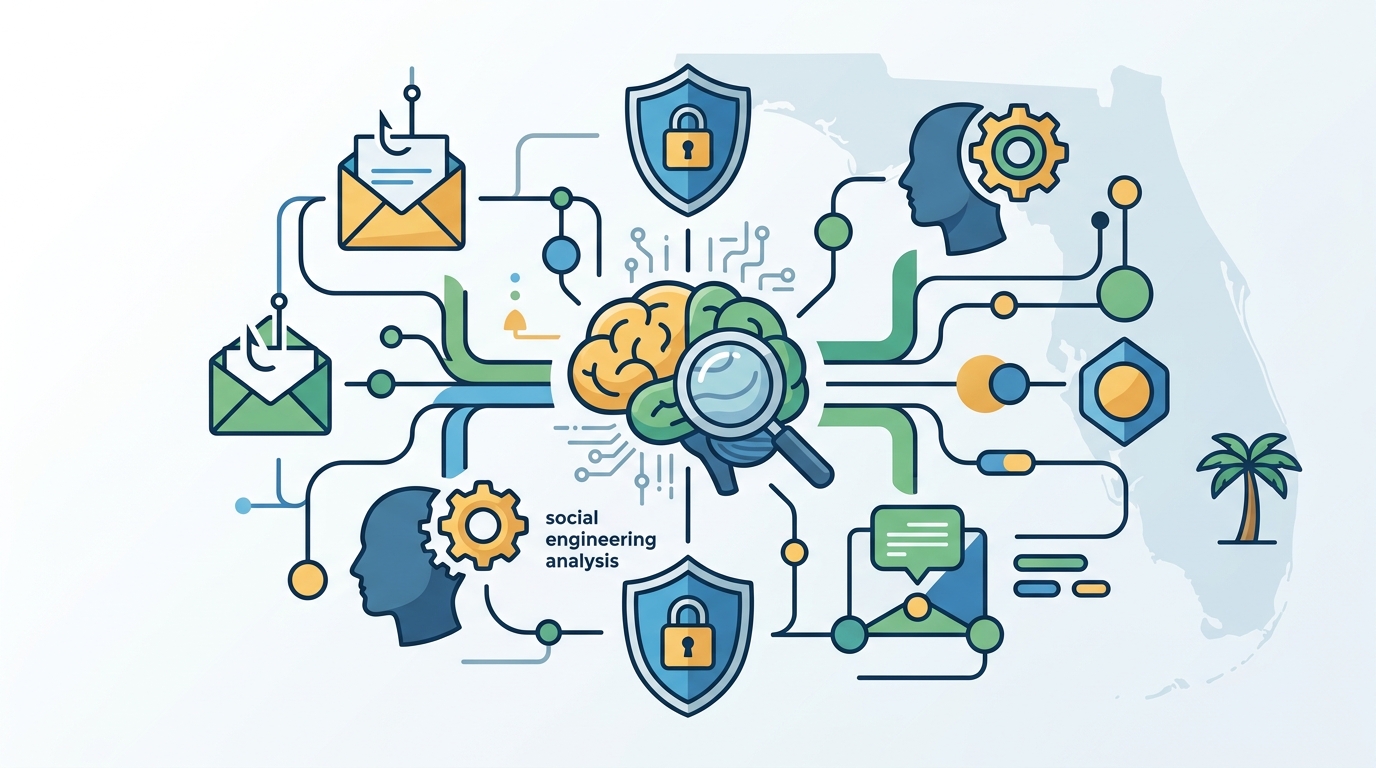
Cybersecurity is no longer just about firewalls and encryption. The human factor accounts for the vast majority of successful cyberattacks, from phishing schemes to social engineering exploits. Behavioral cybersecurity is the discipline that merges psychology, criminology, and digital security strategy to address these human vulnerabilities. Evidentia University, a Florida-based institution specializing in behavioral and forensic sciences, has built an online learning platform designed to train the next generation of professionals who can anticipate, analyze, and neutralize cyber threats rooted in human behavior.
What Is Behavioral Cybersecurity?
Behavioral cybersecurity is an interdisciplinary field that applies psychological and behavioral science principles to understand and mitigate cyber threats caused by human actions. Unlike traditional cybersecurity, which focuses on technical defenses, this approach examines why people fall for phishing emails, use weak passwords, or ignore security protocols.
Research published in Frontiers in Psychology highlights that fundamental psychological principles like cognition, motivation, and emotion form the primary basis for a security-by-design philosophy. This growing field recognizes that both human factors and technological aspects must be addressed for a safer digital environment.
Why the Human Factor Matters in Cybersecurity
The numbers tell a compelling story. The UK's National Cyber Security Centre found that 23.2 million cyberattack victims used "123456" as their password. In 2025, Indian education providers experienced roughly 8,487 weekly cyberattacks, demonstrating how online learning platforms have become high-value targets.
Cybercriminals exploit unconscious biases and time-pressured decision-making. Phishing texts create artificial urgency, while malware delivery relies on habitual link-clicking behavior. A study in NCBI found that 34% of risky cybersecurity behavior was predicted by the combination of password knowledge, personality traits, and general risk-taking tendencies.
Technical vs. Behavioral Cybersecurity Approaches
| Dimension | Traditional Cybersecurity | Behavioral Cybersecurity |
|---|---|---|
| Primary Focus | Networks, systems, encryption | Human cognition, decision-making, social engineering |
| Threat Model | Exploit technical vulnerabilities | Exploit psychological vulnerabilities |
| Defense Strategy | Firewalls, antivirus, MFA | Behavioral profiling, awareness training, nudge design |
| Key Disciplines | Computer science, engineering | Psychology, criminology, behavioral science |
| Typical Degree Path | BS/MS in Cybersecurity or IT | MS in Behavioral Cybersecurity & Cybercriminology |
Evidentia University's Behavioral Cybersecurity Programs
Evidentia University offers multiple pathways into behavioral cybersecurity education, from short continuing education courses to a full master's degree.
Master in Behavioral Cybersecurity & Cybercriminology
The MS in Behavioral Cybersecurity & Cybercriminology is designed to give students a unique command over the human factor in cyber risk. Students learn to integrate psychology, criminology, and strategy to analyze and neutralize the most advanced cyber threats. The curriculum includes cybercriminal profiling, victimology analysis, and real cyberattack case studies.
Professional Certificate Program
The Professional Certificate in Behavioral Cybersecurity & Cybercriminology provides a focused pathway for professionals seeking specialized credentials. This program uses a behavioral analytics approach in cybersecurity management and is ideal for those looking to pivot into this emerging field.
Supporting Courses
Evidentia also offers individual courses such as Cybersecurity from a Psychological Perspective and Cybercrime and Cybercriminal Behavioral Analysis, enabling learners to build targeted skills within the broader discipline.
How the Online Learning Platform Works
Evidentia University's programs are 100% online, making them accessible to professionals worldwide. The platform combines several pedagogical elements to ensure rigorous, evidence-based training.
Cybercriminology is a field where theory must meet practice. The university uses case studies drawn from real social engineering and cyberattack scenarios, allowing students to face the situations that define today's digital threat landscape. Each module is designed for students to apply what they learn immediately in professional contexts.
Academic integrity is maintained through proctoring technology. The university uses SMOWL, a digital proctoring tool that monitors video, audio, and computer activity during assessments, ensuring the credibility of every credential earned on the platform.
Faculty Expertise and Industry Partnerships
Evidentia University's faculty includes professionals with PhDs in psychology, criminology, and economics, as well as practitioners with direct experience in cybersecurity threat intelligence. The team brings real-world experience and cutting-edge knowledge to every course.
A strategic partnership with Fundación Borredá, an institution dedicated to promoting security in all its dimensions, strengthens the university's cybersecurity offerings. This collaboration represents a milestone in cybersecurity and cybercrime education, combining academic rigor with real-world security expertise.
The university's broader faculty roster includes former FBI behavioral analysis professionals and international experts in criminal profiling, further reinforcing the institution's authority in behavioral sciences.
Career Outcomes and Industry Demand
The Bureau of Labor Statistics projects employment of information security analysts to grow 32% from 2022 to 2032, far outpacing most occupations. Behavioral cybersecurity graduates are uniquely positioned for roles that go beyond technical analysis.
Graduates from Evidentia's programs develop competencies for high-demand sectors such as consulting, risk management, and corporate security. The School of Behavioral Sciences prepares students for key roles in government agencies, private companies, academic institutions, and international organizations.
Cybercriminology is the study of criminal activity conducted through digital means, examined through the lens of human behavior. Professionals with this dual expertise are increasingly sought after as organizations realize that technology alone cannot stop threats driven by human psychology.
Key Takeaways
- Behavioral cybersecurity addresses the human vulnerabilities that cause most cyberattacks, not just technical weaknesses.
- Evidentia University offers a full MS degree and professional certificate programs in Behavioral Cybersecurity & Cybercriminology, all 100% online.
- The curriculum integrates psychology, criminology, and strategy, with real-world case studies and social engineering simulations.
- Faculty members hold PhDs and bring professional experience from fields like threat intelligence and criminal psychology.
- A partnership with Fundación Borredá adds industry-grade security expertise to the academic program.
- Information security analyst roles are projected to grow 32% through 2032, making this a high-demand career path.
- The university uses SMOWL proctoring technology to ensure academic integrity in its fully online assessments.
Frequently Asked Questions
What is behavioral cybersecurity?
Behavioral cybersecurity is an interdisciplinary field that applies psychology and behavioral science to understand and prevent cyber threats rooted in human behavior, such as phishing susceptibility and poor password practices.
What programs does Evidentia University offer in behavioral cybersecurity?
Evidentia University offers a Master in Behavioral Cybersecurity & Cybercriminology, a Professional Certificate program, and individual continuing education courses like Cybersecurity from a Psychological Perspective.
Is the behavioral cybersecurity program fully online?
Yes. All of Evidentia University's behavioral cybersecurity programs are delivered 100% online, allowing students from anywhere in the world to participate.
Who should study behavioral cybersecurity?
The programs are designed for cybersecurity analysts and technicians who want to understand the psychology behind attacks, as well as professionals in consulting, risk management, and corporate security seeking to specialize.
How does Evidentia ensure academic integrity online?
The university uses SMOWL proctoring software, which monitors video, audio, and computer activity during exams, maintaining assessment credibility across all online programs.
What career paths are available after earning a behavioral cybersecurity degree?
Graduates pursue roles in cybersecurity consulting, threat intelligence, corporate security management, risk assessment, and government agency positions. The BLS projects 32% growth in information security analyst roles through 2032.
Where is Evidentia University located?
Evidentia University is headquartered in Florida, USA, but its online platform makes all programs accessible globally.
What makes behavioral cybersecurity different from traditional cybersecurity?
Traditional cybersecurity focuses on technical defenses like firewalls and encryption. Behavioral cybersecurity focuses on the human element: why people make risky decisions online and how attackers exploit cognitive biases and emotional responses.
Start Your Behavioral Cybersecurity Journey
Ready to move beyond technical-only cybersecurity and become a strategist of the human factor in cyberspace? Explore the Master in Behavioral Cybersecurity & Cybercriminology at Evidentia University and take the first step toward a career at the intersection of psychology and digital security.