

Master's in Sustainability: How It Addresses Environmental Challenges and Launches Your Career
Climate change, resource depletion, and corporate accountability are reshaping the global workforce. A Master's in Sustainability is a graduate-level degree that equips professionals with the scientific, strategic, and policy skills needed to tackle these pressing environmental challenges. Whether you aim to lead ESG initiatives at a Fortune 500 company or shape public environmental policy, this guide explains exactly how the degree prepares you, what careers await, and why institutions like Evidentia University's Master in Sustainability are at the forefront of this transformation.
What Is a Master's in Sustainability?
A Master's in Sustainability is an interdisciplinary graduate program that blends environmental science, business strategy, and public policy to prepare leaders who can drive systemic change. Programs typically cover ESG (Environmental, Social, and Governance) criteria, corporate social responsibility, circular economy models, and sustainable finance.
Unlike a traditional environmental science degree, a sustainability master's emphasizes the intersection of profitability and planetary health. At Evidentia University's School of Social Innovation, the curriculum is designed to train future managers of innovative solutions that promote social change, supported by an international network of faculty experts.
Environmental Challenges the Degree Addresses
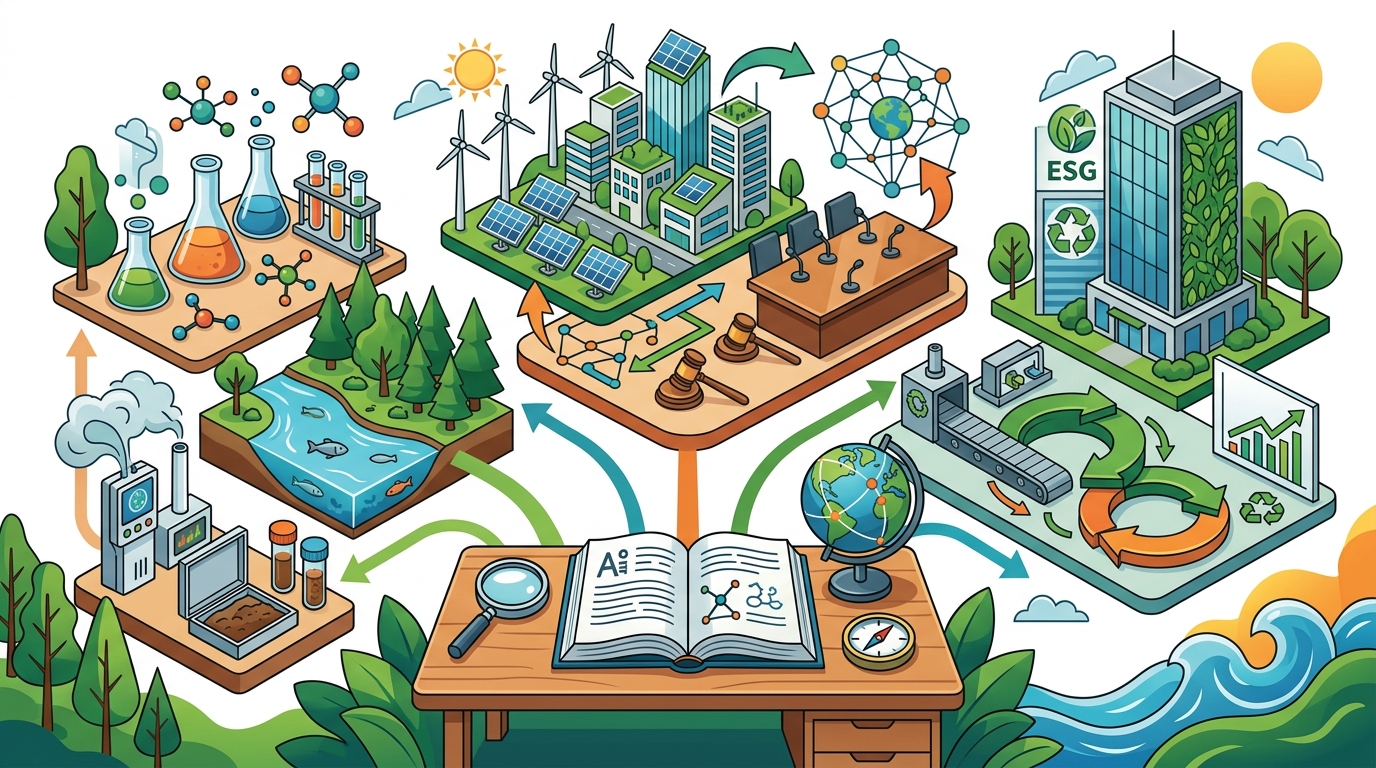
Today's most urgent environmental problems require professionals trained in both science and strategy. A sustainability master's program directly addresses the following challenges:
Climate Change and Carbon Reduction
Students learn to design and implement carbon reduction strategies, analyze climate risk data, and develop organizational resilience plans. These skills are critical as businesses face increasing regulatory requirements related to environmental compliance and carbon emissions.
Resource Depletion and Circular Economy
The circular economy is a regenerative system that minimizes waste by keeping materials in use for as long as possible. Graduate programs teach students to apply circular economy principles to supply chain management and product development, turning waste reduction into a competitive advantage.
Corporate Accountability and ESG Reporting
Investors and consumers increasingly demand transparency about environmental practices. Programs train students in ESG measurement, reporting frameworks, and stakeholder communication, skills that are now essential across finance, healthcare, manufacturing, and construction sectors.
Core Curriculum and Skills You Will Gain
A well-designed sustainability master's program offers a strategic toolkit that goes beyond environmental awareness. At Evidentia University, the curriculum integrates foundational knowledge with hands-on application.
| Core Subject Area | Key Skills Developed | Career Application |
|---|---|---|
| Foundations of Sustainable Development | UN SDGs framework, systems thinking | Policy analysis, program design |
| ESG Criteria and Reporting | Data measurement, stakeholder reporting | Investment analysis, corporate strategy |
| Corporate Social Responsibility | Initiative design, brand alignment | CSR management, consulting |
| Circular Economy and Sustainable Finance | Business model innovation, green finance | Energy management, entrepreneurship |
Programs also emphasize case-based learning, where students analyze real-world success and failure stories from leading companies, and project-based application, where learners develop sustainability plans for real or simulated organizations.
Career Paths and Salary Outlook
The job market for sustainability professionals is strong and growing. According to the U.S. Bureau of Labor Statistics, employment for environmental scientists and specialists is projected to grow 6% from 2022 to 2032, with approximately 6,900 openings expected annually. Sustainability specialists earned a median salary of $80,060 as of May 2024.
| Job Title | Median Salary (USD) | Growth Outlook |
|---|---|---|
| Sustainability Specialist | $80,060 | 6% (2022-2032) |
| Environmental Engineer | $88,000 | Faster than average |
| Sustainability Director | $124,000 | High demand |
| CSR Manager | $70,000-$95,000 | Growing |
| Climate Change Analyst | $70,000-$85,000 | Growing |
Graduates enter diverse roles across nonprofits, government agencies, businesses, and educational institutions. Those interested in leadership positions such as Chief Sustainability Officer or Sustainability Director often find that a master's degree is the differentiating credential.
Why Choose an Online Sustainability Program
Online programs offer flexibility that is especially valuable for working professionals. Evidentia University delivers its programs through teaching modalities that can be accessed anytime, everywhere, allowing students to balance career growth with academic study.
Global Perspective
Online cohorts often include students from over 20 countries, enriching discussions with diverse cultural and professional viewpoints. This global diversity transforms every class into a unique learning experience.
Practical Application
The best online programs go beyond lectures. Evidentia's method includes personalized tutoring from expert faculty and project-based final deliverables that students can apply directly to their organizations.
How to Choose the Right Program
When evaluating sustainability master's programs, consider several factors:
- Licensure and accreditation: Verify the institution's credentials. Evidentia University is authorized to operate and grant degrees in Florida by the Commission for Independent Education, Florida Department of Education (license #9097).
- Faculty expertise: Look for programs with internationally credentialed faculty who bring real-world experience from corporate, government, and research sectors.
- Financial support: Investigate scholarship and grant opportunities. Evidentia University offers institutional scholarships based on financial need and interest-free payment plans.
- Curriculum relevance: Ensure the program covers ESG, CSR, circular economy, and sustainable finance as core components.
For professionals seeking a shorter commitment before pursuing a full master's degree, a Certificate in Sustainability can serve as a focused first step into the field.
Key Takeaways
- A Master's in Sustainability prepares graduates to address climate change, resource depletion, and corporate accountability through interdisciplinary training.
- Sustainability specialists earned a median salary of $80,060 in 2024, with the field projected to grow 6% through 2032.
- Core curricula cover ESG criteria, CSR strategy, circular economy models, and sustainable finance.
- Online programs like Evidentia University's Master in Sustainability offer flexible, globally accessible education.
- High-demand roles include Sustainability Director (up to $124,000), Environmental Engineer, and CSR Manager.
- Licensure and faculty credentials are critical factors when selecting a program.
- Certificate programs provide a fast-track entry point for professionals exploring the sustainability field.
Frequently Asked Questions
What can you do with a Master's in Sustainability?
Graduates pursue careers as sustainability directors, environmental consultants, CSR managers, energy analysts, climate change analysts, and policy advisors across government, corporate, and nonprofit sectors.
How long does a Master's in Sustainability take to complete?
Most programs take between 12 and 24 months, depending on full-time or part-time enrollment. Some accelerated programs, such as Cornell's ESP, can be completed in 12 months.
Is a sustainability degree worth it financially?
Yes. Sustainability professionals command competitive salaries, with environmental engineers averaging $88,000 annually and sustainability directors earning up to $124,000. The BLS projects continued job growth in this sector.
Do I need a science background to enroll?
Not necessarily. Many programs accept applicants from diverse academic backgrounds, including business, social sciences, and liberal arts. Evidentia University's sustainability programs are designed for professionals from any background.
What is the difference between a sustainability certificate and a master's degree?
A certificate is an intensive specialization, typically completed in 12 weeks, focused on applicable skills. A master's degree is a longer, deeper academic program that confers a graduate credential and opens doors to senior leadership roles.
Are online sustainability degrees respected by employers?
Yes, especially when earned from licensed and accredited institutions. Employers increasingly value the practical skills and flexibility that online programs demonstrate in candidates.
What environmental challenges does the degree address?
Programs tackle climate change mitigation, carbon reduction, resource depletion, circular economy implementation, ESG compliance, and corporate environmental strategy.
How do I get started with Evidentia University?
Visit the Master Admission Process page to review requirements and connect with an enrollment advisor who can guide you through the application.
Take the Next Step Toward a Sustainable Career
The demand for sustainability leaders is accelerating. Whether you start with a Certificate in Sustainability or commit to the full Master in Sustainability at Evidentia University, now is the time to build the expertise the world needs. Request information today and speak with an academic advisor about your goals.