

Master's in Sustainability: How It Addresses Environmental Challenges and Prepares You for a Career
The global push toward sustainable business practices has created extraordinary demand for professionals who can bridge science, strategy, and corporate responsibility. A Master's in Sustainability is a graduate-level degree program that equips students with the scientific, legal, and financial knowledge needed to lead organizations through environmental transformation. Whether you are a mid-career professional in finance or a recent graduate passionate about climate action, understanding what this degree covers and how it translates into real career outcomes is essential. This guide explores how a sustainability master's program tackles pressing environmental issues and positions graduates for high-impact roles.
What Is a Master's in Sustainability?
A Master's in Sustainability is a graduate program that combines environmental science, corporate strategy, and ESG (Environmental, Social, and Governance) frameworks into a single interdisciplinary degree. Unlike traditional environmental science programs that focus primarily on diagnosing ecological problems, sustainability master's programs emphasize managing solutions at the organizational and policy level.
At Evidentia University, for example, the Master of Science in Sustainability and ESG Strategy is a 36-credit program integrating scientific rigor, applied practice, and corporate strategy to develop experts capable of managing sustainable projects in businesses, governments, and NGOs.
Current Environmental Challenges the Degree Addresses
Today's environmental landscape is defined by interconnected crises. According to the United Nations Environment Programme (UNEP), the world faces accelerating climate change, biodiversity loss, and resource depletion simultaneously. A well-designed sustainability program addresses these challenges head-on.
Climate Change and Energy Transition
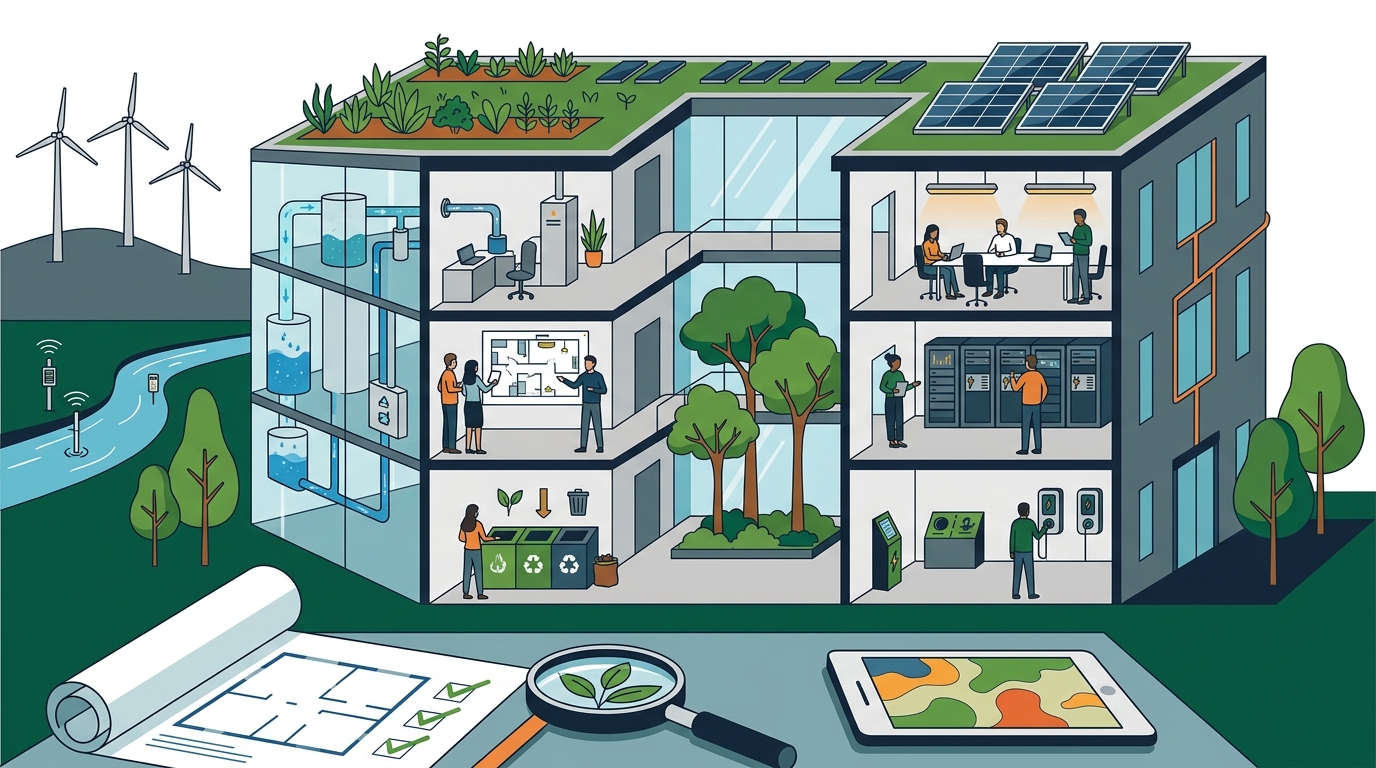
Students study energy systems, green capitalism, and growth models to understand how organizations can reduce emissions while maintaining profitability. Coursework in biophysics and meteorology provides the scientific grounding for evidence-based climate strategies.
Corporate Greenwashing and Compliance
Greenwashing is the practice of making misleading claims about environmental practices. Sustainability programs teach students to move beyond superficial PR campaigns and develop authentic ESG compliance frameworks aligned with evolving regulations.
Resource Scarcity and Circular Economy
Students learn to design circular economy models that reduce costs and increase value, replacing the traditional linear "take-make-dispose" approach with systems that keep resources in use longer.
Core Curriculum Pillars
A strong sustainability master's program is built on multiple disciplinary foundations. The table below compares the three core pillars found in leading programs like the one offered through Evidentia University's academic schools.
| Pillar | Focus Areas | Career Application |
|---|---|---|
| Science of Viability | Biophysics, Environmental Chemistry, Energy Systems | Evidence-based decision-making, technical audits |
| ESG and Financial Intelligence | Sustainable Finance, Green Capitalism, Legal Frameworks | ESG reporting, investment analysis, risk management |
| Human Behavior and Cultural Change | Behavioral Economics, Stakeholder Engagement | Policy design, consumer behavior change, leadership |
This interdisciplinary structure ensures graduates can operate across departments, from the C-suite to the lab, making them uniquely valuable in the modern workforce.
The Role of Behavioral Economics in Sustainability
Behavioral economics is the study of how psychological, social, and emotional factors influence economic decisions. It plays a critical role in sustainability because environmental outcomes often depend on changing human behavior at scale.
Evidentia University's curriculum includes dedicated coursework on Behavioral Economics and Sustainability, teaching students to apply nudge theory and decision architecture to influence consumer choices and employee habits. This behavioral approach is what differentiates a strategic sustainability leader from a technical specialist.
The Master in Behavioral Economics offered at the same institution provides a complementary foundation for those who want even deeper expertise in this area.
Career Paths and Job Outlook
The demand for ESG professionals continues to outpace supply. According to LinkedIn's 2025 Green Economy Report, sustainability-related job postings have grown roughly 30% year over year globally. Graduates of sustainability master's programs are well positioned for roles including:
- Chief Sustainability Officer (CSO) - leading corporate sustainability strategy
- ESG Analyst - evaluating investment risks through environmental metrics
- Corporate Responsibility Director - managing stakeholder relations and compliance
- Sustainability Consultant - advising organizations on regulatory frameworks
- Circular Economy Specialist - redesigning supply chains for resource efficiency
Companies face immense pressure from regulators and investors to comply with ESG standards, and they need professionals who understand both legal frameworks and the underlying science. The expert faculty at Evidentia University includes PhDs, corporate directors, and international consultants who bring real-world perspective to the classroom.
Why Evidentia University's Program Stands Out
Evidentia University, a Florida-licensed institution, offers its Master in Sustainability and ESG Strategy as a 100% online, 36-credit program. The degree is authorized by the Florida Department of Education (CIE), License #9097, and is equivalent to 64.8 European ECTS credits.
Flexibility for Working Professionals
The program is fully asynchronous, with live sessions recorded for on-demand viewing. There are no fixed class times, so students organize study around their professional schedules.
A Global Learning Community
Students interact with peers and professors from over 20 countries through active discussion forums and collaborative case studies. The student testimonials page highlights the academic and professional impact reported by alumni.
Financial Accessibility
Evidentia University offers institutional grants covering up to 60% of tuition along with interest-free payment plans, ensuring that budget constraints do not limit access to quality education. Visit the tuition and grants page for details.
Key Takeaways
- A Master's in Sustainability integrates environmental science, ESG frameworks, and corporate strategy into a single interdisciplinary degree.
- Programs address climate change, greenwashing, and resource scarcity through evidence-based coursework.
- Behavioral economics is a critical differentiator, teaching graduates how to change human behavior at organizational and policy levels.
- Career demand for ESG professionals has been growing roughly 30% annually, with roles like CSO and ESG Analyst leading the way.
- Evidentia University's 36-credit online program is licensed by the Florida Department of Education and recognized internationally.
- Flexible, asynchronous learning and financial aid options make this degree accessible to working professionals worldwide.
Frequently Asked Questions
What is a Master's in Sustainability?
A Master's in Sustainability is a graduate degree that combines environmental science, corporate strategy, ESG frameworks, and behavioral economics to prepare professionals for leadership roles in sustainable development across businesses, governments, and NGOs.
What environmental challenges does a sustainability master's address?
The degree addresses climate change, energy transition, corporate greenwashing, regulatory compliance, biodiversity loss, and resource scarcity through evidence-based coursework in biophysics, environmental chemistry, and sustainable finance.
What careers can I pursue with this degree?
Graduates pursue roles such as Chief Sustainability Officer, ESG Analyst, Corporate Responsibility Director, Sustainability Consultant, and Circular Economy Specialist in both the public and private sectors.
How long does the program take to complete?
Evidentia University's Master in Sustainability is a 36-credit program. Most working professionals complete it within 12 to 18 months, depending on their course load.
Is the degree recognized internationally?
Yes. Evidentia University is licensed by the Florida Department of Education (CIE). The program's 36 U.S. credits are equivalent to 64.8 European ECTS credits and the degree is valid for applying to Ph.D. programs in Europe.
Do I need a background in environmental science?
No. The program is designed for professionals from diverse backgrounds including finance, management, law, and engineering. The curriculum provides the scientific foundation needed without requiring prior expertise in environmental science.
Can I study while working full-time?
Yes. The program is 100% online and asynchronous. Live sessions are recorded, and students access the virtual campus 24/7, allowing them to balance study with professional responsibilities.
Is financial aid available?
Evidentia University offers institutional grants covering up to 60% of tuition and flexible interest-free payment plans. Each case is reviewed individually to provide personalized financial solutions.
Take the Next Step in Your Sustainability Career
If you are ready to move from environmental awareness to strategic leadership, explore Evidentia University's Master in Sustainability and ESG Strategy. Request information today and speak with an academic advisor to discover how this program fits your professional goals.