

How to Become a Certified Criminal Profiler Through Online Graduate Studies
Criminal profiling is one of the most fascinating intersections of psychology and law enforcement, yet the path to becoming a profiler is widely misunderstood. Contrary to what TV shows suggest, profiling is not an entry-level position or an innate gift. It is a structured, evidence-based discipline that requires graduate-level education, investigative experience, and rigorous analytical training. If you are wondering how to break into this field from anywhere in the world, online graduate programs now make it possible to gain the specialized knowledge you need without relocating. This guide walks you through every step, from foundational education to professional certification.
What Is Criminal Profiling, Really?
Criminal profiling is the systematic application of behavioral science, victimology, and crime-scene analysis to infer relevant offender characteristics and help investigators prioritize hypotheses and resources. It is also known as criminal investigative analysis. Unlike its portrayal on shows like Criminal Minds, real profiling relies on logic, criminology, and the scientific method rather than intuition.
The gold standard methodology today is Behavioral Evidence Analysis (BEA), a deductive method where all conclusions must be based only on the evidence found in the specific case being investigated. BEA was developed to address scientific weaknesses in earlier models such as the original FBI typology, which was based on a study of just 36 offenders.
Education Requirements for Criminal Profilers
A strong educational foundation is non-negotiable. According to an FBI survey of top criminal profilers, 87.5 percent held graduate degrees. Most professionals in the field hold at least a master's degree in forensic psychology, criminology, or a closely related behavioral science discipline.
Undergraduate Foundation
At minimum, aspiring profilers need a bachelor's degree in psychology, criminal justice, or forensic psychology. This undergraduate work provides the theoretical grounding in human behavior, abnormal psychology, and research methods that all advanced study builds upon.
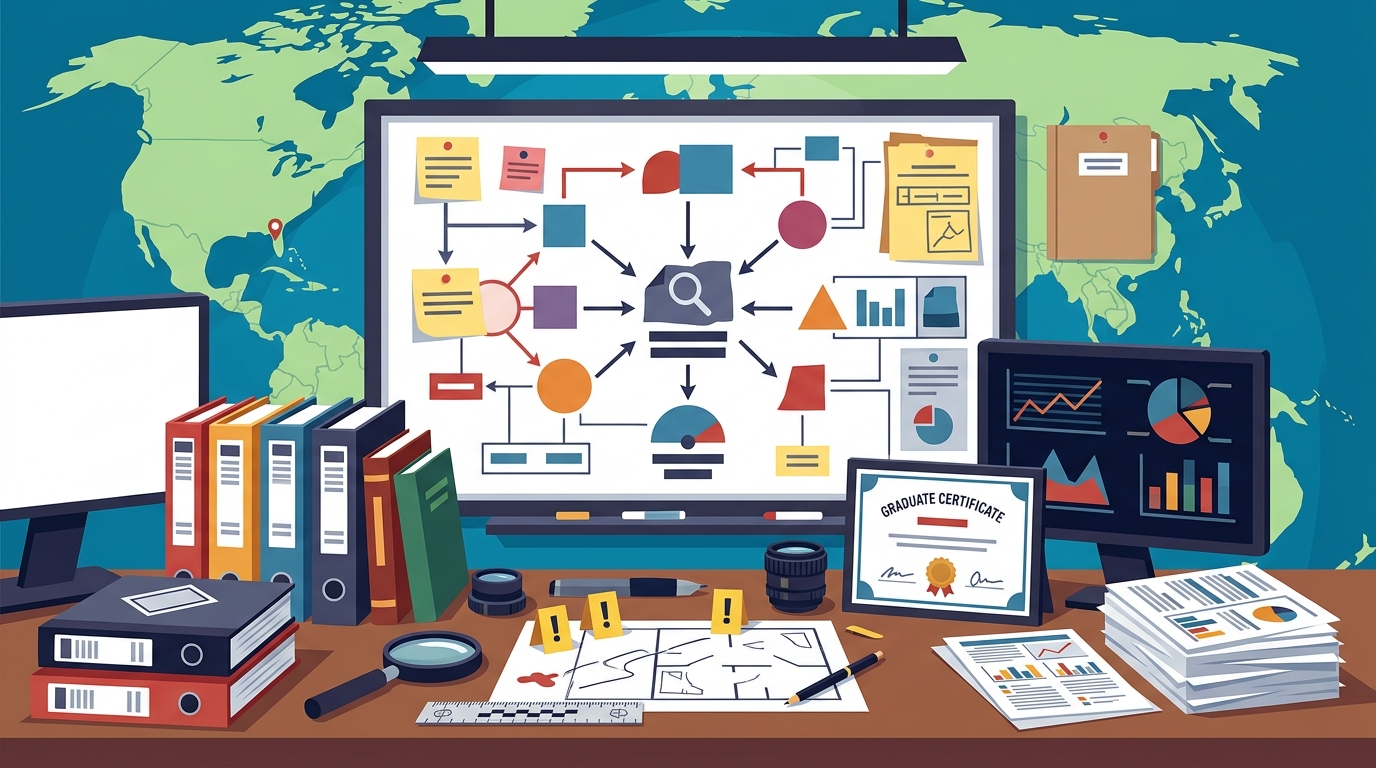
Graduate-Level Specialization
Graduate programs focused on criminal profiling teach you to apply deductive, inductive, and psychological profiling methods within ethical boundaries. The Master's in Criminal Profiling at Evidentia University is a comprehensive program designed to equip students with advanced skills in behavioral analysis, focusing on forensic psychology and crime scene investigation. Its curriculum is taught by experts with backgrounds in elite units such as the FBI's Behavioral Analysis Unit (BAU).
Step-by-Step Path to Becoming a Criminal Profiler
There is no single route, but the most common trajectory follows a clear progression. Here is a realistic roadmap:
- Earn a bachelor's degree in psychology, criminology, or criminal justice (4 years).
- Gain investigative experience through law enforcement, crime analysis, or related roles. Most agencies expect 7 to 15 years of field experience before considering candidates for profiling positions.
- Complete a graduate degree or certificate in criminal profiling or forensic psychology. Programs like the M.S. in Criminal Profiling deliver science-based methods taught by active practitioners.
- Pursue professional certification such as the Certified Criminal Profiler (CCP) credential to validate your expertise.
- Apply for specialized roles as a crime analyst, investigative consultant, forensic psychologist, or behavioral analyst within a government agency or private practice.
The full journey can take 8 to 10 years, including education, academy training, field experience, and a graduate degree. Patience and commitment are essential.
Online vs. On-Campus Graduate Programs
Online graduate programs have become a viable and increasingly preferred option for working professionals who cannot pause their careers. The table below compares the two formats:
| Factor | Online Programs | On-Campus Programs |
|---|---|---|
| Flexibility | Study on your schedule; 24/7 access to materials | Fixed class times; requires relocation |
| Faculty Access | Daily tutor support, live sessions, recorded lectures | In-person office hours |
| Practical Training | Case simulations, crime-scene analysis exercises | On-site lab work and field visits |
| Networking | Global peer community and international guest speakers | Local cohort and campus events |
| Cost | Often lower total cost; no relocation expenses | Higher tuition plus housing and commuting |
| Ideal For | Working professionals, career changers, international students | Full-time students near a university |
Evidentia University's School of Crime Science delivers its programs 100% online, with faculty that includes former FBI BAU agents, forensic criminologists, and international law enforcement professionals. Students simulate real criminal investigations and analyze crime scenes as part of the coursework.
Key Certifications and Credentials
A professional certification is a credential that validates specialized knowledge through examination and documented experience. While no single license is legally required to practice criminal profiling, certifications strengthen your credibility.
Certified Criminal Profiler (CCP)
The CCP, offered by the McAfee Institute, is a board certification that requires a combination of education and experience. Candidates with a bachelor's degree need at least four years of relevant experience; those with only a high school diploma need six years. The certification validates skills in crime scene analysis, interviewing, and behavioral interpretation.
Academic Certificates
A shorter-form academic credential can serve as a stepping stone. The Certificate in Criminal Profiling from Evidentia University is a 12-week intensive that covers deductive, inductive, and psychological profiling methods. It is designed for professionals from diverse backgrounds and does not require prior forensic experience.
FBI BAU Training
The ATF's criminal profiler program requires candidates to complete the FBI's Behavioral Analysis Unit certification training, which includes 13 weeks of instruction in psychology, behavioral science, crime scene analysis, and forensic pathology. This path is reserved for senior special agents with at least eight years of experience.
Career Outlook and Salary Data
The U.S. Bureau of Labor Statistics does not track "criminal profiler" as a distinct job title, classifying these roles under detectives and criminal investigators. However, the field offers several adjacent career paths.
Graduates from programs like Evidentia University's School of Crime Science are equipped for roles as criminal profilers, cybersecurity experts, forensic investigators, and security consultants. Realistic job titles include crime analyst, investigative consultant, forensic psychologist, and academic researcher in criminal behavior.
Salary ranges vary significantly by employer, location, and experience. Entry-level FBI special agents start around $52,440 per year, with locality adjustments pushing total compensation higher. Experienced profilers at the federal level can earn substantially more.
Key Takeaways
- Criminal profiling is a structured, evidence-based discipline, not an intuitive art form.
- Most successful profilers hold graduate degrees; an FBI survey found 87.5% had advanced education.
- Online master's programs provide flexible, high-quality training that rivals on-campus options.
- Behavioral Evidence Analysis (BEA) is the modern gold standard for scientific profiling methodology.
- Professional certifications like the CCP add credibility but are not a substitute for education and field experience.
- The path typically takes 8 to 10 years of combined education and investigative work.
- Evidentia University offers both an M.S. in Criminal Profiling and a 12-week Certificate, both 100% online.
Frequently Asked Questions
What degree do I need to become a criminal profiler?
At minimum, you need a bachelor's degree in psychology, criminal justice, or forensic psychology. However, most profilers hold a master's degree or higher. Graduate-level training in criminal profiling or behavioral analysis significantly improves your candidacy for specialized roles.
Can I become a criminal profiler entirely online?
You can complete the educational component online through accredited programs. Evidentia University offers a 100% online M.S. in Criminal Profiling with practical case simulations. However, you will also need real-world investigative experience, which must be gained through employment in the field.
How long does it take to become a criminal profiler?
The full journey typically takes 8 to 10 years, including earning undergraduate and graduate degrees, completing law enforcement academy training, and accumulating several years of field experience in investigative roles.
Is criminal profiling a real job title?
Dedicated "criminal profiler" positions are rare. Most agencies rely on partnerships with larger organizations like the FBI's BAU. In practice, professionals work as crime analysts, investigative consultants, forensic psychologists, or behavioral analysts who apply profiling techniques as part of their broader role.
What is Behavioral Evidence Analysis (BEA)?
BEA is a deductive method of criminal profiling where all conclusions must be based only on the evidence found in the specific case under investigation. It was developed to eliminate speculation and cognitive bias from the profiling process, making it more scientifically defensible than earlier inductive approaches.
Do I need law enforcement experience to study criminal profiling?
Not necessarily. Programs like the Certificate in Criminal Profiling at Evidentia University are designed to be accessible to professionals from diverse backgrounds. However, to practice as a profiler in a government agency, investigative experience is typically required.
What is the difference between a certificate and a master's in criminal profiling?
A certificate program is a shorter, focused credential that covers core profiling methods in approximately 12 weeks. A master's degree is a longer, deeper graduate program that provides comprehensive training across forensic psychology, crime scene investigation, and behavioral analysis. Many professionals use a certificate as a first step before pursuing a full master's program.
How much do criminal profilers earn?
Salaries vary widely. Entry-level FBI special agents earn approximately $52,440 per year before locality adjustments. Experienced profilers, consultants, and forensic psychologists at senior levels can earn significantly more depending on agency, location, and specialization.
Take the First Step Toward Your Profiling Career
If you are ready to move beyond the myths and build real, science-based profiling skills, explore the programs at Evidentia University. Whether you start with the 12-week Certificate in Criminal Profiling or commit to the full Master of Science in Criminal Profiling, you will learn from former FBI agents, forensic criminologists, and international law enforcement experts. Request information today through the admissions page and take the first step toward a career grounded in evidence, not fiction.