

Moving from traditional classroom settings to an online learning environment can feel overwhelming, especially in specialized fields like behavioral and forensic sciences. These disciplines demand hands-on case analysis, expert mentorship, and rigorous evidence-based training. The good news? Online programs have evolved dramatically, offering flexible schedules, virtual classrooms with HD video lectures, and real-world case studies that rival in-person experiences. Whether you are a working professional looking to advance your career or a newcomer exploring criminal profiling or deception detection, this guide walks you through the key steps to make your transition smooth and successful.
1. Understand What Online Learning Really Means
Online learning is a mode of education delivered entirely through digital platforms, allowing students to access coursework from any location with an internet connection. It is not simply watching recorded lectures. Modern online programs integrate live sessions, interactive exercises, and collaborative projects.
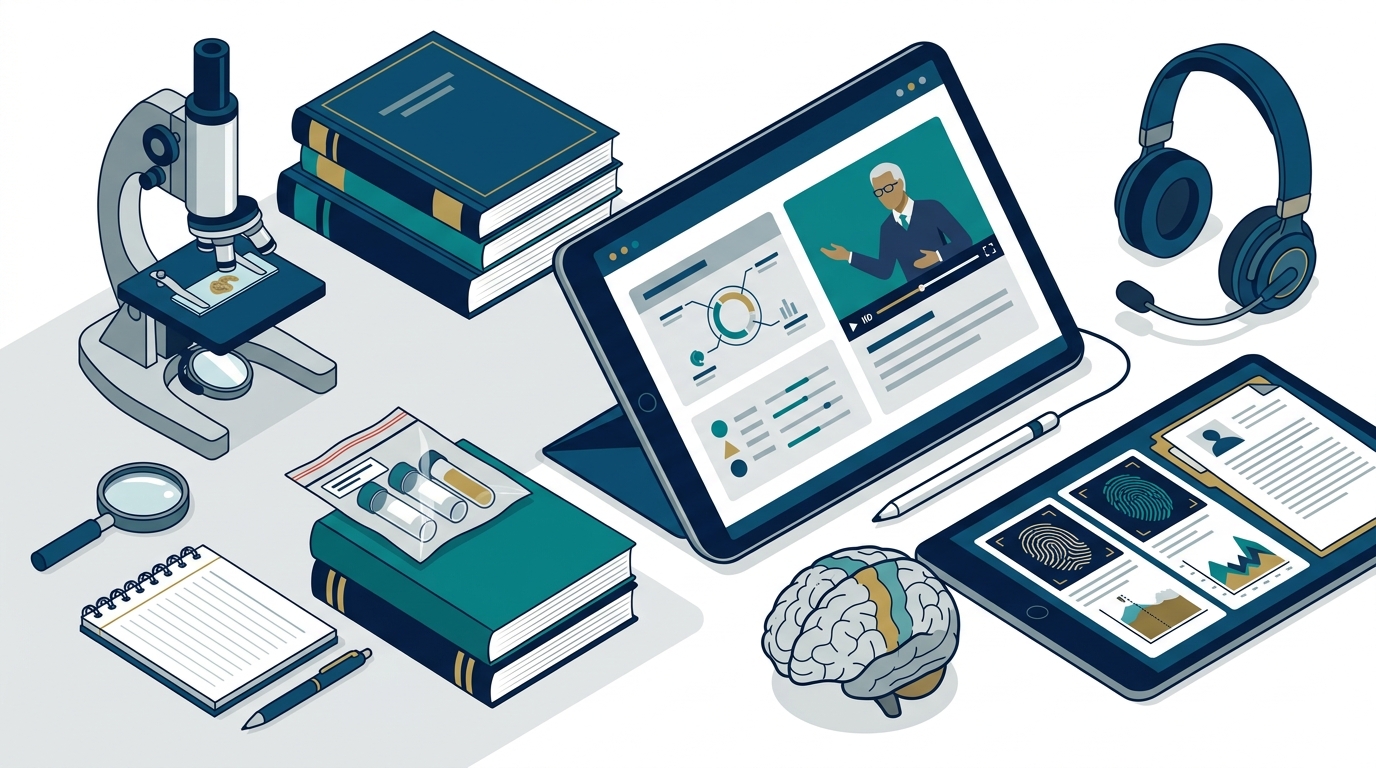
At institutions like Evidentia University, the online model is designed from the ground up for working professionals. Programs combine video lectures in full HD, training exercises, mandatory activities, and supplementary materials within a virtual classroom environment. This approach ensures that students studying behavioral and forensic sciences receive practical, applied training rather than passive consumption of theory.
2. Evaluate Programs That Match Your Career Goals
Not all online programs are created equal. When transitioning to online learning in behavioral or forensic sciences, look for programs that emphasize evidence-based methodologies and practical application.
Check Accreditation and Licensing
Always verify that your chosen institution holds proper authorization. Evidentia University, for example, is licensed by the Florida Department of Education (CIE, license number 9097), which officially authorizes it to offer postsecondary programs under Chapter 1005, Florida Statutes. Accreditation is a formal recognition process that confirms an institution meets established quality standards.
Review Faculty Credentials
Faculty expertise matters enormously in specialized fields. The best programs feature instructors with real-world experience. Evidentia University's faculty includes former FBI Behavioral Analysis Unit agents, PhDs in psychology and criminology, and active law enforcement professionals who bring practical knowledge into every lesson.
Assess Program Structure
Look for programs offering varied formats. Options range from short continuing education courses lasting 4 to 12 weeks, all the way to full master's degree programs comprising 36 U.S. credits. This variety lets you choose an entry point that fits your current schedule and career stage.
3. Prepare Your Technology and Workspace
A successful online learning experience starts with the right setup. Students typically need a computer with a reliable internet connection, a webcam, and a microphone. A dedicated, distraction-free workspace significantly improves focus and retention.
For programs at Evidentia University, exams must be taken from a computer (not a tablet or phone) with webcam and microphone access. The Help Center provides detailed hardware and software requirements so you can prepare in advance.
4. Develop Effective Online Study Habits
Self-discipline is the ability to maintain consistent effort without external supervision, and it is the single most important skill for online learners. Here are practical strategies:
- Set a weekly schedule: Log in to your classes at least three times per week, as recommended by most online programs.
- Engage with live sessions: While recorded sessions are available, attending live classes enables real-time interaction with faculty and peers.
- Use active learning techniques: Apply what you learn immediately. Programs in nonverbal behavior and deception detection, for instance, have students analyze real videos of depositions and interviews from day one.
According to the National Center for Education Statistics, online enrollment in postsecondary institutions has grown steadily, with millions of students now learning remotely. This growth reflects increasing confidence in the quality and rigor of digital education.
5. Leverage Student Support and Academic Resources
Transitioning students should take full advantage of institutional support systems. A robust support infrastructure is a network of services designed to help students succeed academically and technically.
24/7 Technical Support
Online learners need reliable tech assistance. Evidentia University provides round-the-clock technical support for issues related to educational technology and online platforms.
Digital Library Access
Research is central to behavioral and forensic sciences. Through partnerships like Evidentia University's agreement with e-Library LIRN, students gain 24/7 access to databases from Gale, ProQuest, EBSCO, JSTOR, and more. This access is critical for completing research projects and staying current with peer-reviewed literature.
Onboarding Tutorials
Most reputable institutions offer tutorials for new students to learn how to navigate their learning management system. Taking the time to complete these before your first class begins removes unnecessary friction.
6. Online vs. Traditional Learning: A Quick Comparison
| Feature | Online Learning | Traditional Classroom |
|---|---|---|
| Schedule Flexibility | Study anytime; no fixed hours | Fixed class times |
| Location | Anywhere with internet | On-campus only |
| Faculty Access | Weekly live sessions + recordings | In-person office hours |
| Case Study Application | Real video analysis, digital simulations | In-class role-play, labs |
| Library Resources | 24/7 digital databases (JSTOR, EBSCO, etc.) | Physical + limited digital |
| Peer Interaction | Global community, forums, live chats | Local cohort |
| Cost | Often lower tuition; scholarships up to 65% off | Higher tuition + commuting costs |
Key Takeaways
- Online learning in behavioral and forensic sciences now offers the same rigor as traditional programs, with added flexibility for working professionals.
- Always verify your institution's accreditation and faculty credentials before enrolling.
- Prepare your technology setup in advance, including a computer with webcam and microphone.
- Develop a consistent study schedule and engage with live sessions whenever possible.
- Use institutional resources like 24/7 technical support and digital libraries to maximize your learning.
- Look for programs that emphasize practical application, such as real case study analysis, not just theoretical knowledge.
- Financial aid and scholarships can reduce tuition by up to 65%, making advanced degrees more accessible.
Frequently Asked Questions
Can I study behavioral or forensic sciences online while working full-time?
Yes. Many online programs are designed specifically for working professionals. At Evidentia University, master's programs are 100% online with flexible schedules and no fixed class hours, allowing you to organize your studies around your professional responsibilities.
What technology do I need for online learning?
You need a computer with a reliable internet connection, a webcam, and a microphone. Tablets and smartphones are not sufficient for exams. Check your institution's specific hardware and software requirements before enrollment.
Are online degrees in forensic sciences respected by employers?
Yes, when earned from properly licensed institutions. Evidentia University is authorized by the State of Florida through the Florida Department of Education, and its degrees carry the same academic weight as traditional programs in behavioral and forensic sciences.
How do online programs handle practical training in forensic sciences?
Leading programs incorporate real-world case studies, video analysis of depositions and interviews, and interactive exercises. Students apply forensic methodologies to actual scenarios rather than relying solely on textbook theory.
What academic resources are available to online students?
Online students typically have 24/7 access to digital libraries. Evidentia University partners with e-Library LIRN, providing databases such as Gale, ProQuest, EBSCO, and JSTOR for research and coursework.
How long does it take to complete an online master's in behavioral sciences?
Program length varies. Full master's programs at Evidentia University comprise 36 U.S. credits (equivalent to 64.8 European ECTS). Continuing education courses range from 4-week intensive formats to 12-week certificate programs.
Is financial aid available for online programs?
Many institutions offer income-based financial aid and community scholarships. Evidentia University provides scholarships of up to 65% off total program cost when students apply for their programs.
What if I need to take a break from my studies?
Most universities allow formal leaves of absence. Students must submit a request specifying the reason and expected return date, which is then reviewed by the administrative office.
Start Your Journey Today
Transitioning to online learning does not have to be complicated. With the right institution, proper preparation, and a commitment to consistent study habits, you can earn a respected degree in behavioral or forensic sciences from anywhere in the world. Explore Evidentia University's academic programs and discover how flexible, evidence-based online education can transform your career. Take the first step now.