

Traditional compliance programs rely on rules, audits, and punishment. Yet fraud persists—and often thrives—inside organizations that check every regulatory box. The missing ingredient is behavioral science: a discipline that explains why people actually make the choices they do, and how you can redesign the environment so the honest choice becomes the easy choice.
This tutorial walks you through a practical, phased approach to weaving behavioral-science principles into your corporate anti-fraud program—from diagnosing root causes to deploying ethical nudges, strategic friction, and a culture of psychological safety.
Why Behavioral Science Belongs in Fraud Prevention
Fraud is fundamentally a human problem. Legacy controls that rely on credentials, devices, or static rules are increasingly outpaced by modern social-engineering tactics. Behavioral science offers an alternative paradigm: instead of only detecting bad acts after the fact, you shape the environment so that ethical behavior becomes the path of least resistance.
Behavioral science draws from economics, psychology, sociology, and neurology to illuminate how conscious and unconscious factors drive decisions. To manage fraud risk effectively, organizations must go beyond dictating rules; they need to explain the purpose of those rules, understand employee perspectives, and anticipate likely actions.
Revisiting the Fraud Triangle Through a Behavioral Lens
The classic fraud triangle—opportunity, pressure, rationalization—is well known. Behavioral science adds nuance. Research grounded in the theory of planned behavior has identified three key dimensions of employee fraud motive: perceived behavioral control, behavioral attitudes, and subjective norms. Studies show that perceived behavioral control—essentially, how easy an employee believes it is to commit fraud undetected—is the single most important factor, followed by attitudes toward dishonesty and finally social norms within the team.
This ranking is actionable. When anti-fraud budgets are limited, organizations should first reduce perceived ease of committing fraud (controls and friction), then address attitudes (training and nudges), and finally reinforce social norms (culture initiatives).
Step 1 — Map Decision Points Where Fraud Risk Is Highest
Before designing any intervention, audit your processes to identify the specific moments when an employee faces a choice that could tip toward dishonesty. Common hotspots include:
- Expense-report submission
- Vendor onboarding and invoice approval
- Procurement bidding and contract awards
- Travel and entertainment reimbursement
- Payroll exception processing
- Insurance claims intake
For each hotspot, document the current choice architecture: What information does the employee see? What defaults are in place? What oversight exists? This audit becomes the blueprint for every subsequent intervention.
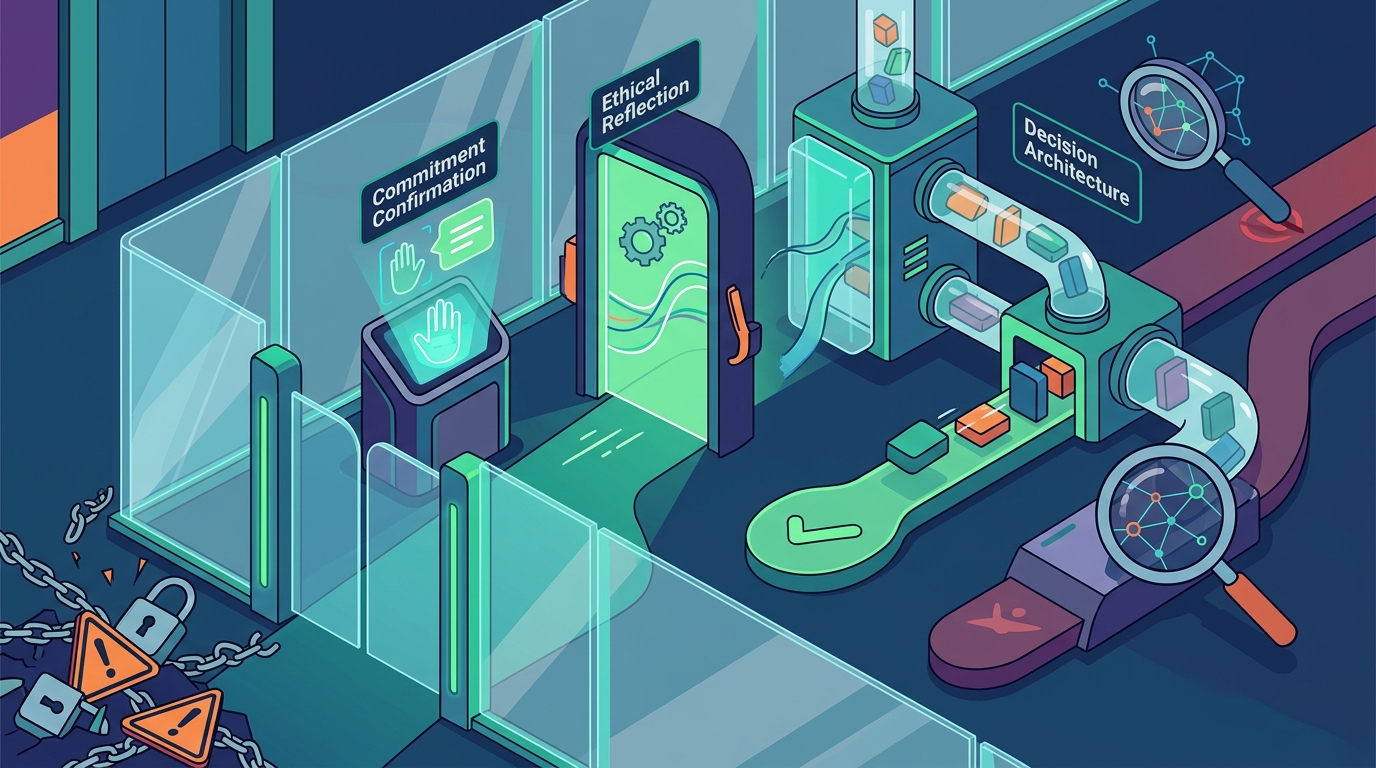
Step 2 — Deploy Ethical Nudges at Critical Moments
An ethical nudge is a subtle design element that reminds people to act with integrity at the exact moment a decision is being made. One workplace example is implementing reminders that pop up when completing an expense form, prompting employees to record their expenses truthfully. The key principle is timing: nudges work best when they appear at the point of decision, not buried inside a policy document read once a year.
Practical Nudge Examples for Corporate Fraud Prevention
| Fraud Risk Area | Nudge Intervention | Mechanism |
|---|---|---|
| Expense reports | Honesty attestation displayed before data entry begins | Pre-commitment to truthfulness |
| Vendor invoices | Automated flag showing historical average for this vendor category | Anchoring and social comparison |
| Procurement | Visual dashboard showing bid-spread norms across the company | Descriptive social norms |
| Insurance claims | Short integrity pledge at the start of the claim form | Moral salience |
| Time-sheet entry | Peer-comparison badge: "92% of your team submitted on time and accurately" | Social proof |
Insurance startup Lemonade famously uses a pre-commitment nudge by having claim applicants certify their honesty at the start of the claims process rather than at the end, which the company credits with reducing fraudulent claims by heightening ethical awareness early on.
Important Caveat on Sign-at-the-Top Nudges
Be aware that the original academic research supporting "signing at the top" honesty attestations has come under serious scrutiny. The landmark study by Dan Ariely and Francesca Gino was found to contain fabricated data, and subsequent large-scale replications in insurance contexts found no significant main effects from this type of nudge on reducing dishonest self-reporting. This does not invalidate all honesty nudges—but it does mean you should rely on multiple reinforcing mechanisms rather than a single trick.
Step 3 — Introduce Strategic Friction Into High-Risk Processes
Friction is a barrier that slows down a process—and in fraud prevention, friction can be your friend. Additional security steps that slow down or complicate the experience, such as multiple approval screens or multi-factor authorisation in payment processing, deter fraudsters and provide more time for detection and intervention. They also increase the complexity a fraudster must overcome.
Where to Add Friction
- Payment release: Require a second approver for any payment exceeding a threshold, with a mandatory 24-hour cooling-off period for new payees.
- Vendor master-file changes: Introduce dual-control edits so no single employee can change bank details unilaterally.
- High-value procurement: Add a "pause-and-reflect" screen summarising the total contract value and the employee's personal accountability before final sign-off.
The flip side of friction is simplicity. Keep compliance documents, policies, and risk assessments short and visually clear—because most people in the workforce do not retain the information in lengthy framework documents for very long.
Step 4 — Redesign Incentives and Performance Management
There are many mechanisms within organizations that inherently drive behaviors away from integrity and promote the individual over the organization. Aggressive sales targets, revenue-linked bonuses, and rank-and-yank performance reviews can all create pressure to cut corners.
Apply behavioral-science principles to incentive design:
- Balanced scorecards: Weight ethical conduct and compliance metrics alongside revenue.
- Loss framing: Instead of offering a bonus for hitting targets, grant the bonus upfront and claw it back for compliance violations—loss aversion makes the second approach far more psychologically powerful.
- Team-based rewards: Tie a portion of variable pay to team-level integrity metrics, leveraging social accountability.
Step 5 — Build a Listen-Up Culture, Not Just a Speak-Up Culture
One of the most effective ways to reinforce expectations of doing the right thing is a visible and timely response to issues reported to the company, whether internally or through anonymous whistleblowing lines. Transparency in how these matters are handled is key to bolstering employee trust—moving from a speak-up culture to a listen-up culture where individuals feel heard and respected, potentially leading to the earlier detection of wrong behaviors.
Concrete Actions
- Publish anonymised case outcomes quarterly so reporters see that their reports led to change.
- Close the feedback loop within 30 days, even if the investigation is still underway—acknowledge receipt and outline next steps.
- Highlight the consequences of poor behavior visibly so employees understand what is tolerated and what is not.
- Continually improve day-to-day controls identified during investigations—this is the strongest positive reinforcement signal you can send.
Step 6 — Leverage Behavioral Analytics Technology
Behavioral science is not limited to nudges and culture. A growing ecosystem of technology uses behavioral analytics to detect fraud in real time by examining how users interact with systems—not just what data they submit.
Behavioral analytics examines patterns of behavior and provides organizations insight into how their customers and employees behave. Profiles are built based on known user behavior to determine if someone is acting normally or exhibiting anomalous, potentially fraudulent behavior. Data points include login times, typing cadence, mouse movements, device usage, and transaction patterns.
Machine learning models process these signals to assign risk scores, helping businesses focus prevention efforts where they matter most. Financial institutions using advanced behavioral analytics have reportedly seen fraud rates drop significantly—some sources cite reductions of up to 73 percent.
Applying Behavioral Analytics Internally
- ERP and financial systems: Monitor for unusual journal-entry patterns, after-hours access, or override frequency.
- Procurement platforms: Flag employees who consistently approve invoices just below review thresholds.
- Expense systems: Detect behavioral anomalies like bulk submissions, round-number claims, or weekend-night entries.
Step 7 — Measure, Iterate, and Guard Against Desensitisation
Any behavioral intervention loses potency over time. It is essential to continuously innovate nudges to prevent desensitisation. Build a measurement framework that tracks:
- Leading indicators: Whistleblower report volumes, expense-report error rates, policy-acknowledgement completion rates.
- Lagging indicators: Confirmed fraud cases, financial losses, regulatory penalties.
- Behavioral metrics: Time-to-complete for controlled processes (friction check), nudge click-through rates, anonymous survey scores on ethical climate.
Run A/B tests where feasible. Rotate nudge messages quarterly. Refresh training content with new case studies from your own organisation. Behavioral science is not a "set and forget" program—it is an ongoing design practice.
Honest Limitations: What Nudges Cannot Do Alone
Nudges are most effective when used as part of a holistic approach. They excel at steering employees toward safe choices in the moment but lack the depth to address systemic behaviors or long-term knowledge gaps. Research has shown that individuals with strong preexisting attitudes toward dishonesty may commit fraud even in the presence of nudges.
A well-known large-scale field experiment in the insurance industry found that customers could not be meaningfully nudged to reduce indicators of claims fraud, adding to growing evidence that nudges alone are insufficient for determined bad actors. The lesson: nudges reduce opportunistic fraud among the persuadable majority—but they must be combined with strong detective controls, meaningful consequences, and cultural reinforcement to address the full risk spectrum.
Key Takeaways
- Fraud is a human problem first; behavioral science addresses root causes that rules-based systems miss.
- Map every decision point where fraud risk exists before designing interventions.
- Deploy ethical nudges at the moment of decision—not in annual training decks.
- Use strategic friction to slow high-risk processes and increase perceived difficulty of committing fraud.
- Redesign incentives so ethical behavior is rewarded, not just revenue generation.
- Build a listen-up culture that visibly acts on reported concerns.
- Layer behavioral analytics technology to detect anomalies in real time.
- Rotate and refresh interventions to prevent desensitisation.
- Acknowledge that nudges alone will not stop determined fraudsters—combine them with detective controls and consequences.
Frequently Asked Questions
What is an ethical nudge in the context of fraud prevention?
An ethical nudge is a subtle design element placed at a decision point that reminds an employee or customer to act honestly. Examples include pop-up integrity reminders on expense forms, honesty pledges at the top of claims forms, and peer-comparison dashboards that show how colleagues typically behave. Nudges work by leveraging cognitive biases—like social proof and loss aversion—without removing freedom of choice.
Does the "sign-at-the-top" honesty nudge actually work?
The original research supporting sign-at-the-top attestations has been discredited due to data fabrication concerns. Subsequent large-scale replications found no significant effect. While integrity attestations can still play a role as one component of a broader program, they should not be relied upon as a standalone fraud deterrent.
How does strategic friction help prevent fraud?
Strategic friction adds deliberate barriers—such as multi-step approvals, cooling-off periods, and dual-control edits—to slow high-risk processes. This extra time provides more opportunity for detection and increases the perceived difficulty of committing fraud, which behavioral research identifies as the top factor influencing employee fraud motive.
What is the difference between a speak-up culture and a listen-up culture?
A speak-up culture encourages employees to report concerns. A listen-up culture goes further: reported issues receive visible, timely responses, and employees feel heard and respected. This transparency bolsters trust and leads to earlier detection of problematic behaviors because employees believe their reports will actually make a difference.
Can behavioral analytics detect internal corporate fraud?
Yes. Behavioral analytics monitors how employees interact with internal systems—tracking patterns like login times, override frequency, journal-entry anomalies, and transaction cadence. Machine learning models build baseline profiles and flag deviations in real time, allowing fraud investigators to focus on genuine threats rather than sifting through false positives.
What are the limitations of using nudges for fraud prevention?
Nudges are most effective against opportunistic fraud by otherwise well-intentioned employees. They have limited impact on determined bad actors with strong preexisting intent to defraud. Nudges also lose potency over time through desensitisation. For a robust program, combine nudges with detective controls, meaningful consequences, incentive redesign, and cultural change.